
Key takeaways
- Your first lesson is mostly orientation: a short warm-up, rental fitting, then marching, two-foot glides, and simple weight shifts.
- Many adult programs follow a leveled curriculum, such as Learn to Skate USA's Adult 1-6.
- Properly fitted skates matter more than any other piece of gear; add gloves, warm layers, and optional protective gear if you're nervous.
- Practicing safe falls, setting tiny goals, and skating with a buddy are the best fixes for fear and plateaus.

Adult ice skating lessons are designed to build real fitness and confidence while keeping joint health and fall prevention front of mind. Plenty of adults worry about falling, sore joints, or feeling self-conscious next to a rink full of tiny jumping children, and each of those worries has a practical fix. This guide walks through a first lesson, the gear that matters, fear and joint concerns, and how adult curriculums map your progress.
What should adults expect in their first ice skating lesson?
Your first adult lesson is an orientation plus an introduction to basic skills. Expect a short off-ice warm-up, a chance to get comfortable in rental skates, and instructor-led drills focused on low-risk movements like marching, two-foot glides, and simple weight shifts. Those early, achievable steps build balance and reduce fear, so you leave feeling steadier than you arrived. Our first skating lesson checklist covers the night-before prep.
What to bring
Being prepared speeds up check-in and keeps your focus on learning. After rental fitting and a brief safety talk, most lessons move straight into balance drills, marching practice, and short two-foot glides, so arrive ready to move.
- Layered, comfortable clothing that lets your knees and hips bend, plus a pair of thin-to-medium moisture-wicking socks.
- Gloves to protect your hands, and photo ID if the rink asks for it at rental check-in.
- A willingness to start slow and follow the instructor's balance drills.
How adult classes typically progress
Adult classes usually follow a scaffolded sequence. You start with balance and marching, add gliding and swizzles, then learn stopping and weight transfer, and finally work on edges and simple turns. Many programs package this into blocks of weeks whose length varies by rink, from 4 weeks at the University of Illinois to 12 at Anaheim ICE, with each session building on the last and repeating key drills so they stick. Extra short practice sessions between lessons help wobbly movements become automatic.
Group lessons give you social support and classmates to learn from, while private lessons speed up progress by tailoring the pace and corrections to you. Many adults end up doing a mix of both. If you're weighing the private route, our guide to finding the right figure skating coach as an adult explains what to look for. Once you have a coach you love, our gift guide has a row of thank-you gifts for them.
Common beginner skills
Beginner adult lessons concentrate on a handful of foundations: getting up and down safely, marching, swizzles, two-foot glides, and basic stopping. Each skill trains a core mechanism, whether that's balance, weight transfer, or edge awareness, and instructors usually pair it with a short drill. Drills are intentionally short and frequent to build confidence without overloading your joints, and our basic skating techniques guide previews each one.
Which equipment do adult beginner ice skaters need?
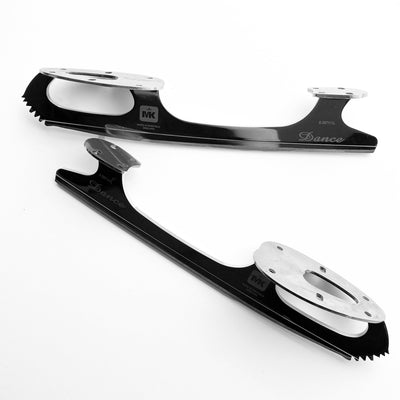
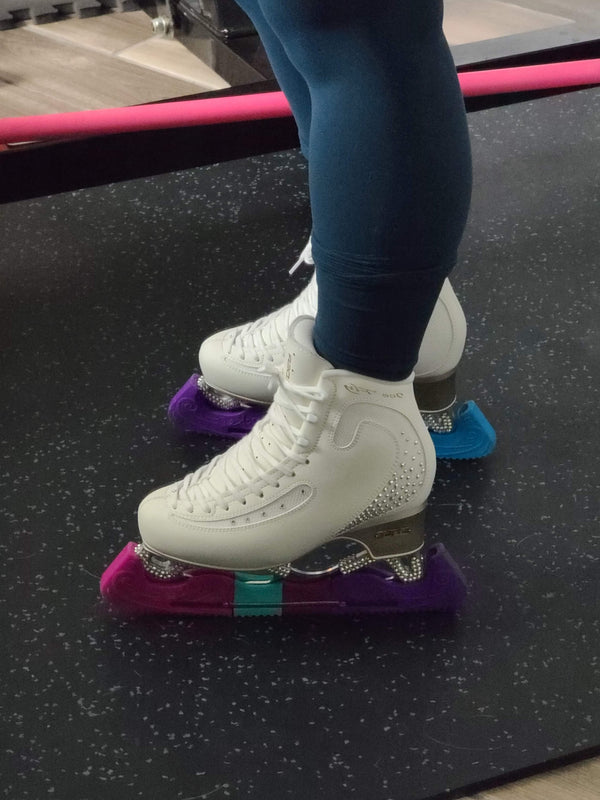
For adult beginners, the basics are properly fitted skates, socks that don't bunch, gloves, and optional protective gear such as a helmet or wrist guards while you learn to fall. A good fit gives you ankle support and foot stability, which helps balance and reduces joint strain. The boot provides that support, the blade controls your glide and edges, and the laces and padding fine-tune the fit. Which type of skate you choose depends on your goals.
| Skate type | Fit and support | Ideal use |
|---|---|---|
| Figure-style | Tighter ankle support, toe pick included | Adult figure classes and learning balance and edges |
| Recreational | Softer boot, more comfort | Casual public sessions and intro learn-to-skate classes |
| Hockey-style | Lower cut, nimble support, no toe pick | Faster skating and adult hockey clinics |
How to choose skates as an adult beginner
Look for a snug heel lock, solid ankle support, and enough toe room for circulation without slipping, since those cues cut blisters and protect your joints. Rent at first to get a feel for blades and sizing, then buy once you're committed. A quick fit check: your heel is held firmly, nothing squeezes painfully across the forefoot, and your ankle feels gently supported. Our figure skate fitting guide and boot match quiz help with the next step.
Rental skates are part of the class fee at some rinks, including Anaheim ICE and the Philadelphia Skating Club and Humane Society, so you may not need to buy anything to start. The Philadelphia club says it's easier for first-time skaters to learn in figure skates because they're longer, which gives more stability, and it also strongly recommends buying your own pair. When you're ready to buy, our guide to complete skates versus separate boots and blades explains why a complete set is the better buy for most adults starting out, and our guide to new and used figure skates says to have a used pair checked and sharpened before you skate on it. Once you own a pair, our guide to the signs your skates need sharpening, repair or replacing explains when the boots may be done.
Basic maintenance keeps your skates working for you. Dry your blades after every session, wear guards whenever you walk off the ice, and check your laces regularly, which keeps edges sharp and boots supportive. Our skate care guide has the full routine.
Safety gear and apparel
Clothing and safety gear matter for comfort and injury prevention. Layer breathable fabrics so you stay warm but mobile, wear socks that don't bunch, and bring gloves to protect your hands during falls. Nervous beginners may prefer a helmet, wrist guards, or knee pads while practicing falls, because they reduce fear. If you have mild knee or ankle sensitivity, compression sleeves can help, and our guide to what to wear ice skating covers outfits in detail.

How can adults overcome challenges when learning to ice skate?
The three most common challenges for adult learners are fear of falling, joint or pain concerns, and dips in motivation. Fear eases with safe falling practice, protective gear, and stepwise balance drills that stack up small successes. Joint worries are best managed with a low-impact progression, off-ice cross-training, and careful attention to skate fit. Motivation improves when you set short, measurable goals, practice with a buddy, and track your progress.
- Start small: give yourself a micro-goal each session, such as holding a steady two-foot glide.
- Practice safely: use protective gear and rehearse falls on a soft surface off the ice before trying them on the rink.
- Track progress: record short videos, note small wins, and schedule regular instructor feedback.
How to fall safely on ice
A safe fall protects your head, avoids reaching out with straight arms, and goes to the side or into a sit so the impact lands on your hip and outer thigh, not your wrists. Practice controlled collapses on a soft surface first: bend your knees, tuck your chin, and keep your arms in. Then move to slow, supervised drills on the ice. Our guide to how to fall safely in figure skating breaks it down step by step.
Getting back up is a skill too. Roll onto your hands and knees, bring one foot up between your hands with the blade flat on the ice, then the other, and push up through your legs, keeping your fingers clear of anyone's blades. Repeating the fall-and-recover sequence lowers your injury risk and takes the intimidation out of it, and our falling and getting up guide has more drills.
Building confidence and staying motivated
Confidence comes from achievable milestones, celebrated small wins, and a bit of social accountability. Practice with a buddy or join adult-only sessions to cut down on self-consciousness, keep practices short and frequent, and jot down one improvement after every session. Reflecting on small gains turns frustration into visible progress and keeps you coming back, and our guide to overcoming fear and building confidence has more strategies.
What are the physical, mental, and social benefits of adult ice skating?
Ice skating works your cardiovascular fitness, strength, balance, and social life all at once. It recruits large muscle groups, including the quads, glutes, and core, and sustained skating raises your heart rate. Balance work improves your sense of where your body is in space, which can carry over to everyday steadiness, and the social side of classes and clubs builds a routine that keeps you showing up.
| Benefit | What does the work | Result |
|---|---|---|
| Cardiovascular | Sustained, moderate-intensity skating and interval drills | Better aerobic fitness and calorie burn |
| Muscular strength | Repeated weight transfer and knee bend and extension | Stronger legs and core |
| Balance | Edge drills and one-foot glides | Better stability on and off the ice |
How skating improves physical fitness
Skating builds dynamic balance, single-leg strength, and core stability by engaging the quads, hamstrings, glutes, and abs in coordinated movement. Sessions that include interval-style drills, short bursts of effort followed by recovery, give your cardiovascular system a real workout. Gliding is also lower impact on the joints than running, which makes skating accessible for many adults. Aim for regular sessions plus some off-ice strength work, and our off-ice training guide has exercises to start with.
Mental health and social advantages
Regular, structured activity can help lower stress and lift your mood, and learning new skills builds confidence in a way few adult hobbies do. Group classes and adult-friendly sessions add social bonds, a regular routine, and shared goals, all of which make it easier to keep exercising. An adult-only environment can also reduce self-consciousness so you can focus on improving, and our post on skating for mental health goes deeper.
How do adult ice skating curriculums and skill progressions work?
Many adult programs follow a leveled framework, such as Learn to Skate USA's Adult 1-6, that defines clear skill goals at each stage. You start with balance and gliding, progress through stops and basic edges, and finish with turns and crossovers. Progress is checked with periodic skill assessments, and adults move at their own pace. How long each level takes isn't fixed, and at Kraken Community Iceplex, for example, adults work through six levels by demonstrating the skills listed for each one and can move up in any of the eight weeks of a session.
| Level | Skills include |
|---|---|
| Adult 1 | Forward marching, forward two-foot glide, forward swizzles |
| Adult 2 | Forward one-foot glides, forward slalom, backward skating and backward swizzles |
| Adult 3 | Forward stroking, half-swizzle pumps, forward chassés on a circle, backward snowplow stops |
| Adult 4 | Forward outside and inside edges on a circle, forward crossovers, backward one-foot glides, hockey stop |
Key skill levels
Adult levels generally move from foundational balance and gliding, through controlled stops and stroking, to edges, crossovers, and backward skills in the higher levels. Instructors adapt the pace for adults, with plenty of repetition, clear feedback, and alignment cues that protect your joints. Assessments usually mean demonstrating a skill in class or at a scheduled check, and those milestones help you and your instructor plan what's next. When you're ready for backward skills, our backward skating guide will help.
Tracking your progress and setting goals
Track progress with a mix of checklists, short videos, and regular instructor feedback. Keep a skills checklist tied to your level and record brief clips of key moves, like a glide, a stop, or an edge, to compare week to week. Set a small goal for each session, such as holding a steady two-foot glide, and reassess your goals regularly. Our free practice tracker and first 30 days skating guide make it easy.
Where and how can adults find ice skating lessons near them?
Look for lessons at local ice rinks, community recreation centers, and clubs that advertise adult learn-to-skate classes. Check rink schedules online, call the front desk, or browse program listings, and prioritize adult-only sessions, instructors who work with adults, small classes, and available rental skates. Many rinks also offer public or drop-in sessions that pair well with lessons, and our guide to understanding ice time and sessions explains the options. Before you enroll, ask a few focused questions.
- Do you offer adult-only classes, and what's the typical class size?
- What experience do the instructors have teaching adults?
- Are rental skates available, and does someone help with fitting?
- Is a Learn to Skate USA membership included in the class fee, or do you buy it separately?
- Does the fee include rental skates and practice ice?
- What happens if you miss a class, and are there make-up classes?
- Do adults have to wear a helmet?
The answers really do differ, because the Philadelphia Skating Club and Humane Society issues no make-up classes for classes missed, while Detroit Skating Club gives make-up slips that can be used for public skating. Helmets are mandatory in Kraken Community Iceplex's adult classes, and Detroit Skating Club strongly recommends that adults wear a helmet or halo and wrist guards. If a rink's page doesn't answer these, Learn to Skate USA's own advice is to contact your local skating rink for information on its class offerings.
If you'd like a class that follows the Learn to Skate USA adult curriculum, its Find a Skating Program page lists its locations near any ZIP code you enter. That curriculum has six progressive levels that introduce forward and backward skating, stops, edges and turns, and it's designed for beginning and experienced skaters who want to improve. Your local program's own website will have the class times, days and levels, and Learn to Skate USA suggests contacting the rink to find out which level to sign up for. If you're signing up a child as well, Learn to Skate USA's Snowplow Sam curriculum is designed for skaters under the age of six.
Choosing a program or instructor
Choose programs with adult-focused instruction, small classes for personal feedback, and instructors experienced with adult learners, since those factors support safety and faster progress. Confirm the rink's safety procedures, rental fitting help, and whether classes follow a recognized curriculum for consistent skill sequencing. Watch for red flags like overcrowded classes, instructors with no clear progression plan, or rinks that won't help with rental fit. Our guide to choosing a skating coach has a fuller checklist.
How much adult skating lessons cost
Most of the rinks we looked at sell adult group classes as a session of weekly classes, though Detroit Skating Club bills its adult classes by the month and Kraken Community Iceplex runs a drop-in workout class at $15 a time. The length of a session changes a lot from rink to rink, from four weeks at the University of Illinois to twelve at Anaheim ICE. If your rink teaches the Learn to Skate USA curriculum, you'll also need a Learn to Skate USA membership, which costs $20.00 for a season that runs from July 1 to June 30. Some programs include it in their registration fee, and others have you register for it directly with Learn to Skate USA.
| Rink | Price | What it includes |
|---|---|---|
| Kraken Community Iceplex | $272 per 8-week session, or $34 per class | 30-minute group classes |
| Anaheim ICE | $300 for a 12-week session, or $25 per class | 30 minutes of ice time and group instruction, skate rental, and 10 practice or public session passes |
| Philadelphia Skating Club and Humane Society | $275 for the 10-week Tuesday adults semester | 30 minutes of instruction and 30 minutes of practice time, with rental figure skates |
| Detroit Skating Club | $22 per class on Mondays and Fridays, charged monthly, plus a $32 membership | 25 minutes of instructed class time and 25 minutes of supervised free time |
| University of Illinois Campus Recreation | $65 for members or $80 for non-members for a 4-week group session | Adult 1 to 4 group classes |
Private lessons are priced differently from group classes at the rinks we looked at. At Penn Ice Rink, cost and schedule are coordinated with the instructor, each instructor's rate may vary, and you pay the instructor directly. You also pay the session admission fee for the ice your lesson takes place on, so the full cost there is the coach's rate plus the ice. The University of Illinois sells private lessons as a package instead, at $115 for members or $140 for non-members for a 4-week session. Our guide to the real cost of adult figure skating has more of the prices we found in October 2026 and explains how to find your own rink's. If you're adding private lessons, our guide to choosing a skating coach covers asking about lesson fees, ice fees and billing before you book.
Sources
Level descriptions come from the U.S. Figure Skating Learn to Skate USA adult curriculum; practice suggestions are AST's own rough guide. Programs vary by rink, so check your local program's level sheets.
- U.S. Figure Skating, Learn to Skate USA adult curriculum (Adult 1-6) and skill descriptions.
- Learn to Skate USA, Compete USA Competition Manual, Elements: Adult 1-6 (August 2026): the skills listed for each adult level.
- Learn to Skate USA, Adult Info page (membership cost and season, registering for classes) and Member Benefits page.
- Learn to Skate USA, Class Types, Adult curriculum and Find a Skating Program pages, and About Us page.
- Kraken Community Iceplex, Adult Learn to Skate page (class details, pricing, Deep Sea levels).
- Anaheim ICE, Learn to Skate Classes page (Fall 2026 sessions and costs).
- The Philadelphia Skating Club and Humane Society, Learn To Skate page (fall classes, fees, frequently asked questions, procedures and guidelines).
- Detroit Skating Club, Adults page (Learn to Skate, Adults).
- University of Illinois Campus Recreation, Learn to Skate page (lesson prices, class descriptions, private lessons).
- Penn Ice Rink, Private Skating Lessons page.