
Off-ice training is exercise you do away from the rink to make skating feel easier: leg strength for pushing and landing, balance on one foot, a steady core, and floor practice of jump and spin positions. You don't need a gym or a big plan, just a little done regularly and built up slowly. If you have a joint problem or an injury, or you haven't exercised in a while, check with your doctor or a physio first.
Key takeaways
- Strong legs, good balance on one foot and a steady core make almost everything on the ice easier, from stroking to landing your first jump.
- Start with a few simple exercises, do them well, and add more gradually. Soreness the next day is normal; sharp pain is a sign to stop.
- Floor jumps are hard on adult joints, so warm up first, land softly on a bent knee and keep those sessions short.
- Off-ice jump and spin drills rehearse the shapes, and your coach turns them into skating. Directions here are counterclockwise, so mirror them if you turn clockwise.
Heads up: this guide contains an Amazon affiliate link. If you buy through it, Adults Skate Too earns a small commission at no extra cost to you. Details.
Most of us only get a few hours on the ice a week, and a chunk of that goes on warming up and dodging other skaters. Off-ice training is a way to keep working in between. It won't replace ice time, but stronger legs and steadier balance make the time you do get go further. A lot of it can be done in your living room in sneakers.
This page sticks to simple exercises that skaters commonly use, without rep counts or a fixed schedule, because the right amount depends on you. If you have a coach, ask what they'd most like you to work on off the ice. If you're not sure an exercise suits your body, a physio or a qualified trainer can show you how to do it safely.
What off-ice training does for skaters
Skating asks a lot of your body at once. You push and land on bent knees, balance on one foot over a narrow blade, and keep your upper body still while your legs work. Off the ice you can train each of those on its own, without the slippery surface or the worry of falling, so it's easier to pay attention to doing them well.
It can help your nerve, too. A one-foot glide feels less scary when you've already practiced standing on one leg with a bent knee at home. Rehearsing a jump or spin position on the floor gives your body a rough idea of the shape before you try it on the ice. Your coach will still need to fine-tune it, but you won't be starting from nothing.
Before you start
Warm up for a few minutes first, with something like marching on the spot, gentle jogging or a few easy squats, so your muscles aren't cold. Wear supportive sneakers and clear a space with nothing to trip over. A sturdy chair or a kitchen counter within reach is useful for the balance work, and there's no shame in holding on.
Start with fewer exercises than you think you need, and do them slowly and carefully. Muscle soreness the day after is normal when you start something new. Sharp pain, joint pain that lingers, or anything that makes you dizzy is not, so stop and get it checked. If you're coming back from an injury, have joint problems or haven't exercised in a while, talk to your doctor or a physio first.
Some skaters like to wear kinesiology tape on a knee or ankle when they train. A 2012 review in the journal Sports Medicine found little good evidence that it prevents or treats sports injuries any better than other stretchy tape, so it's no substitute for getting a sore joint checked. If a physio suggests it and shows you how to put it on, you can find kinesiology tape on Amazon.
Leg strength
Your legs do almost all the work in skating, and most of it happens with your knees bent. These exercises build strength for pushing, holding a deep knee bend and landing. Do them slowly and with control, and stop each set while your form still looks good rather than grinding out extra repetitions.
Squats
Stand with your feet about hip-width apart. Sit back and down as if you're lowering yourself into a chair, keeping your chest up and your knees pointing the same way as your toes, then push through your whole foot to stand. Go only as low as feels comfortable. A real chair behind you is a good guide while you're learning.
Lunges and split squats
Step one foot forward and lower your back knee toward the floor, keeping your front knee over the middle of your foot and your body upright. Push back up and switch legs. A split squat is the same movement with your feet staying put, which is easier to balance. Hold a chair or counter if you wobble, especially at first.
One leg at a time
You spend most of your skating on one leg, so it's worth training one leg at a time. Step-ups onto a low, sturdy step are a good start. When those feel easy, try sitting down onto a chair and standing back up on one leg, using your hands on the chair as much as you need. Keep your knee in line with your toes the whole way.
Calf raises
Rise up onto the balls of your feet, then lower your heels slowly. Holding a counter for balance is fine. Strong calves and ankles help with pushing and with landing jumps, and you can do these while the kettle boils. Once two feet feel easy, try one foot at a time.
Balance and core
Balance on one foot sits underneath nearly every skating skill, and it's the easiest thing to practice at home. Stand on one foot near a counter with your knee slightly bent, the way it is on the ice, and your arms out to the sides. When that feels steady, bend the knee a little deeper, move your free leg slowly forward and back, or try it while you brush your teeth.
To make it harder, stand on a folded towel or a cushion, or close your eyes for a few seconds, always with something to grab. You can also hold a spiral shape: standing on one leg, stretch the other leg out behind you with your toe pointed and your back long, and lift it only as high as you can keep your posture. Practice both legs, even if one side feels much worse.
A steady core keeps your upper body quiet while your legs move, which helps with edges, spins and landings. Planks on your forearms, side planks and the dead bug, where you lie on your back and slowly reach out with the opposite arm and leg, are all good choices. Keep your lower back from sagging or arching, and stop when your form slips. Doing them well matters far more than how long you hold.
Jump drills on the floor
Practicing jumps on the floor is a normal part of skater training, because it lets you learn the shape and timing without slipping. It's also high impact, so warm up properly, use a forgiving floor rather than concrete, and keep jump sessions short. Land softly on the ball of your foot and let your heel and knee give, never on a stiff leg. If your knees, hips or back complain, stop and ask a physio.
The landing position
The landing position is worth holding on its own before you add any jumping. For a counterclockwise skater, stand on your right foot with the knee bent, stretch your left leg out behind you and a little to the side, and hold your arms out to the sides. Keep your chest up and your weight over the ball of your right foot. Clockwise skaters mirror it.
An off-ice waltz jump
Once the landing feels steady, you can practice a floor version of the waltz jump. Counterclockwise, step forward onto your left foot with the knee bent, swing your right leg forward and up, jump and make a half turn to the left in the air, and land on your right foot in your landing position. Start small and slow. Our guide to the waltz jump explains how it works on the ice.
Bigger jumps
You'll see box jumps and tuck jumps in a lot of skater workouts. They build power, but they're hard on adult joints and easy to get wrong when you're tired. Leave them until you've built a base with the exercises above, and learn them from a coach or a qualified trainer rather than a video. Small two-foot hops with a quarter or half turn are a gentler way to get used to being in the air.
Spin practice at home
Off the ice you can practice spin positions and get used to turning. Stand on your left foot if you spin counterclockwise, or your right if you spin clockwise, rise onto the ball of your foot and hold the position your coach has shown you, with your arms rounded in front of you. Keep your back tall and your head level, looking straight ahead. Holding the shape still, without turning, is good balance work in itself.
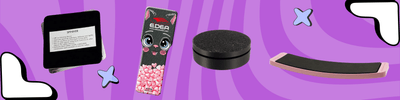
An off-ice spinner lets you actually turn. Board-style spinners move and tilt a little like a blade, while platform spinners stay in one place, which makes them good for posture and arm positions. Our off-ice spinner comparison goes through the types, and we carry the CRS Cross figure skating spinner, a platform style. Use any spinner in a clear space away from furniture. If you're putting one on a holiday list, our gift guide has more off-ice ideas too.

Turning at home can make you dizzy, just like on the ice. Take breaks between turns, and stop for the day if you feel sick or faint. If you have an inner-ear or balance condition, check with your doctor before you try spin practice. Our guide to first spins covers the on-ice side, including which foot to spin on.
Fitting it into your week
There's no single right amount of off-ice training. It depends on how often you skate, how your body recovers and what else is going on in your life. A short session on a day you're not skating is a good place to start, and some skaters do a few balance and leg exercises as a warm-up before they get on the ice. Leave time for rest days too, because your body needs them to recover.
General fitness helps as well. Skating comes in short, hard bursts, and running through even a short program can leave you out of breath. Any activity you enjoy and will keep doing, like brisk walking, cycling, swimming or jumping rope, builds stamina. Jumping rope is higher impact, so build up to it gradually.
Stretching fits well at the end of a session, when your muscles are warm, and our stretching routine for skaters has ideas for hips, legs and back. Keep a simple note of what you did, in a notes app or a paper log, so you can see your progress and spot what makes you sore. When you're not sure what to work on, ask your coach what would help your skating most right now.
This is general advice from adult skaters, not medical or training advice. Everyone's body is different, so check with your doctor or a physio if you have health concerns, and with your coach about what to work on.