Made for Adult Ice Skaters

Adults Skate Too is more than a brand — it's a movement built for adult figure skaters of all levels. Whether you're returning to the rink after years away, starting as an adult beginner, or skating every week, AST celebrates adult skating with high-quality, fun, and functional apparel and accessories.

From our best-selling rink totes to cozy skate hoodies, our products are made for those redefining what ice skating for adults looks like. Join the growing community of adult skaters who are proving it’s never too late to lace up.

Skating Guides Hub | Complete Figure Skating Resource Center

⛸️ Skating Guides Hub

Everything you need to level up your skating game. From first steps on ice to competition-ready moves, we've got the guides, tips, and real talk to help you skate with confidence.

30+
Free Resources
6
Categories
100%
Free
Possibilities

🎯 Your Learning Progress

0%
0 of 30 guides completed

🌟 Beginner Essentials

6 guides

📋First Lesson Checklist

Heading to your first lesson? Here's everything you need to know (and pack) to show up ready.

Read Guide →

👢How to Fit Figure Skates

Stop the blisters before they start. Learn how to fit your skates like a pro.

Read Guide →

🛡️How to Fall Safely

Spoiler: you're going to fall. Here's how to do it right and bounce back up.

Read Guide →

📅Your First 30 Days

What to expect in your first month of skating - realistic milestones and progress markers.

Read Guide →

🤝Rink Etiquette & Rules

Essential etiquette and rink rules every adult skater should know for a positive experience.

Read Guide →

👨🏫Choosing Your First Coach

How to find the right skating coach to support your adult skating journey.

Read Guide →

⚡ Skills & Technique

7 guides

⛸️Understanding Ice Time

Freestyle vs Public vs Practice Ice - what's the difference and which one do you need?

Read Guide →

📐Mastering Basic Edges

Edges are everything in skating. Master them and you'll unlock every move.

Read Guide →

🔄How to Do Crossovers

Step-by-step tutorial for learning forward and backward crossovers as a beginner.

Read Guide →

🔙Backward Skating

Build confidence skating backwards with progressive drills and technique tips for adults.

Read Guide →

🌀Introduction to Basic Spins

Learn the fundamentals of spinning - from two-foot spins to finding your center.

Read Guide →

🚀Your First Jump: Waltz Jump

Complete beginner's guide to learning your first figure skating jump safely.

Read Guide →

🏅Understanding USFS Testing

Navigate the USFS testing system as an adult skater with this complete guide.

Read Guide →

🛠️ Equipment & Maintenance

6 guides

When to Sharpen Your Skates

Learn how to tell when your skates need sharpening and maintain optimal blade performance.

Read Guide →

Complete Skate Maintenance

Keep your equipment in top shape with this comprehensive maintenance routine.

Read Guide →

👢Breaking In New Boots

How to break in new skate boots faster and more comfortably - avoid pain and blisters.

Read Guide →

🔪Choosing the Right Blade

Complete guide to selecting the perfect blade for your skating level and goals.

Read Guide →

🎒Building Your Skating Bag

Essential gear checklist - everything you need in your skating bag for practice and competition.

Read Guide →

📈 Training & Progress

5 guides

💪Off-Ice Training Exercises

Build strength, flexibility, and skating-specific fitness with targeted off-ice workouts.

Read Guide →

📊Track Your Progress

Methods and tools for documenting your skating journey and celebrating milestones.

Read Guide →

🤸Stretching Routine

Essential stretches for figure skaters to improve flexibility and prevent injury.

Read Guide →

🧠Overcoming Fear

Build confidence on ice and overcome mental blocks with proven strategies.

Read Guide →

🎯Setting SMART Goals

How to set realistic, motivating goals and create a roadmap for skating success.

Read Guide →

🏆 Competition & Performance

3 guides

🏅Your First Competition

Everything you need to know before competing for the first time as an adult skater.

Read Guide →

🎵Choosing Music

How to select the perfect music for your skating program that showcases your strengths.

Read Guide →

👗Competition vs Practice Attire

What to wear for competition versus practice - complete guide to skating apparel.

Read Guide →

💫 Style & Customization

3 guides

🔥Heat Transfer Guide

Learn how to apply heat transfers to your skating apparel for custom, professional-looking results.

Read Guide →

👗Capsule Wardrobe

Build the perfect skating wardrobe with essential pieces that mix and match effortlessly.

Read Guide →

Style & Function

Balance fashion and performance - complete guide to skating style that works on ice.

Read Guide →

❓ Frequently Asked Questions

Preparation is key! Check out these guides:

Proper maintenance extends the life of your skates:

Start with these fundamental skills:

Maximize your progress with off-ice training:

Dress for comfort and performance:

Get competition-ready with these resources:

🥇 Olympics Guides

Dive deep into the world of Olympic figure skating with our comprehensive guides covering history, legendary skaters, iconic performances, and what makes Olympic skating so special.

Explore Olympics Guides →


⭐ Getting Started FAQs

Am I too old to start figure skating?

Absolutely not! Adults of all ages start figure skating every day. Many rinks offer dedicated adult skating classes for beginners, and the adult skating community is one of the most welcoming and supportive you'll find. Whether you're 25 or 65, it's never too late to lace up and hit the ice.

What should I expect at my first skating lesson?

Your first lesson will focus on the basics: how to stand on the ice, march in place, glide forward, and safely fall and get back up. Most instructors start with balance exercises and simple movements. You'll likely spend the full session near the boards at first, and that's completely normal. Bring a positive attitude and don't worry about looking silly!

How do I overcome the fear of falling on the ice?

Falling is a normal part of learning to skate, even for advanced skaters. The key is learning how to fall safely — bending your knees, tucking your chin, and falling to the side rather than backward. Wearing padded shorts or crash pads can boost your confidence. Over time, as your balance improves, falling becomes less frequent and less scary.

How long does it take to learn basic skating skills?

Most adults can feel comfortable gliding, stopping, and doing basic crossovers within 2-3 months of consistent practice (2-3 times per week). Everyone progresses at their own pace, so don't compare yourself to others. Some skills click quickly while others take more time — that's part of the journey.

Should I take private or group lessons?

Both have benefits! Group lessons are more affordable and social — great for beginners who want to learn the fundamentals alongside other adults. Private lessons offer personalized attention and faster progression on specific skills. Many skaters start with group lessons and add private coaching as they advance. A combination of both is often ideal.

Do I need to be in good physical shape to start skating?

You don't need to be an athlete to start skating. Basic fitness helps, but skating itself is a great workout that builds strength, balance, and flexibility over time. If you can walk comfortably, you can learn to skate. As you progress, you may want to add off-ice conditioning, but it's not a prerequisite for beginners.

How often should I practice as a beginner?

Aim for 2-3 sessions per week if possible. Consistency matters more than session length — even 30-45 minutes of focused practice is valuable. Your body needs time to build muscle memory, so spacing out sessions throughout the week is more effective than cramming multiple hours into one day.

Where can I find adult skating classes near me?

Check your local ice rinks for "Learn to Skate" programs — many offer adult-specific sessions. U.S. Figure Skating and the Ice Sports Industry (ISI) both have rink locators on their websites. You can also search for adult skating clubs in your area, as they often organize group sessions and social skates.

What is proper rink etiquette I should know?

Key rink rules: always skate in the same direction as everyone else, don't stop in the middle of the ice, be aware of other skaters around you, and yield to more advanced skaters practicing jumps and spins in the center. During public sessions, avoid doing moves that could endanger others. During freestyle sessions, be mindful of who has the right of way (typically the skater whose music is playing).

I skated as a kid — will it come back to me?

Yes, to some extent! Your body retains muscle memory, so basic balance and gliding often come back faster than learning from scratch. However, your body is different now, so be patient with yourself. You may need to rebuild strength and flexibility. Many returning skaters find they progress quickly through the basics but need to relearn technique with an adult body's different center of gravity.

👗 What to Wear & Bring FAQs

What should I wear to the ice rink for my first time?

Wear comfortable, stretchy clothing that allows you to move freely — leggings or athletic pants, a fitted long-sleeve top, and a light jacket or fleece you can remove if you warm up. Avoid jeans (they're stiff and get cold when wet) and bulky coats that restrict movement. Dress in layers so you can adjust as needed.

Do I need to wear gloves when skating?

Yes, always wear gloves! They protect your hands from the cold ice and from being cut by other skaters' blades if you fall. Thin, fitted gloves work best — they keep your hands warm without being too bulky. Many skaters prefer touchscreen-compatible gloves so they can use their phone between sessions.

Should I wear a helmet as an adult beginner?

It's highly recommended, especially when you're just starting out. A bike helmet or multi-sport helmet works fine. There's no shame in wearing one — protecting your head is smart, not embarrassing. Many adult skating programs actually require helmets for beginners. As you build confidence and stability, you can decide whether to continue wearing one.

Are leggings or pants better for skating?

Leggings or stretchy athletic pants are ideal. They allow full range of motion for bending your knees deeply, doing lunges, and extending your legs. Skating-specific pants and leggings are available with features like moisture-wicking fabric and reinforced knees. Avoid anything loose or baggy that could get caught on your blades.

How should I layer for a cold rink?

The best approach is three layers: a moisture-wicking base layer next to your skin, an insulating mid-layer (like a fleece or lightweight jacket), and optionally a windbreaker or vest on top. Rink temperatures typically range from 45-60°F (7-15°C). You'll warm up as you skate, so being able to shed a layer is key.

What's the best way to wear my hair while skating?

Keep your hair secured and out of your face. A low bun, braid, or ponytail works well. Avoid loose hair that can obstruct your vision during spins or get tangled. If you wear a helmet, a low bun or braid underneath is most comfortable. Headbands and ear warmers are popular for keeping hair back and ears warm.

What kind of socks should I wear for skating?

Wear thin, moisture-wicking socks — ideally ones that go above the ankle to prevent rubbing from the boot. Avoid thick, cushioned socks as they reduce the feel and control you have in your skates and can cause blisters. Many skaters prefer thin skating-specific socks or even knee-high tights for the best boot contact.

What should I bring in my skating bag?

Essentials: skates (if you own them), gloves, a towel to dry your blades, hard guards for walking, soakers for storage, a water bottle, and a small first aid kit. Nice to have: extra socks, a change of clothes, snacks, a skate tool for minor adjustments, and a notebook to jot down things your coach tells you.

Can I wear my regular winter coat to skate?

It's not ideal. Bulky winter coats restrict your arm movement and make it harder to balance. A slim-fit fleece jacket or athletic zip-up is much better for skating. You'll generate body heat once you start moving, so you won't be as cold as you think. Save the puffy coat for watching from the stands.

Is there a difference between fashion skating outfits and practical ones?

Yes! While cute skating outfits exist, prioritize function over fashion when you're learning. Look for moisture-wicking fabrics, stretchy materials, and reinforced areas where you might fall. As you advance, you can incorporate more stylish pieces. Many skating apparel brands now combine both — so you can look good and skate comfortably.

🛠️ Equipment & Gear FAQs

Should I buy my own skates or use rentals?

If you're committed to learning, buying your own skates is one of the best investments you can make. Rental skates are poorly fitted, dull, and lack ankle support. Your own skates will be heat-molded to your feet, properly sharpened, and far more comfortable. Most coaches recommend purchasing skates once you decide to take lessons regularly.

How stiff should my skating boots be?

Boot stiffness depends on your skill level and weight. Beginners generally need a softer boot (stiffness rating around 25-45) that allows ankle flex while providing support. Too stiff and you won't be able to bend your knees properly; too soft and your ankles will buckle. A knowledgeable fitter can help you find the right stiffness for your level.

What's the difference between figure skating blade types?

Beginner blades have a smaller toepick and flatter rocker for stability. Intermediate blades have a larger toepick and more pronounced rocker for jumps and spins. Advanced blades have aggressive toepicks and specialized rockers for multi-rotation jumps. Freestyle blades, dance blades, and synchro blades each have different profiles optimized for their discipline.

How do I break in new skating boots?

Break in boots gradually — start with 15-20 minute sessions and increase over 2-3 weeks. Lace them snugly but not painfully tight. Some skaters use a hair dryer to warm problem spots, or have their pro shop punch out pressure points. Heat-moldable boots can be baked at the shop for a custom fit. Never try to break in boots by walking around your house — only on the ice.

How often should I get my blades sharpened?

Most recreational skaters should sharpen every 20-40 hours of ice time, or roughly every 1-2 months with regular skating. You'll know it's time when you start slipping on edges or your blades feel dull. Find a sharpener who specializes in figure skates — hockey sharpening is different and can ruin your blades. Always use soakers after each session to prevent rust.

How should I get fitted for skating boots?

Visit a specialized figure skating pro shop if possible. Your skating boot size is usually 1-1.5 sizes smaller than your street shoe. The fitter will measure your foot length, width, and arch, and consider your skill level and weight. A proper fit should feel snug (not painful) with no heel slippage. Many shops offer heat-molding for a custom fit.

How much do figure skates cost?

Entry-level recreational skates run $80-$150 but aren't suitable for lessons. Beginner figure skating boots start around $150-$300, and blades add another $80-$200. A solid beginner setup typically costs $250-$500 total. Intermediate and advanced setups can range from $500 to $1,500+. It's an investment, but quality skates make a huge difference in your learning experience.

Is it safe to buy skating boots online?

It's risky for your first pair since proper fitting is crucial. If you must buy online, make sure you know your exact measurements and the brand's sizing chart. Some online retailers offer exchange policies for sizing issues. For subsequent pairs of the same brand and model, online purchasing is more feasible. Many skaters buy their first pair in-store and reorder online later.

Are used figure skates a good option for beginners?

Used skates can be a great budget option if they're in good condition. Check that the boots aren't broken down (the ankle should still feel supportive, not floppy), the soles aren't cracked, and the blades have life left in them. Consignment shops at rinks are a good source. Avoid skates that have been heavily worn — a broken-down boot will hinder your progress.

How should I store and care for my figure skates?

After every session: wipe your blades completely dry with a towel, then put on soakers (absorbent blade covers) for storage. Never store blades in hard guards — they trap moisture and cause rust. Loosen your laces and open the tongue to let boots air dry. Store skates in a ventilated bag at room temperature, never in a hot car or cold garage.

⚡ Skills & Technique FAQs

How long does it take an adult to learn jumps?

It varies widely, but most adults can learn a waltz jump within 3-6 months of consistent practice. Single jumps like the salchow and toe loop may take 6-12 months. Some adults work toward axels and doubles over several years. Progress depends on your athleticism, practice frequency, coaching, and individual body mechanics. Focus on enjoying the process rather than rushing milestones.

What are inside and outside edges in figure skating?

Your blade has two edges separated by a hollow groove. The inside edge is the one closest to your other foot; the outside edge faces away. Almost every skating skill depends on edge control — forward crossovers use inside edges, backward crossovers use outside edges, and most jumps take off from specific edges. Learning to feel and control your edges is the foundation of all skating technique.

How do I start learning to spin?

Most skaters learn a two-foot spin first, then progress to a one-foot spin. The key is finding your spinning "sweet spot" on the blade (the ball of your foot area), keeping your core tight, and starting slow before pulling in your arms to speed up. Dizziness is normal at first — your body adapts over time. Practice spinning in both directions to find your natural rotation.

How do I learn to skate backwards?

Start by standing at the boards and pushing off gently backward. Practice backward swizzles (making hourglass shapes with your feet) to build comfort. Keep your weight slightly forward on the balls of your feet and look over your shoulder. Backward skating uses the same principles as forward skating — just reversed. Most beginners learn basic backward skating within their first month of lessons.

What are the different ways to stop on ice?

The snowplow stop (pushing one or both feet outward) is the most common beginner stop. As you advance, you'll learn the T-stop (dragging one foot behind perpendicular), hockey stop (turning both blades sideways), and eventually more advanced stops. Master the snowplow first — it's the most reliable and safest stopping method for beginners.

Why are crossovers so important in figure skating?

Crossovers are fundamental to almost everything in skating — they build speed, control direction, and demonstrate edge mastery. Forward and backward crossovers are used in every program, every warm-up, and every session. They teach you weight transfer, edge control, and body positioning. Strong crossovers make everything else easier, from jumps to spins to footwork sequences.

What is a footwork sequence in figure skating?

A footwork sequence (or step sequence) is a series of turns, steps, and movements performed across the ice. It includes elements like three-turns, mohawks, choctaws, brackets, rockers, and counters. In competitive skating, step sequences are required elements that demonstrate a skater's edge quality, rhythm, and overall skating skills. They're challenging but incredibly rewarding to master.

Should I do off-ice training to improve my skating?

Absolutely! Off-ice training can dramatically accelerate your on-ice progress. Focus on core strength (planks, rotational exercises), leg strength (squats, lunges), balance exercises (single-leg stands, bosu ball), and flexibility (hip stretches, splits progression). Even 15-20 minutes of targeted off-ice work 3 times a week can make a noticeable difference in your skating.

How important is flexibility for figure skating?

Flexibility helps with deeper edges, higher extensions, better spirals, and more comfortable movements on the ice. While you don't need to be a gymnast, working on hip flexibility, hamstring flexibility, and ankle mobility will directly improve your skating. Consistent stretching after each session — even just 10 minutes — adds up over time. It also helps prevent injuries.

What muscle groups does figure skating work?

Skating is a full-body workout! It primarily works your quads, glutes, hamstrings, and calves for power and stability. Your core is constantly engaged for balance. Your hip flexors and adductors control edge work and crossovers. Upper body strength matters for arm positions, lifts, and rotational momentum. Don't be surprised if muscles you didn't know you had are sore after skating!

📈 Training & Coaching FAQs

How do I find a good figure skating coach?

Ask your rink for a list of coaches who work with adults. Watch them teach — do they communicate clearly and patiently? Talk to other adult skaters for recommendations. A good adult coach understands that adults learn differently than kids, respects your body's limitations, explains the "why" behind techniques, and sets realistic goals. Don't be afraid to try a few coaches before committing.

How much do private skating lessons cost?

Private lessons typically range from $25-$60 for a 30-minute session, depending on the coach's experience and your location. Some coaches offer package deals or reduced rates for regular students. Group lessons are more affordable at $10-$20 per session. Factor in ice time costs ($5-$15 per session) as additional expense. Many skaters budget $150-$300/month for coaching and ice time.

How many times per week should I practice to see real progress?

For steady progress, aim for 3-4 ice sessions per week, with at least one lesson. Quality matters more than quantity — a focused 45-minute session beats 2 hours of aimless skating. Supplement with 2-3 off-ice training sessions. Rest days are important too, especially for adults whose bodies need more recovery time. Listen to your body and avoid overtraining.

What kind of off-ice training helps skating the most?

The most beneficial off-ice exercises for skaters include: core work (planks, Russian twists, dead bugs), single-leg exercises (single-leg squats, lunges, single-leg deadlifts), jump training (box jumps, squat jumps), spinning practice (on a spinner or with rotation exercises), and flexibility work (dynamic stretching, yoga, foam rolling). Pilates and ballet are also excellent cross-training activities for skaters.

How do I overcome mental blocks with jumps or new skills?

Mental blocks are incredibly common, even among elite skaters. Break the skill into smaller pieces and master each part. Use visualization — mentally rehearse the movement successfully before attempting it. Work with your coach to build up progressively (harness, off-ice jumps, smaller versions of the skill). Be patient with yourself and don't force it. Sometimes taking a break from a skill and coming back later helps.

How do I set realistic skating goals as an adult?

Focus on process goals rather than outcome goals. Instead of "land a double salchow," try "practice salchow entry edges for 10 minutes each session." Set short-term goals (this month), medium-term goals (this season), and long-term dreams. Write them down and review with your coach. Celebrate small wins — every new skill mastered is an achievement, no matter how "basic" it seems.

Should I film myself skating to improve?

Yes! Video review is one of the most powerful training tools. What you think you're doing on the ice often looks very different on camera. Film your practice sessions and review with your coach. Compare your movements to reference videos. Focus on one element at a time — body position, arm placement, edge quality. Many rinks allow tripods rinkside, or ask a friend to film you.

Are group lessons worth it for adults, or should I go straight to private coaching?

Group lessons are absolutely worth it, especially when starting out. They cover the fundamentals systematically, you learn alongside other adults (which is motivating and fun), and they're much more affordable. Many adult skaters do both — group lessons for structure and social connection, and private lessons for personalized technique work. You don't have to choose one or the other.

What are skating tests and should I take them?

Skating tests (through USFS or ISI) are standardized skill assessments at various levels. They're not required, but they provide structured goals, validate your progress, and are required for competing at certain levels. Preparing for a test gives your training direction and purpose. Many adult skaters find the testing process rewarding — it's a concrete way to measure improvement.

I feel like I've hit a plateau — how do I push through it?

Plateaus are normal and happen to everyone. Try these approaches: work on a completely different skill to give your brain new challenges, revisit and refine basics (they're never truly "done"), cross-train with dance or Pilates, take a lesson from a different coach for fresh perspective, attend a skating camp or seminar, or simply take a short break. Growth isn't always linear — sometimes breakthroughs come after frustrating plateaus.

🏆 Competition & Scoring FAQs

Can adults compete in figure skating?

Absolutely! There's a thriving adult competitive skating community. U.S. Figure Skating hosts the Adult Sectional and National Championships. ISI also offers adult competitions. Events are organized by skill level and age group, so you'll compete against skaters at a similar stage. Many adult skaters describe competing as one of the most rewarding experiences of their skating journey.

What is IJS scoring and how does it work?

IJS (International Judging System) is the scoring system used in figure skating competitions. Your score has two components: the Technical Element Score (TES), which grades each jump, spin, and footwork element by difficulty and quality, and the Program Component Score (PCS), which evaluates skating skills, transitions, performance, composition, and interpretation. The two scores are added together for your total.

What are program components and why do they matter?

Program components (PCS) evaluate the artistic and overall quality of your skating: Skating Skills (edge quality, speed, flow), Transitions (connecting movements), Performance (expression, projection), Composition (choreographic design), and Interpretation (musical interpretation). For adult skaters, strong program components can significantly boost your score even without difficult jumps. Focus on skating quality, not just tricks.

What levels can adults compete at?

Adult competitions offer levels from pre-bronze (true beginners) through gold and masters. There are also age categories: adult (21-34), masters (35-49), and specific brackets for 50+, 60+, and even 70+. Some competitions offer both freeskate and artistic/interpretive events, plus ice dance. There's truly a spot for every adult skater regardless of ability or age.

How do I prepare for my first competition?

Start preparing 3-6 months ahead. Work with your coach to choose music, choreograph your program, and build a run-through schedule. Practice your program in full at least 3 times per session in the weeks leading up to the event. Get your costume ready early. Simulate competition conditions by performing for friends or other skaters. Focus on clean, confident skating rather than attempting your hardest elements.

What do judges look for in adult skating competitions?

Judges evaluate the same technical and artistic criteria as all levels — clean edges, proper technique, musical expression, confident presentation, and well-executed elements. For adults, judges particularly appreciate good skating skills (speed, flow, edges), clean landings, and genuine performance quality. You don't need quad jumps to impress — a beautifully skated program with solid basics always scores well.

How do I choose music for my skating program?

Choose music that moves you emotionally and matches your skating style and personality. Consider the tempo — can you realistically skate to it? Make sure it has dynamic variation (not one speed throughout). Vocal music is now allowed in competition. Have your music professionally cut to the required time limit. Avoid overused selections if possible — judges hear the same songs repeatedly. Your coach can help guide your choice.

What are the costume rules for adult competitions?

Costumes should be tasteful and appropriate for athletic competition. They must not be overly revealing or include excessive decoration that could fall on the ice. Men typically wear fitted pants and a shirt/vest; women wear dresses, skirts with tops, or unitards. For adult events, the atmosphere is generally relaxed — focus on something that makes you feel confident and complements your music and program theme.

How do I handle competition nerves?

Competition nerves are universal — even Olympic skaters get nervous. Develop a pre-skate routine: warm up consistently, do deep breathing exercises, listen to your program music, and visualize a successful performance. Focus on your process (skating well) rather than the outcome (placement). Remember that everyone watching is rooting for you. The more you compete, the more manageable the nerves become.

What different competition categories and events exist for adults?

Adults can compete in freeskate (solo programs with jumps, spins, footwork), artistic/interpretive (focused on performance and expression with fewer technical requirements), ice dance (with a partner), pairs (with a partner), solo dance (ice dance patterns skated alone), and showcase/entertainment events. Some competitions also offer compulsory figures for those who want to test their tracing skills.

📖 Terminology & Reference FAQs

What are the basic edge terms I need to know?

Every move in skating is defined by your edge and direction. The four basic edges are: Right Forward Inside (RFI), Right Forward Outside (RFO), Left Forward Inside (LFI), Left Forward Outside (LFO), and the same four backward (RBI, RBO, LBI, LBO). "Inside" edges are toward your body's midline; "outside" edges face away. Understanding these eight edges is the foundation for all skating terminology.

What are the six figure skating jumps and how do they differ?

The six jumps, from easiest to hardest, are: Toe Loop (toe-assisted, back outside edge takeoff), Salchow (edge jump, back inside edge), Loop (edge jump, back outside edge), Flip (toe-assisted, back inside edge), Lutz (toe-assisted, back outside edge with counter-rotation), and Axel (the only forward-takeoff jump, adding an extra half-rotation). Each is distinguished by its takeoff edge and method.

What are the main types of spins in figure skating?

The three basic spin positions are: Upright (standing tall, variations include scratch spin and layback), Sit (in a sitting position with free leg extended), and Camel (free leg extended behind at hip height or above). Each has numerous variations — a "flying" spin enters with a jump, a "combination" spin changes positions, and there are countless creative variations within each category.

What are field moves (moves in the field)?

Field moves (also called Moves in the Field or MIF) are patterns performed across the entire ice surface that test skating skills, edge quality, power, and control. They include spirals, stroking sequences, crossovers, turns, and edge patterns. USFS requires skaters to pass MIF tests at each level before competing. They're the skating equivalent of scales in music — fundamental skills that underpin everything else.

What do the different skating test levels mean?

USFS test levels progress through: Pre-Preliminary, Preliminary, Pre-Juvenile, Juvenile, Intermediate, Novice, Junior, and Senior. Each level has corresponding Moves in the Field, Freeskate, and (optionally) Dance tests. For adult skaters, there are also adult-specific bronze, silver, and gold test tracks. ISI uses a numbered level system (1 through 10). Test level determines what competitions you can enter.

What's the difference between ISI and USFS?

ISI (Ice Sports Industry) is a recreational-focused organization with a graduated level system that's great for beginners and recreational skaters. USFS (U.S. Figure Skating) is the national governing body for competitive figure skating, with a more rigorous testing and competition structure. Many rinks offer both programs. ISI is more relaxed and inclusive; USFS is more technically demanding and competition-oriented. Both welcome adult skaters.

What do common skating abbreviations mean?

Common abbreviations: LTS = Learn to Skate, FS = Freestyle (practice session) or Free Skate (program), MIF = Moves in the Field, IJS = International Judging System, GOE = Grade of Execution (quality score for elements), PCS = Program Component Score, TES = Technical Element Score, SP = Short Program, FP = Free Program, XO = Crossovers, CCW = Counter-clockwise (most common rotation direction).

What are the parts of a figure skating blade?

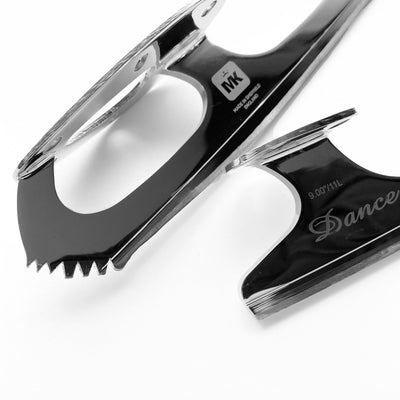
Key blade parts: Toepick (serrated teeth at the front), Rocker (the curve of the blade from front to back), Hollow (the concave groove down the center that creates inside and outside edges), Stanchion (the metal post connecting blade to boot), Heel (back of the blade), and Sweet spot (the optimal balance point, usually near the ball of the foot). Each part plays a specific role in skating mechanics.

What are the basic body positions in skating?

Key positions: Spiral (gliding on one foot with free leg raised to hip height or above), Lunge (one leg bent deeply, other leg trailing behind on the ice), Ina Bauer (back arched with feet on opposing edges), Spread Eagle (gliding on two feet facing opposite directions on matching edges), Hydroblading (extremely deep edge with body close to the ice). These are used as connecting elements and showcase flexibility and edge control.

What do common scoring terms like GOE and base value mean?

Base Value is the predetermined point value for each element based on its difficulty (e.g., a single axel = 1.10 points). GOE (Grade of Execution) ranges from -5 to +5 and reflects the quality of how you performed the element — positive for excellent execution, negative for errors. Underrotated means a jump landed short of full rotation. Downgraded means it was so short it counts as the lower-rotation version.

💜 Community & Stories FAQs

How do I find other adult skaters to practice with?

Check if your rink has an adult skating club or social skating group. Attend adult freestyle sessions where you'll naturally meet other adult skaters. Join online communities like the Adult Figure Skating Facebook groups, Reddit's r/FigureSkating, or Instagram skating communities. Many areas have informal adult skating meetups. Don't be shy — adult skaters are famously welcoming and love connecting with new skaters.

Are there adult skating clubs I can join?

Yes! Many rinks host adult skating clubs, and USFS has a formal Adult Skating Committee that supports clubs nationwide. Clubs typically organize group sessions, social events, test sessions, and competition trips together. Some meet weekly at specific freestyle sessions. Check the USFS club directory or ask your rink's skating director. If there isn't one at your rink, consider starting one — it's easier than you think.

What online communities exist for adult figure skaters?

There's a vibrant online community! Popular spaces include: Facebook groups (Adult Figure Skating, Adult Skaters Only), Reddit (r/FigureSkating), Instagram (follow hashtags like #adultskatetoo, #adultfigureskater), skating blogs and YouTube channels, and Discord servers dedicated to skating. These communities share tips, celebrate achievements, commiserate about struggles, and provide endless encouragement. They're a great resource when your rink community is small.

What skating events and camps are available for adults?

Major events include: USFS Adult Nationals (the biggest adult competition), Adult Sectionals (regional qualifiers), and various invitational competitions throughout the year. Adult skating camps offer intensive training vacations — popular ones run during summer at various locations across the country. There are also fantasy skating camps where you train at Olympic-level facilities. Many skaters plan vacations around these events!

How do I get over feeling self-conscious as an adult at the rink?

This is one of the most common concerns, and the truth is: nobody is judging you. Kids are focused on their own skating, and other adults completely understand what you're going through. Everyone started as a beginner. Wear what makes you feel confident, skate during adult sessions when possible, and remember that most people watching admire your courage. The self-consciousness fades quickly once you start focusing on the joy of skating.

What's unique about adult skating culture?

Adult skating culture is uniquely supportive and non-judgmental. Unlike the youth competitive world, adults skate because they genuinely love it — there's no parental pressure or career stakes. This creates an incredible sense of community. Adult skaters cheer for each other at competitions, share coaching tips, travel together to events, and celebrate every milestone regardless of level. It's less about winning and more about personal growth and joy.

How can I support and encourage other adult skaters?

Cheer for others during freestyle sessions and competitions. Share tips and resources you've found helpful. Celebrate their achievements on social media. Offer to film their practice or run-throughs. Be the welcoming face for new adult skaters at your rink — remember how it felt to start. Organize social skates or off-ice gatherings. A simple "great job out there!" can make someone's entire day.

How do I share my skating journey on social media?

Start by filming your practice sessions and sharing progress videos — people love seeing the journey, not just polished performances. Use hashtags like #adultskatetoo, #adultfigureskater, and #figureskating to connect with the community. Share both successes and struggles — authenticity resonates. Instagram Reels and TikTok are great for short skating clips. Don't compare your behind-the-scenes to someone else's highlight reel.

How do I find skating groups in my local area?

Start at your local rink — ask about adult sessions, clubs, and group lessons. Search Facebook for "[your city] adult skating" groups. Check your rink's bulletin board for posted flyers about clubs and events. Ask your coach if they know of groups. USFS and ISI rink finders can help locate programs near you. If nothing exists, post on social media — you might be surprised how many adult skaters are nearby looking for the same connection.

Where can I find inspiration and motivation to keep skating?

Watch adult skating competition videos on YouTube — seeing people your age performing is incredibly motivating. Follow adult skaters on Instagram and TikTok for daily inspiration. Read blogs and articles from the adult skating community. Attend live competitions (even as a spectator). Set a goal that excites you — whether it's a test, competition, or learning a specific skill. And remember why you started: because skating brings you joy. That's all the motivation you need.

📰 Want More In-Depth Content?

Dive deeper with our weekly blog featuring personal stories, detailed tutorials, product reviews, and community updates from adult skaters just like you.

Read the AST Blog →