
Looking after figure skates comes down to a few habits. After every session, dry your blades, put soakers on for the bag and open your boots up. At home, take the skates out of the bag so everything can dry, and every so often check the screws, edges, laces and boots, so small problems get fixed before they become big ones.
Key takeaways
- Dry your blades after every session, including the sides and around the screws, then put soakers on for the bag.
- At home, take the skates out of the bag, slip the soakers off and let blades and boots dry at room temperature, away from heaters.
- Every so often, check the blade screws, edges, laces, hooks and soles. It takes a few minutes and catches problems early.
- Loose blades, deep rust, cracked soles and boots that have lost their support are jobs for a sharpener or skate shop.
Figure skates aren't fussy, but they don't forgive neglect either. A few minutes of care after each session keeps rust away and your edges sharp for longer, and it helps your boots last. None of it needs special skills, just a towel, soakers, hard guards and the odd look at the screws.
This page is the routine: what to do after every session, at home, every so often, and when to hand things over to a professional. For the difference between guards and soakers, see our guards vs soakers guide. For when and how to sharpen, see our sharpening guide.
After every session
Hard guards go on as soon as you step off the ice, so your edges are protected on the walk to the bench. Once you sit down, take them off and dry each blade with your towel, including the sides, the toe pick and around the screws, where water likes to hide. Then put soakers on before the skates go in your bag, because hard guards trap moisture against the steel and that's how rust starts.
While you unlace, loosen the laces right down and pull the tongue forward so the boot can start to air out. Give the outside of the boots a quick wipe if they're wet or covered in ice shavings. Pack the skates so the blades can't knock together or rattle around loose, and keep your guards in the same pocket every time.
At home
When you get home, take your skates out of the bag and slip the soakers off so the blades can finish drying. Cold blades pick up condensation as they warm up, and a soaker that has done its job is damp by now. Give the blades another wipe if they look wet, and leave the skates somewhere with a bit of air around them.
Let the boots dry at room temperature with the laces open and the tongue pulled forward, and take the insoles out if they lift out easily. Keep them away from radiators, heaters and hair dryers. Heat isn't good for boots, many of which are made to soften and reshape when they're heated, or for the glue that holds them together.
Hang your towel and soakers up to dry, and wash them now and then. Don't leave your skates in a hot car, and a freezing one isn't much better, because nobody enjoys lacing up stiff, icy boots. Leaving damp skates zipped in a bag overnight is how rust and that famous skate-bag smell get started.


Your water bottle is looking a bit bare
Holographic skating stickers, kiss-cut and water-resistant. Pick three and the price drops on its own.
Build a bundleEvery so often: a quick check
Every few weeks, or whenever you think of it, give your skates a good look over. It only takes a few minutes, and it's a good moment to restock your skating bag too. The table covers what to check and what to do if something isn't right.
| Check | What to look for | What to do |
|---|---|---|
| Blade screws | A blade that moves when you push it sideways, or a screw that has worked loose | Tighten gently with the right screwdriver, without forcing it. If a screw won't tighten or keeps working loose, take the skate to a skate shop. |
| Edges | Nicks, burrs, rust spots, or edges that have started slipping on the ice | See the blades section below and our sharpening guide. |
| Guards | Cracks, soles worn through, grit inside, loose springs or screws | Clean them out and tighten them, or replace them. |
| Soakers and towel | Thin, smelly or no longer soaking anything up | Wash them, and replace them when washing stops helping. |
| Laces and hooks | Fraying laces, bent or loose hooks, eyelets pulling out | Replace frayed laces and keep a spare pair in your bag. Hooks and eyelets are a job for a skate shop. |
| Soles and heels | Cracks, or the sole or heel lifting away from the boot | Have a skate shop look at them before you skate on them again. |
| Ankle support | Deep creases at the ankle, or ankles that fold when you stand | Ask your fitter to check them, because it may be time for new boots. |
If your guards have cracked or your soakers and towel have stopped soaking anything up, we carry two CRS Cross sets that each come with hard guards, microfiber soakers and a matching towel. One has two-piece guards with springs that you put together and may need to trim to fit, and the other has one-piece guards with an adjustable heel strap that need no assembly. In both sets the guards are one size, and the soakers come in small, medium or large depending on your boot size.
Our own guards and soakers are just above. For the smaller things, like a blade towel and boot polish, we've put together a Blade Care Kit on our Amazon storefront so you can see them all in one place.
Heads up: this guide contains an Amazon affiliate link. If you buy through it, Adults Skate Too earns a small commission at no extra cost to you. Details.
Blades: rust, nicks and sharpening
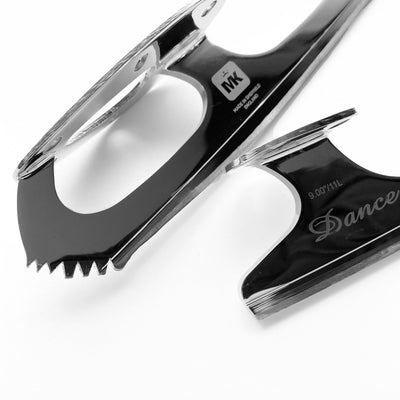
Rust shows up as orange or brown spots, often along the edge or near the screws, and it usually means a blade went into the bag wet or spent time in hard guards. Light surface rust can sometimes be cleaned off, so ask your sharpener how they'd like you to do it rather than reaching for steel wool or sandpaper, which can damage the edge. A chipped or badly rusted edge needs a sharpener.

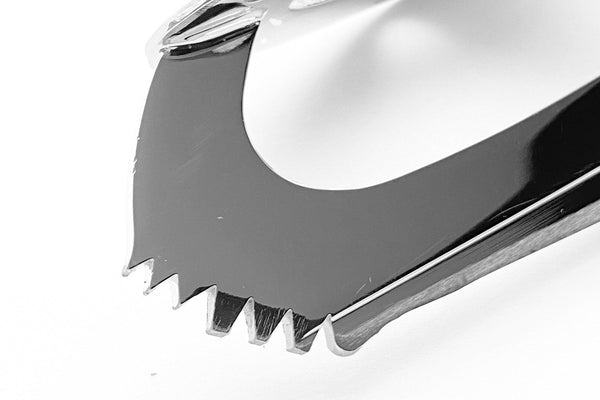
Nicks come from walking on hard floors without guards, knocking the boards or catching another blade. To check for them, gently drag a fingernail across the edge, from side to side, not along it, and feel for rough patches. Blades are sharp enough to cut skin, so never run a finger along the edge itself.
Our sharpening guide covers when to sharpen, finding a good sharpener and what hollow means. In short, edges that slip and stops that skid are the signs to watch for, and how your blades feel on the ice is a better guide than the calendar. Our blade guide covers the blades themselves, from rockers to when it's worth upgrading.
Boots: drying, cleaning and wear
Boots take a beating from sweat, ice and slush, so give them a wipe with a damp cloth when they're dirty and let them dry at room temperature. For anything beyond that, like conditioner, polish or waterproofing, follow the maker's care instructions or ask your fitter first. The wrong product, or too much of it, can soften a boot and take away support you paid for.

Keep an eye on the soles and the heel, where the blade is mounted. A crack, or a heel starting to lift away from the boot, needs a skate shop before you skate on it again. Laces wear out faster than you'd think, so replace them when they start to fray rather than waiting for one to snap mid-session.
Boots also wear out. Deep creases at the ankle, ankles that fold when you stand, or a boot that feels much softer than it used to can all mean it's losing support. Our fitting guide covers what a good fit should feel like, and our boot guide explains what to look for in the next pair.
When to see a sharpener or skate shop
Some jobs are best left to a professional, usually your sharpener or a skate shop that works on figure skates. Mounting or moving blades, fixing hooks and eyelets, and repairing soles and heels all need the right tools, and a home fix can make things worse. Take your skates in if you notice any of these.
- A blade that moves, or screws that won't tighten or keep working loose
- Deep rust, pitting, a chip in the edge or a bent blade
- Edges that still slip after a fresh sharpening, or one edge that grabs while the other slips
- A crack in the sole, or the sole or heel lifting away from the boot
- Hooks that are bent or loose, or eyelets pulling out
- Boots that have lost their support at the ankle
A skate shop would much rather fix a small problem early than a big one later. Your coach and the other skaters at your rink will know who people trust.
Putting your skates away for a while
If you're taking a break from skating, for the summer or while an injury heals, give your skates a little extra care before you put them away. Dry everything thoroughly and check the blades for rust. Once the blades are completely dry, store the skates out of the bag somewhere cool and dry, with clean, dry soakers on to protect the edges, never in hard guards or a sealed plastic bag.
Some skaters wipe a thin coat of oil on their blades before a long break, so ask your sharpener whether they'd suggest it for yours. Before your first session back, check the screws, laces and edges, and look over the boots for anything that has cracked or come loose. Then take your first skate back gently.
This is general advice from adult skaters. Your sharpener and skate shop know your skates, so if their advice differs from this page, go with theirs.
Sources
This routine matches our sharpening, skating bag and fitting guides, and the details come from the skate care advice below. Care instructions vary between makers, so check the ones that came with your boots and blades.
- Riedell Skates blog, How to Take Care of Your Figure Skate Blades (for Beginners): drying the blades and the mounting area, wearing guards to walk and putting the blades in soakers for the bag.
- Fred Bartick, Proper Blade Care Tips (iCoachSkating): guards only for walking, and soakers off at home so the blades can dry.