
Under the ISU rules used at the Olympics and World Championships, falls cost more points each time, music with lyrics is allowed, props are banned and late jumps earn a bonus. Backflips, banned for decades, are allowed again. Here are twelve rules that surprise people watching at home, and what each one means on the ice.
Key takeaways
- In senior singles, the first two falls cost a point each, the third and fourth cost two, and every fall after that costs three.
- A senior free skate is 4 minutes and a short program 2 minutes 40 seconds, with 10 seconds either way allowed.
- Costumes must be modest and dignified, men must wear full-length trousers, and a piece falling on the ice is a deduction.
- Judges' highest and lowest marks for each element are dropped before the rest are averaged.
Watch a big skating event with friends and the questions start early. People want to know why one fall made such a difference, why a skater is using a song with words, or why someone stopped in the middle. Most of the answers are in the ISU's Sports Rules, the rulebook used at the Olympics and the World Championships.
Everything below is quoted from the 2026 edition of the ISU Sports Rules for singles, pairs and ice dance, saved when we wrote this. U.S. Figure Skating's rulebook has its own versions for competitions in the United States, and adult events in particular run on different times. For how the scores themselves add up, our guide to IJS scoring explains it in plain English.
1. Falls cost more each time
Every fall is a deduction, and in senior singles it grows. The first and second falls cost a point each, the third and fourth cost two points each, and the fifth and any after it cost three. In pairs and ice dance, a fall by one partner costs a point and a fall by both costs two. The judges also reduce that element's grade of execution by 5.
2. A hand down is a fall
The rules define a fall as losing control so that most of the skater's body weight is on the ice, held up by anything other than the blades. That includes a hand, a knee, the back, the bottom or an arm. So a fall doesn't have to mean sitting down. It's the technical panel's job to confirm it.

The scoring system on two pages
Base values, GOE and the deductions that actually happen, as a PDF you print at home.
Get the cheat sheet3. Songs with words are allowed
Plenty of viewers still think skaters have to use instrumental music, but the rules say vocal music with lyrics is permitted. The program only has to be skated in harmony with the music the skater chose. Our article on the music rules of figure skating covers lyrics, time limits and music rights.
4. Programs have exact times
A senior short program is 2 minutes and 40 seconds, and a senior free skate is 4 minutes for men, women and pairs. Skaters get 10 seconds either way. The clock starts when the skater begins to move and stops when they come to a complete stop at the end. Adults in U.S. competitions have shorter maximum times with no leeway at all.
5. Stopping mid-program costs points
If a skater stops during a program, the deduction depends on how long the stop lasts. More than 10 seconds up to 20 costs a point, more than 20 up to 30 costs two, and more than 30 up to 40 costs three. A longer interruption, with up to 3 minutes allowed to resume, costs five points. Skaters resume from the point where they stopped, or just before the element they were starting.
6. Music problems aren't the skater's fault
If the music fails, the skater isn't punished for stopping. The rules say no deductions apply for interruptions caused by music problems, and the skater picks up from where the program stopped. If an element had already been called, it's deleted and the skater can do it again.
7. Skaters can stop for hazards
The same goes for problems the skater didn't cause, like lighting, the ice itself or an item thrown onto the ice. The skater can stop and report it to the referee. Once the problem is solved, they carry on from the point where they stopped.
8. Costumes have a dress code
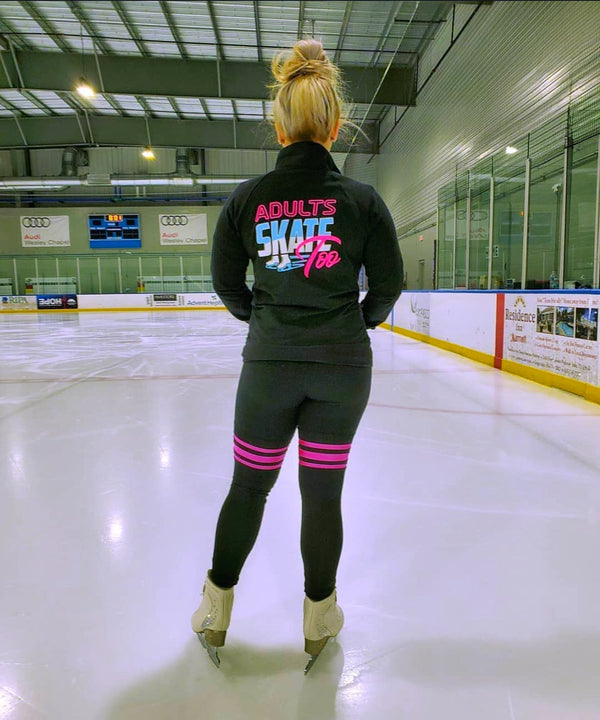
At ISU events and the Olympics, costumes must be modest, dignified and appropriate for athletic competition, not garish or theatrical. They can reflect the character of the music, but they must not give the effect of excessive nudity, and men must wear full-length trousers. A costume that breaks the rules costs a point. Our page on iconic Olympic costumes shows how much room that still leaves.
9. No props, nothing falling off
Accessories and props aren't permitted in singles and pairs, so there are no hats tossed away or fans waved about. Decorations have to be sewn on firmly, because the rules say they must be non-detachable. If part of a costume or a decoration falls on the ice, that's a one point deduction. Ice dance can have exceptions announced by its technical committee.
10. Late jumps are worth more
Jumps started in the second half of a program have their base value multiplied by 1.1. The bonus is there to reward spreading the difficulty through the program. Only the last jump element in the second half counts in the short program, and only the last three in the free skate. It gives skaters a reason to save something big for when their legs are tired.
11. Repeats are limited
In the free skate, only two of the triple, quadruple and quint jumps can be done twice, and only one of those two repeats can be a quad or a quint. If both tries of a repeated jump are solo jumps, the second is worth 80% of its value. Quint jumps, with five rotations, aren't allowed in any discipline at all.
12. Backflips are legal again
After an offseason rule change, NBC Sports reported, skaters can perform a backflip without a penalty for the first time since 1976. Ilia Malinin made his competition backflip debut soon after, at a lower-level event in Italy. The ISU itself reported that Deanna Stellato-Dudek backflips from her partner's chest in a pairs short program. Our backflip article has the whole history.
The highest and lowest marks go
For each element, the panel's grade of execution is a trimmed mean, so the highest and lowest judges' marks are deleted and the rest are averaged. With fewer than five judges, nothing is dropped. Our guide to what makes a good score puts the totals in context.
Sources
- International Skating Union, Sports Rules: Single & Pair Skating and Ice Dance 2026: rules 353 (deductions, the 1.1 factor and the trimmed mean), 501 (clothing), 502 (duration), 503 (falls), 515 (interruptions) and 611 and 612 (jump rules).
- ISU Communication 2788, Levels of Difficulty and Guidelines for marking Grade of Execution, 2026-27: the GOE reduction for a fall.
- NBC Sports, story on Ilia Malinin's backflip plans at Skate America: the rule change.
- ISU news, Yes, she can backflip: Deanna Stellato-Dudek and Maxime Deschamps.
- U.S. Figure Skating, 2026-2027 Adult Singles Free Skating Requirements: adult maximum times.