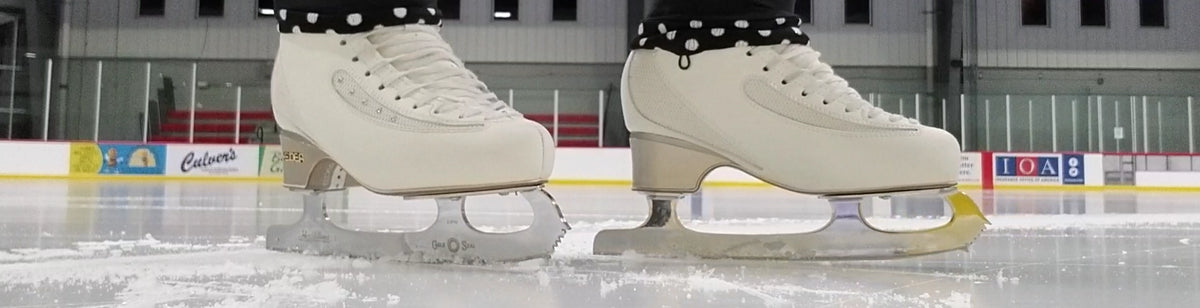

To fall safely on ice, bend your knees, get low and go down sideways onto your hip and thigh, with your chin tucked and your hands kept in. To get up, roll onto your hands and knees, put one foot flat on the ice between your hands, then the other, and stand up slowly with your knees still bent. Practice both at home before your first lesson and the real thing gets a lot less scary.
Key takeaways
- Sit down into the fall: bend your knees and land on the side of your hip, not on your hands, your knees or your tailbone.
- Tuck your chin every time you go down, and if your head does hit the ice, stop for the day and get checked, even if you feel fine.
- Get up from your hands and knees, one foot at a time between your hands, after a quick look around for other skaters.
- A helmet is a good idea while you're learning, and padded shorts or knee pads under your leggings are completely normal.
Every adult skater has a fall story, and most of us have a long list of them. You will fall in your first lesson, and you'll keep falling every time you learn something new, from your first backward glide to your first waltz jump. That isn't a sign you're doing it wrong. It's how skating works at every level, including for the people you watch on TV.
What you can change is how you land. A fall where you sit down sideways onto your hip usually ends with a bruise and a wet backside. A fall where you throw out a hand, or go straight back and let your head snap onto the ice, is how adults get hurt. The difference is mostly habit, and habits can be practiced.
How to fall without getting hurt
The moment you feel yourself going, stop trying to save it. Fighting a fall is what makes people stiffen up and land badly. Bend your knees and get as low as you can, because the closer you are to the ice, the shorter the trip. Then let yourself go down to one side, onto the padded part of your hip and thigh.
Keep your hands in. Your instinct will be to throw a hand out and catch yourself, and a straight arm hitting the ice is how wrists get sprained and broken. Aim to keep your hands near your thighs or tucked toward your chest. Once you're down, get your fingers off the ice quickly, because other skaters' blades are sharp and they may not see you in time.
Tuck your chin toward your chest as you go down. It keeps your head from snapping back into the ice, which matters most on backward falls. If you're moving when you fall, let yourself roll or slide a little with it instead of stopping dead. Sliding a few feet on your hip is fine, and it spreads the impact out instead of putting it all in one spot.
Tipping forward
Forward falls often happen when your weight drifts over your toe picks, which is very common in your first few weeks. Bend your knees, turn a shoulder and aim for your side rather than landing on your knees or reaching for the ice with your hands. If you keep landing on your knees anyway, knee pads under your leggings take the sting out while you work on it.
Going over backward
Backward falls are the ones adults worry about most, and they're the reason the chin tuck matters so much. If you feel yourself tipping back, sit down and toward one side rather than straight back, round your back a little and keep your chin down. Aim for the fleshy part of your bottom and hip, not your tailbone. You'll meet this fall a lot while learning to skate backward, so it's worth practicing on purpose.
How to get back up
Don't rush. Take a second to check that nothing hurts, then look around, because a skater coming up behind you may not be able to stop. If you've landed somewhere busy, it's fine to scoot toward the boards before you stand. Getting out of the traffic lane is good rink etiquette, and nobody minds.
Then roll onto your hands and knees. Put one foot flat on the ice between your hands, then bring the other foot up next to it. Push yourself up slowly with your knees bent, and only straighten up once you feel steady.
Some coaches teach a version where you come up onto one knee first, like you're about to propose, then push up off the front leg. Either works, so use whichever your coach shows you. What doesn't work is trying to stand straight up from sitting. Your skates slide out from under you and you end up right back where you started.
Practice falling before you need to
The best time to learn to fall is before it happens by accident. At home on a carpet, a yoga mat or the lawn, bend your knees, sit down to one side with your chin tucked, then roll to your hands and knees and stand up the way you would on the ice. Do it slowly a few times in sneakers. It feels silly, and it works.
On the ice, start from a standstill near the boards with your coach or a skating friend close by. Bend your knees, sit down sideways, then get up using the same steps. Most learn-to-skate classes start with this too. If you're heading to your first lesson, our first lesson checklist covers what else to sort out beforehand.
Gloves, padding and helmets
You don't need special gear to fall safely, but a few things make falls hurt less while you're learning. Nobody at the rink will think twice about padding, and plenty of adults wear some for their first months. Wear whatever helps you stop worrying and start skating, and leave it at home once you don't need it.
| Gear | What it protects | Worth knowing |
|---|---|---|
| Gloves | Hands, from cold, scrapes and other skaters' blades | Wear them every time you skate. Padded skating gloves add cushioning on the palm. |
| Padded shorts | Hips and tailbone | They go under your leggings, so nobody can tell. Most useful while you learn to skate backward. |
| Knee pads | Knees, on forward falls | Thin, flexible pads fit under leggings better than bulky ones. |
| Wrist guards | Wrists, if your hands go down anyway | A backup while you learn, not a replacement for keeping your hands in. |
| Helmet | Your head, mostly on backward falls | Worth it while you learn, especially for backward falls. More below. |
A helmet is worth wearing while you're learning, adults included, and it matters most for backward falls. It should sit level on your head, not tipped back, with the chin strap buckled so it can't shift. Some rinks have their own helmet rules for classes, so ask yours.
For gloves, any warm pair that lets you grip the boards is fine for your first few sessions. If you want a pair made for skating, we carry CRS Cross padded skating gloves in black and tan. What matters most is that your hands are covered every time you're on the ice.
When a fall is more than a bruise
If your head hits the ice
Stop skating for the day and get checked by a doctor, even if you feel fine. Concussion symptoms don't always show up right away, and a head knock isn't something to skate through. Tell your coach or the rink staff what happened so someone keeps an eye on you.
Most falls end with a bruise and a laugh. Stop and get help if you feel sharp pain, can't put weight on a leg or a wrist, feel dizzy or confused, or something just feels wrong. It's always fine to call it a day early. The ice will still be there next week.
Getting your nerve back after a fall
A hard fall can rattle you for the rest of the session, and sometimes for weeks. That's normal, and it doesn't mean you're not cut out for this. Right after a scary one, skate something easy you know you can do, like forward stroking or a two-foot glide, so the last thing your body remembers is skating that went well. Then tell someone about it, because every skater at your rink has a story of their own.
If the fear sticks around and starts keeping you off the ice, our page on overcoming fear on the ice has more ideas. A good coach will also help you rebuild a skill in small steps. If you haven't booked a class yet, how to start figure skating as an adult walks you through finding a rink and your first lessons.
This is general advice from adult skaters, not medical advice. Rinks set their own rules on helmets and padding, so check with yours and with your coach.