
Ice skating can be a good way to ease stress. Like other exercise, a session can calm short-term anxiety and improve your sleep, and skating takes so much attention that there's little room left for worrying about work. It isn't a treatment for anxiety or depression, but many adult skaters find the rink is where their head clears.
Key takeaways
- Research on exercise in general links it with less anxiety, better sleep and fewer symptoms of depression, and skating is exercise.
- Balancing on a blade takes your full attention, which is why many skaters say their worries go quiet at the rink.
- Small wins and rink friends do a lot for your mood, and the adult skating crowd is a welcoming one.
- Skating can be stressful too, with falls, nerves and comparisons. Go at your own pace, and skate just for fun when you need to.
- Skating doesn't replace professional help. If you're struggling, talk to your doctor, and in the US you can call or text 988 in a crisis.
Lots of adult skaters will tell you the rink is where they go to feel better. You arrive after a long day with your head full of work, and an hour later you're pink-cheeked, a little sore and thinking about nothing but your crossovers. It isn't magic, and it isn't only about skating, but there are good reasons it happens.
This article looks at what's known about exercise, stress and mood, what skating adds, and the days when skating is more stressful than soothing. For the physical side, see our article on the benefits of figure skating for adults.
What the research says
There isn't much research on adult recreational figure skating itself, but there's plenty on exercise, and skating counts. The CDC says a single session of moderate-to-vigorous activity can reduce short-term feelings of anxiety and improve sleep, and that regular activity can lower your risk of depression and anxiety over time. The World Health Organization also lists fewer symptoms of depression and anxiety among the benefits of regular activity.
The evidence is stronger than you might expect. A 2023 overview in the British Journal of Sports Medicine pulled together 97 reviews covering more than 1,000 trials, and found that physical activity improved symptoms of depression, anxiety and psychological distress across a wide range of adults. Harder exercise tended to help more. None of those studies were about skating, so think of them as good news about moving your body rather than proof about the rink.
Mayo Clinic calls exercise meditation in motion, because after a fast game or a few laps of the pool you often find you've forgotten the day's irritations. It also notes that regular exercise can build self-confidence and ease the symptoms of mild depression and anxiety. If you've ever left the rink unable to remember what you were worrying about, that will sound familiar.
Why the rink clears your head
Skating asks for a lot of attention. You're balancing on a curved blade, feeling for an edge, watching for other skaters and trying to remember what your coach said about your free leg. There isn't much room left for your inbox. Many adult skaters say that's the part they love most, because it's one of the few hours in the week when their mind stops running through lists.
Psychologists call the deepest version of this flow, when a task takes all your attention and time seems to move differently. A 1992 study asked national champion figure skaters about it, and most said they felt it only rarely. You don't need the full version, though. A few minutes of thinking about nothing but your edges can be a real break.
Music helps too. Stroking around the rink to a song you love feels more like dancing than exercise, and plenty of skaters find that the right song on the rink speakers changes their whole mood.
Small wins and getting back up
Learning to skate as an adult is a steady supply of small wins. Your first lap without touching the boards, your first stop that actually stops you, a backward glide that doesn't wobble: each one is proof you can still learn something hard. That kind of progress can do a lot for how you feel about yourself, on the ice and off it.
Falling is part of it, and so is getting back up. Most beginner falls happen at low speed, and once you've learned how to fall, a fall becomes something you can handle rather than something that just happens to you. Our guides to falling safely and building confidence on the ice help with the nerves that come with it.
Try to measure yourself against where you were a few weeks ago, not against the teenager landing jumps beside you. A quick note after each session of what you worked on, or a short video now and then, shows you how far you've come on the days it doesn't feel like it. Our goal-setting guide has more ideas.
Rink friends
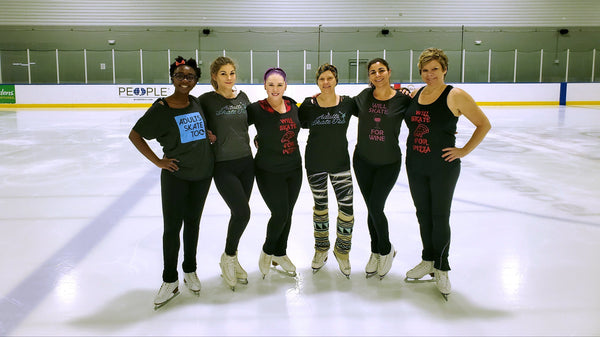
The adult skating community is a big part of why skating feels good. In an adult class or on adult ice, everyone remembers being the wobbly one, and nobody minds if you fall. Plenty of skating friendships start at the boards between turns and carry on over coffee afterward, or in a group chat about ice conditions.

Friendships like that matter for your health. The U.S. Surgeon General's 2023 advisory on loneliness and isolation linked a lack of social connection with higher risks of depression, anxiety, heart disease and stroke. A weekly class won't fix loneliness on its own, but it's an easy way to see the same friendly faces every week.
If you're on the shy side, a group class is an easier start than skating alone, and going to the same session each week helps the faces become familiar. Our guide to ice time explains adult sessions and which ones suit beginners.
Making a session calmer
A few small choices can make the rink feel more relaxing. A quieter session, like a weekday daytime public session or adult ice if your rink has it, is far less stressful than a packed Saturday afternoon. Arriving a little early means you're not rushing to lace up, and a few minutes of easy stroking before anything hard lets your body and your head settle.
Going in with one small thing to work on helps as well. "Get my forward edges a bit deeper" is a lot calmer than trying to fix everything at once. If something scary is on the list, a couple of slow breaths and one simple thought, like "bend", can help you settle, and our guide to building confidence has more on that.
And sometimes the best session is the one where you don't work on anything at all. Stroking around to the music and finishing on something you're good at counts as skating too.
When skating adds stress
Skating isn't always relaxing, and it's fine to admit it. A hard fall, a skill that won't come, a lesson where nothing works or a rink full of fast teenagers can leave you more wound up than when you arrived. Adults also tend to bring their own pressure, because we're used to being good at things.
Comparison is the big one. The skater beside you may have started at six, skate five days a week or simply have different knees, so their progress says nothing about yours. Test and competition nerves are normal too, and our pages on tests for adult skaters and your first adult competition cover the practical side.
Money and time can add stress as well, since ice time, lessons and skates add up. Our article on the real cost of adult figure skating has ideas for keeping it manageable. If skating starts to feel like another job, it's okay to drop a lesson, skip a test or go back to skating just for fun for a while.
What skating can't do
Skating can be a good part of looking after yourself, but it isn't a treatment for anxiety, depression or any other mental health condition. If low mood, worry or stress is affecting your sleep, your work or your relationships, talk to your doctor or a mental health professional. Many people find exercise works best alongside other support, not instead of it.
Injuries can hit your mood hard, especially when the rink is where you usually go to feel better. If an injury keeps you off the ice, staying in touch with your skating friends and keeping up whatever gentle activity your doctor or physio is happy with can help. If fear after a bad fall won't go away, a sports psychologist or counselor can help with that too.
If you're in crisis or thinking about harming yourself, please get help now. In the US you can call or text 988 to reach the 988 Suicide and Crisis Lifeline at any time, and in an emergency call 911. Outside the US, call your local emergency number or a crisis line in your country.
This is general information, not medical advice. If you have a mental or physical health condition, check with your doctor about what's right for you.
Sources
The health statements on this page come from public health bodies, a major medical center and peer-reviewed research. Almost all of it is about exercise in general rather than skating, so read it as a guide to what skating can offer, not a promise.
- Centers for Disease Control and Prevention, Benefits of Physical Activity: the short-term effect of a single session on anxiety and sleep, and the longer-term link with lower risk of depression and anxiety.
- World Health Organization, physical activity key facts and the WHO guidelines on physical activity and sedentary behaviour, at a glance: fewer symptoms of depression and anxiety among the benefits of regular activity.
- Singh B. and colleagues, "Effectiveness of physical activity interventions for improving depression, anxiety and distress: an overview of systematic reviews", British Journal of Sports Medicine (2023): 97 reviews, 1,039 trials, and the finding that higher intensity helped more.
- Mayo Clinic, Exercise and stress: Get moving to manage stress: exercise as meditation in motion, and its effect on self-confidence and mild depression and anxiety.
- Jackson S. A., "Athletes in flow: a qualitative investigation of flow states in elite figure skaters", Journal of Applied Sport Psychology (1992): national champion skaters describing flow as rare.
- Office of the U.S. Surgeon General, Our Epidemic of Loneliness and Isolation (2023): social connection and health.
- Substance Abuse and Mental Health Services Administration, 988 Suicide and Crisis Lifeline fact sheet: call or text 988, available at any time.