
Figure skating gives adults a workout that feels more like play, with stronger legs, steadier balance and gliding that's easy on your joints. Many skaters also find it clears their head, and the adult skating crowd is one of the friendliest around. You can start at any age, and you don't need to be fit or flexible first.
Key takeaways
- Skating works your legs, hips and core and asks for a lot of balance. Gliding is gentle on your joints, though jumps and falls are a different story.
- Depending on how hard you work, time on the ice can count toward the weekly activity that health guidelines recommend for adults.
- Like other exercise, a session can ease short-term anxiety and improve your sleep, and learning a new skill brings its own kind of pride.
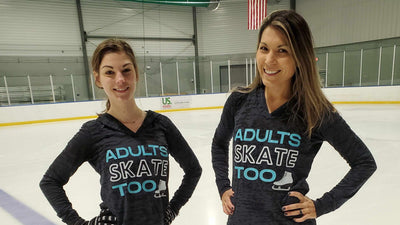
- Adult classes, adult ice and adult competitions mean there's a whole community of grown-ups learning alongside you.
- You don't need to be young, fit or flexible to start. Rental skates, stretchy clothes and gloves are enough for your first class.
Plenty of adults take up figure skating for one reason and stay for several others. Maybe you want exercise that doesn't feel like a chore, or you watched the Olympics and wondered what it would be like. Maybe you skated as a kid, or you just want something that's yours. Whatever brought you here, it's a good reason.
This article looks at what skating can do for you as an adult, what the research on exercise says, and where the limits are. If you're ready to get going, our guide to starting figure skating as an adult covers rinks, lessons and skates. For more on stress and mood, see our article on ice skating for stress relief and mental health.
Why adults take up skating
The honest answer is that it's fun. Gliding across the ice under your own power is a feeling most adults haven't had since they were kids, if ever, and the first time it happens tends to stay with you. Skating also gives you something to work toward. There's always a next skill, from your first one-foot glide to your first spin.
And you're not too old. About 490 adults competed at the 2026 U.S. Adult Figure Skating Championships, and the oldest was 85. Deanna Stellato-Dudek came back to skating at 33 and made her Olympic debut at 42. Plenty of adult skaters never compete at all, and they're having just as good a time.
A workout that feels like play
Skating is harder work than it looks. Every push uses your legs and hips, your core keeps you upright over a narrow blade, and your feet and ankles are working the whole time. Most adults finish their first few sessions with sore thighs and calves. Because you're busy thinking about your edges, it rarely feels like a workout while you're doing it.

How much of a workout depends on what you do. A gentle lap of a public session is light exercise, while stroking hard, doing crossovers or running through a program gets your heart rate up. Harvard Health's chart of calories burned estimates that 30 minutes of general ice skating uses about 210 to 294 calories for people weighing 125 to 185 pounds. Your own number depends on your size and how hard you push.
For adults, U.S. health guidelines recommend at least 150 minutes of moderate activity a week, or 75 minutes of vigorous activity, plus muscle-strengthening work on two or more days. Time on the ice can count toward the activity part when you're moving enough to raise your heart rate and breathing. Some off-ice training covers the strength side and makes skating feel easier too.
Balance you'll notice off the ice
Skating is balance practice from your very first minute. You glide on two feet, then shift your weight from foot to foot, and before long you're holding one-foot glides and edges. Standing on one leg slowly starts to feel normal. Many skaters say they feel steadier on their feet off the ice too, on stairs or an icy sidewalk.
Balance matters more as we get older. The U.S. Physical Activity Guidelines suggest that older adults include balance training alongside aerobic and strength work, because strength and balance help prevent falls. Skating isn't a replacement for a balance program your doctor or physio gives you, but it's a fun way to practice. Our guide to inside and outside edges shows how one-foot balance builds on the ice.
Easy on your joints, mostly
Gliding is smooth, so ordinary skating puts less stress on your joints than running does. Sports medicine clinicians at New England Baptist Hospital make the same point, and add that jumps and spins change the picture. Every jump landing goes through one leg, so build up slowly, warm up before you skate and land on a soft, bent knee.
Falling is the main risk for adult beginners. Learning to fall properly in your first lessons takes a lot of the sting out of it, and padded shorts, knee pads and helmets are all normal at adult classes. Our guide to falling safely and getting back up walks you through it.
Because falls are part of skating, talk to your doctor before you start if you have a joint problem, osteoporosis, a heart condition, a balance problem or a recent injury. Tired muscles the next day are normal. Sharp pain, swelling or a knock to the head mean stop and get checked.
Good for your head, too
Exercise is good for your mood, and skating is exercise. The CDC notes that a single session of moderate-to-vigorous activity can ease short-term anxiety and improve sleep, and that regular activity can lower your risk of depression and anxiety over time. A large 2023 review in the British Journal of Sports Medicine found that physical activity helped with symptoms of depression, anxiety and distress across many groups of adults.
Skating adds a few things of its own. It takes your full attention, so it's hard to worry about work while you're holding an edge, and many skaters say the rink is the one place their phone stays in the bag. Then there's the music and the people. Our article on ice skating for stress relief and mental health goes into all of this.
None of this makes skating a treatment. If you're struggling with your mental health, talk to your doctor or a mental health professional, and think of skating as something that may help alongside their advice.
Learning something new, to music
Adults don't often get to be beginners at something. Skating gives you a steady stream of small wins, like your first lap without the boards, a backward glide or a spin that goes around more than once, and each one is something you earned. That feeling of getting better is a big part of why adults stick with it.
It's creative, too. Skating to music you love feels nothing like a treadmill, and as you progress you can build a short program, pick your music and perform it at a showcase or an adult competition if you'd like to. Our guides to choosing music for your program and setting skating goals help when you're ready.
If you like milestones, U.S. Figure Skating has an adult test track, from Pre-Bronze to Gold, and our guide to tests for adult skaters explains how it works. Testing is completely optional. Plenty of adults never test and still skate happily for years.
The people at the rink
Ask adult skaters what keeps them coming back and many will tell you it's the people. Adult classes, adult sessions and clubs put you on the ice with grown-ups who are learning too, and they understand exactly why a clean stop is worth celebrating. Rink friendships tend to start at the boards and carry on over coffee afterward.

Friendships like that are good for you, and a regular place where people know your name is a nice thing at any age. If you'd like to compete one day, adult events run from local club competitions to the U.S. Adult Figure Skating Championships, with events split by level and often by age. If you'd rather not, there are showcases, holiday shows and plenty of adults who skate just for fun.
Our guide to ice time explains adult sessions and which ones suit beginners. When you're curious about competing, our page on your first adult competition covers entering, music and what to expect on the day.
Trying it for yourself
You don't need to buy anything to find out if skating is for you. Many rinks run group classes for adults, often through Learn to Skate USA, and rental skates are fine for your first sessions. Wear stretchy pants and warm layers, and bring gloves, because your hands will touch the ice. Our first lesson checklist covers the rest.
If you stick with it, a pair of properly fitted skates is the biggest upgrade you can make. Our skate fitting guide explains what a good fit feels like, and our guide to starting figure skating as an adult walks through classes, coaches and costs. Our page on your first 30 days tells you what the first month is usually like.
This is general information, not medical advice. If you have a health condition or an injury, check with your doctor before you start skating.
Sources
The health statements on this page come from public health bodies and peer-reviewed research. Most of that research is about exercise in general rather than skating in particular, so treat it as a guide to what skating can do, not a promise.
- Centers for Disease Control and Prevention, Benefits of Physical Activity: the short-term effect of a single session on anxiety and sleep, and the longer-term link with lower risk of depression and anxiety.
- U.S. Department of Health and Human Services, Physical Activity Guidelines for Americans, 2nd edition (2018): weekly aerobic and muscle-strengthening amounts for adults, and balance training for older adults.
- Singh B. and colleagues, "Effectiveness of physical activity interventions for improving depression, anxiety and distress: an overview of systematic reviews", British Journal of Sports Medicine (2023).
- Harvard Health Publishing, Calories burned in 30 minutes for people of three different weights: the general ice skating row.
- New England Baptist Hospital, Fitness benefits of ice skating: skating as low impact compared with running, and how jumps and spins change that.
- U.S. Figure Skating, coverage of the 2026 U.S. Adult Figure Skating Championships (April 2026): the number of competitors and the oldest competitor's age.
- Adults Skate Too, tests for adult skaters, your first adult competition and falling safely: the adult test track, adult competitions and how to fall.