
Ice skating lessons teach you to move on the ice safely and efficiently, combining balance and posture coaching with basic edge work, stopping, and drills that build on each other. Here is how lessons are structured, how long the basics usually take, which skates to use, and how to choose between group and private coaching.
Key takeaways
- Most beginners find a basic forward glide within a few sessions; stopping and turning take a few more weeks of steady practice.
- Group classes are the most affordable way to build fundamentals, and private lessons speed things up once your goals get specific.
- Rent skates while you try it out, then buy a professionally fitted pair once lessons become a habit.
- Look for a program that follows a recognized curriculum such as Learn to Skate USA, keeps classes small, and rents skates.
New skaters usually worry about the same three things: falling, picking the right skates, and how long it takes before they stop feeling like a baby giraffe. This guide answers all three for beginners of any age, plus the parents signing them up. It covers how organized lessons work, what curricula like Learn to Skate USA teach, how to choose skates and lesson formats, and how to blend group classes with private coaching for steady progress.
What are ice skating lessons, and who are they for?
Ice skating lessons are organized sessions that teach core skills and safe practice habits through a step-by-step curriculum. Instructors sequence balance drills, edge work, stride mechanics, and stopping so you build coordination and confidence one skill at a time. A good beginner program gets you to a steady balance, a basic forward glide, and introductory stopping and turning. That is enough to skate safely at public sessions or to continue into figure skating or hockey.
Types of lessons
Lessons come in a few formats, and the right one depends on your goals. Many skaters start in a group class and add private sessions later to balance cost and progress.
- Group lessons usually follow a standard curriculum, offer peer motivation, and suit kids and adults who like predictable progression.
- Private lessons give one-on-one feedback, quicker corrections, and a tailored practice plan, which helps skaters working toward tests or competitions.
- Clinics and workshops focus on a single area, such as jumps, spins, hockey edges, or speed work, for targeted improvement.
Ages and skill levels
Lessons serve toddlers in introductory balance programs, adults skating for fitness or fun, and young athletes training for competition. Absolute beginners of any age start with stance, marching strides, and safe falling and getting up. Intermediate classes work on edges, turns, and stops, and advanced pathways move on to spins, jumps, and more complex edge work. Young children do best with short, game-like sessions, and helmets and sensible instructor-to-student ratios matter most for the littlest learners.
Teens and adults can start any time, and adult classes use drills and pacing that address fear and confidence. Our complete guide to adult ice skating lessons goes deeper on the grown-up version. Aspiring competitive skaters follow busier schedules that mix group classes with private coaching.
How long does it take to learn to ice skate?
It depends on your goals, how often you practice, your instruction, and any balance experience you bring from other sports. Most beginners can stand steadily and manage a basic forward glide within a few supervised sessions, because early drills focus on balance and weight transfer. Stopping and turning usually take several group lessons or a few private ones. Short, focused practice two or three times a week speeds this up and helps the movements stick.
| Skill | Typical time to competency | Practice needed |
|---|---|---|
| Standing and forward glide | 1-4 sessions | 1-2 short sessions per week |
| Basic stopping (snowplow, T-stop) | 4-8 sessions | 2 sessions per week with drills |
| Crossovers and turning | 8-20 sessions | 2-3 sessions per week |
| Comfortable public skating | 6-12 weeks | Weekly lessons plus practice sessions |
| Test-level skills and jump basics | 3+ months | Regular lessons plus private coaching |
Treat these as ballpark figures rather than deadlines. Steady, deliberate practice produces the most reliable gains, and the skaters who show up consistently tend to pass the skaters who show up heroically once a month.
Basic skills taught in beginner lessons
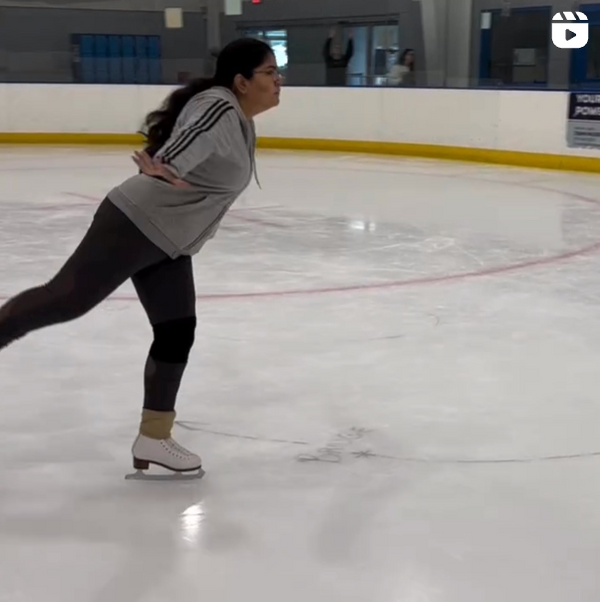
Beginner lessons focus on four areas: balance and stance, forward strides, safe falling and recovery, and basic stopping. Instructors teach a stable athletic stance, with hips, knees, and ankles aligned and knees bent, so you control your center of mass instead of relying on your eyes. Forward glides and marching strides introduce weight transfer and blade contact, with relaxed, longer strides and your head up. Stopping usually starts with the snowplow and moves toward the T-stop as balance improves.
Each drill progresses in small steps through short, repeated runs that build muscle memory. Our basic skating techniques guide previews the early skills, and how to fall safely in figure skating covers the part nobody wants to practice but everybody should.
How skill progression works
Progression in organized lessons is milestone-based. Coaches use checklists or level tests to mark when you're ready for the next skills, which keeps instruction objective and gives you clear short-term goals. Curricula like Learn to Skate USA sequence skills from basic balance to crossovers, edges, and introductory jumps or hockey skills, and coaches assess each level before you move up. How fast you advance depends on practice and your own learning rate.
Frequent short practice sessions between lessons reinforce what you learned, and video review and regular feedback keep you and your coach working toward the same goals. Adding an occasional private lesson to a group class gives you targeted correction when a skill stalls. When you reach that stage, our crossovers tutorial and free practice tracker help between lessons.
If you like reading about skating or writing your goals down on paper, we've put together a skating books list on our Amazon storefront, with memoirs by skaters and a few journals and planners for keeping track of your progress.
Heads up: this guide contains an Amazon affiliate link. If you buy through it, Adults Skate Too earns a small commission at no extra cost to you. Details.
How do you choose the right ice skates for lessons?

Your skates affect comfort, ankle support, and how quickly your technique develops, because boot fit and blade type both influence balance and edge control. A proper fit means a snug heel, a secure ankle, and no extra toe room that lets your foot slide around and blurs your feel for the edges. Figure, hockey, and recreational skates each offer different support and blades suited to different lessons. Match the skate to the lessons you're taking.
| Skate type | Fit and support | Ideal for | Rental |
|---|---|---|---|
| Figure skates | Close ankle support, longer blade with a toe pick | Figure lessons, spins, jumps | Commonly available to rent |
| Hockey skates | Stiffer, heavier boot; shorter blade with no toe pick | Hockey lessons and quick turns | Common in rink rental fleets |
| Recreational skates | Softer, comfort-focused support | Casual lessons and public skating | Easy to rent |
Figure skates vs. hockey skates
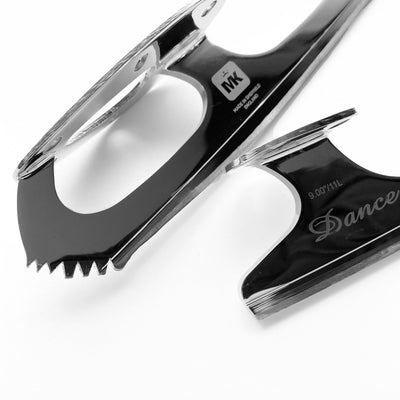
Figure skates have a longer blade with a toe pick and a curved rocker near the toe, which helps with spins, jump takeoffs, and edge control. Hockey skates have a shorter blade with no toe pick, built for quick acceleration and tight turns. Figure boots lace higher up the ankle and are lighter than the heavier composite boots most hockey skates use. Figure lessons call for figure skates, and hockey-style lessons for hockey skates.
Recreational skates prioritize comfort and are the most forgiving for casual learners. Whatever you choose, picking the right skate early keeps you from developing compensating habits. If you want to understand why the curve of a figure blade matters so much, read understanding rockers.
Should you rent or buy skates?
Rent for your first few lessons to test comfort and commitment without an upfront purchase. Buy once lessons become regular, often after several weeks or once you move past the basics, because a properly fitted pair improves control and comfort and cuts down on blisters. Get a professional fitting that checks heel lock, ankle support, and blade alignment, and match boot stiffness to your discipline. Only buy used if you can verify the boot's condition and sizing. Once you have your own pair, guards, soakers and a bag to carry them in come next, and our gift guide has all three if anyone's asking.
Consider upgrading when you reach milestones like consistent crossovers, cleaner edges, or jump preparation, since that is when fitted skates become a real performance benefit. Our figure skate fitting guide, new vs. used figure skates, and best boots and blades for adult beginners cover the next steps.
What are the benefits of taking ice skating lessons?
Lessons combine cardio with balance and strength work in a structured setting, so the benefits are physical, coordination-related, and social. Skating builds lower-body strength, core stability, and proprioception (your sense of where your body is) while giving you aerobic exercise with less joint impact than running. It also sharpens movement patterns that carry over to other sports and daily life. And a rink full of people working on the same wobbly skills is a surprisingly motivating place to be.
Fitness and coordination
Edge work and single-leg glides challenge your balance and strengthen the stabilizer muscles around the ankle, knee, and hip. Your core stays engaged through strides and turns, and repeated strides build the quads, glutes, and calves. Continuous skating or interval-style drills raise your heart rate while staying low-impact, and lessons can adjust the intensity to your fitness goals. Better coordination and fitness also make it easier to move through lesson levels and lower your injury risk.
For more on what skating does for your body and brain, see our guide to adult skating benefits.
Social and recreational opportunities
Group lessons and rink communities create friendships through shared progress, and exhibitions, ice shows, and hockey scrimmages give you concrete milestones to work toward. Beginner groups often bond in a way that encourages regular attendance and practice outside of class. Family-friendly programs let parents and kids skate together, and skaters who pursue tests or competitions get performance opportunities that deepen the hobby. All of that adds accountability and fun to the exercise.
Where can you find ice skating lessons near you?
Start with search phrases that include your location and goal, like "ice skating lessons near me," "adult ice skating lessons," or "hockey skating lessons near me." Providers range from community rinks and university recreation centers to private academies. Look for a progressive curriculum tied to a recognized program such as Learn to Skate USA, the learn-to-skate program endorsed by U.S. Figure Skating, USA Hockey, and US Speedskating. Rental skates and beginner-friendly session times also help.
Questions to ask a rink or skating school
Before you register, a short checklist helps you compare programs on the things that matter most for beginners.
- Does the program follow a recognized curriculum, and how are levels assessed?
- What are the class sizes and instructor-to-student ratios for beginners?
- What experience and credentials do the coaches have?
- Are rental skates available, and are there beginner-friendly session times?
- What safety procedures does the rink follow?
Our guide to understanding ice time and sessions explains how lessons, public skates, and freestyle sessions fit together once you start practicing on your own.
Online booking and memberships
Rinks offer several ways to pay, so pick the one that matches how often you plan to skate. Digital waivers and mobile booking also make registration quicker than it used to be.
- Single classes suit casual learners or anyone trying a first lesson without commitment.
- Class packs and subscriptions lower the per-class cost for regulars and simplify recurring bookings.
- Seasonal enrollments and memberships can include savings, early access to popular class times, or discounted skate rental.
Private vs. group ice skating lessons: which is right for you?
Private lessons deliver individual instruction, rapid feedback, and a custom practice plan, which is ideal if you have specific goals or are preparing for tests and competitions. Group lessons offer peer motivation, a structured curriculum, and a lower cost per lesson, which works well for beginners, social learners, and families. A hybrid approach often gives the best balance of cost and progress: group classes build fundamentals while private sessions fix technique. The table below compares the formats.
| Format | Class size | Cost | Pace and coach attention |
|---|---|---|---|
| Private | 1:1 | Higher | Fast-paced, individual feedback |
| Group | Several skaters per coach (varies by rink) | Lower per person | Standard pacing with peer support |
| Clinic | Small groups | Mid-range | Focused improvement on one skill in a short time |
Advantages of private coaching
Private coaching speeds up learning by isolating technical faults and designing drills to fix them. One-on-one time lets your coach correct blade work and posture in real time and set goals for test elements, choreography, or jumps. It especially helps skaters returning from injury and adults working through fear, since the pace is set around you. Our guide to finding the right figure skating coach as an adult explains what to look for.
How group lessons help
Group lessons build skills cost-effectively through peer learning, standardized curricula, and consistent pacing. You learn from watching classmates, partner drills, and curriculum-based feedback that keeps progression predictable. Groups also make skating less intimidating for new adults, because everyone is making mistakes together and nobody is watching you as closely as you think. Combined with an occasional private lesson, a group class gives you a social training environment that keeps you coming back.
Where to start
Lessons give you fitness, new skills, and a community, and the path is the same at any age: pick a format that fits your goals, get skates that fit your feet, and practice consistently. Group classes are the usual starting point, with private sessions added when you want faster progress on specific skills. Before your first class, run through our first skating lesson checklist, then find a local program that fits your schedule and book it.
Sources
Program details come from Learn to Skate USA and its partner organizations. Skill timelines are AST's rough guide, not an official standard, and class sizes, prices, and booking options vary by rink.
- Learn to Skate USA program overview, as described by US Speedskating (endorsement by U.S. Figure Skating, USA Hockey, US Speedskating, and Special Olympics).
- Figure vs. hockey skate design comparisons from skating retailers and BestReviews (blade length, toe pick, boot construction).