The Salchow Jump: Your First Figure Skating Jump
Master the easiest figure skating jump with our step-by-step tutorial for adult beginners
What's Inside
What Is a Salchow Jump and Why Start Here?
The salchow jump is an edge jump that takes off from a backward inside edge and lands on the opposite foot's backward outside edge. Think of it as a one-revolution turn that happens to involve some air time.
Here's why coaches universally recommend starting with the salchow:
- No toe pick drama - Unlike toe loops, you're not stabbing the ice and hoping for the best
- Natural entry - The setup flows from basic backward skating skills you already have
- Forgiving landing - The rotation helps you find that back outside edge naturally
- Confidence builder - Success here makes other jumps feel possible
Salchow vs Other Figure Skating Jumps
Before you start dreaming of harder jumps, understand why the salchow jump figure skating progression makes sense:
Start with the salchow. Trust the process.
How to Do a Salchow Jump: Step-by-Step Tutorial
Learning how to do a salchow jump isn't about copying what you see in competition footage. It's about building the movement piece by piece until your body knows what to do.
Pre-Jump Foundation
🏁 Before You Jump
Master these skills first: comfortable backward skating, one-foot glides (3-4 seconds), basic edge awareness, and controlled backward crossovers. If you're still working on these fundamentals, check out our guide on getting started as an adult figure skater.
The Setup Phase
Step 1: Start with backward crossovers around the circle
- Build modest speed - not racing, not crawling
- Focus on rhythm and flow, not raw power
- Keep your head up and shoulders square
Step 2: The "step forward"
- From your right back outside edge, step forward onto your left foot
- This creates the backward inside edge for takeoff
- Think "step and glide" not "step and panic"
Takeoff Technique
Step 3: The launch
- From that left back inside edge, swing your right leg and both arms forward
- Press into the ice with your left foot
- Keep your core engaged (those Pilates classes finally pay off)
Step 4: Air position
- Pull arms across your body
- Keep feet close together
- Look in the direction you're rotating, not down at the ice
Step 5: Landing
- Extend your free leg behind you
- Land on your right back outside edge
- Hold that landing position like you mean it
Common Salchow Jump Mistakes (And How Adults Can Fix Them)
Every adult skater makes these mistakes. It's practically a rite of passage.
The Edge Cheat
What it looks like: Taking off from a flat or wrong edge
Why adults do it: Fear makes us want both feet on the ice as long as possible
The fix: Practice the takeoff edge on its own until it feels normal
Under-Rotation Drama
What it looks like: Landing facing the wrong direction or on two feet
Why it happens: Not committing to the full rotation
The fix: Work on spinning in place first, then add the jump
Speed Issues
- Too fast: You panic and everything goes wrong
- Too slow: No momentum for rotation or height
- Sweet spot: Fast enough to maintain flow, controlled enough to think
Adult-Specific Mental Blocks
Let's be real about what's happening in your head:
🧠 Mental Game
"I'm going to fall backward and die" - Valid concern. Practice falling safely. Seriously. It helps.
"This worked in my lesson but now I'm alone and terrified"
Normal. Group practice sessions help build confidence.
"That 12-year-old just landed a double axel while I'm struggling with this"
Stop looking at the kids. They have different physics and zero fear. Focus on your own journey - check out what only adult skaters understand.
Realistic Timeline: How Long Does It Take Adults to Learn a Salchow?
Here's what nobody tells you about learning figure skating jumps for beginners: the timeline varies wildly, and that's completely normal.
Factors That Speed Things Up
- Previous athletic experience (dance, gymnastics, martial arts)
- Frequency of practice (2-3 times per week vs once)
- Quality coaching that matches your learning style
- Not being afraid to fall
Factors That Slow Things Down
- Adult fear responses (totally normal)
- Inconsistent ice time
- Overthinking every component
- Comparing yourself to others
Safety and Fear Management for Adult Salchow Learners
Learning the salchow jump figure skating move as an adult means acknowledging that you have more to lose than teenage skaters. That's not pessimism - it's smart risk management.
Proper Falling Technique
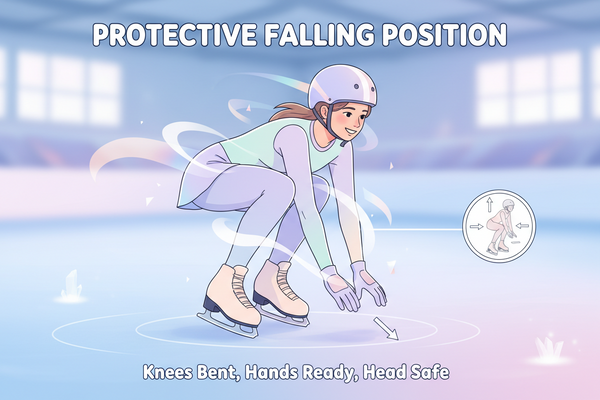
- Don't try to catch yourself with your hands
- Tuck your chin to protect your head
- Try to fall forward or to the side, not straight back
- Keep your knees bent and arms close to your body
Building Confidence Gradually
- Master the entry and takeoff on their own
- Use off-ice visualization and practice
- Consider harness work if your rink offers it
- Find practice partners at your level
🏋️♀️ Off-Ice Training
Strengthen your jumping foundation with targeted exercises. Our off-ice training guide includes specific drills for jump preparation and rotational awareness.
Gear Considerations
Padded shorts: Not necessary but can boost confidence during learning phase
Helmet: Personal choice, but brain injuries are permanent
Proper skates: Well-fitted boots that support your ankles
If you're wondering about gear costs, our guide on the real cost of adult figure skating breaks down what you actually need to invest in.
Ready to Start Jumping?
Get the gear and confidence you need to land your first salchow
Ready to start your jump journey? The salchow jump might seem impossible right now, but thousands of adult skaters have been exactly where you are. Take it one element at a time, celebrate small victories, and remember - every Olympic champion started with their first jump.
Your skating story is just beginning.
Frequently Asked Questions About the Salchow Jump
Got questions about learning the salchow? We've got answers.
Yes, the Salchow is widely considered the easiest figure skating jump to learn, which is why it's typically the first jump taught to beginners. It takes off from a back inside edge and uses a natural rotation that feels less intimidating than edge jumps like the Lutz or Flip. If you're just starting out, our guide to starting figure skating as an adult can help you understand where the Salchow fits into your overall learning journey.
Most adult beginners can expect to land their first Salchow somewhere between a few months to over a year of consistent practice, depending on ice time, fitness, and prior skating experience. Adults generally take longer than children due to factors like fear management and body awareness, but that doesn't make it impossible. It just requires patience and a good coach. For a realistic look at the full investment involved in adult figure skating, check out The Real Cost of Adult Figure Skating.
The Salchow jump starts with a left back inside edge, followed by a swing of the free leg to generate rotation, a single revolution in the air, and a landing on the right back outside edge. Before attempting the full jump, skaters should master the back inside edge entry, a strong swing through, and proper landing position. You can find a full breakdown of all figure skating jumps and how they compare in our guide to every figure skating jump explained.
Learning figure skating jumps as an adult is generally safe when done progressively with proper instruction and fall technique. The key is learning how to fall correctly before attempting any jump, which significantly reduces the risk of injury on the ice. We strongly recommend reading our guide to falling safely in figure skating before you start working on jumps, and always practice under the supervision of a qualified coach.
Yes, you need proper figure skates with a toe pick and sufficient ankle support to safely attempt the Salchow. Recreational or hockey skates are not suitable for jumps. A well-fitted, entry-level figure skate is typically enough to get started, and you don't need to spend a fortune as a beginner. Check out our guide to figure skating apparel and our top ice skating gear for beginners to find the right fit for your budget.
Absolutely. Many adult skaters who return after years away are able to learn or relearn the Salchow with the right approach and realistic expectations. Muscle memory can help, but it's important to rebuild your edge skills and confidence before jumping back into jumps. Our guide to returning to figure skating as an adult covers exactly how to structure your return safely and effectively.
Before attempting the Salchow, you should be comfortable with back inside edges, mohawks or three-turns, stroking with confidence, and basic balance on one foot. Building a strong foundation in these edge skills makes the jump feel far more natural and reduces the fear factor significantly. Our comprehensive beginner figure skaters guide outlines the progression of skills you'll want in place before moving on to jumps.
According to ISU scoring rules, the Salchow jump has the following base values: Single Salchow = 0.40 points, Double Salchow = 1.30 points, Triple Salchow = 4.30 points. These base values are current for the 2024-2025 season and are used in competitive figure skating. For adult recreational skaters, understanding these values helps you see where your skills fit in the broader skating world.
The Salchow jump was invented by Ulrich Salchow, a Swedish figure skater and 10-time World Champion. He first landed the jump in competition in 1909, taking off from a back inside edge and landing on a back outside edge of the opposite foot. The jump was subsequently named after him and remains one of the most fundamental elements in figure skating. Salchow won Olympic gold in 1908 when figure skating was first contested at the Summer Olympic Games in London.
The Salchow is unique because it's the only edge jump that takes off from a back inside edge, making it feel more natural and easier to learn than jumps like the Lutz (back outside edge) or Flip (back inside edge on opposite foot). The Axel is the only forward-edge jump, making it the first jump attempted, but the Salchow is typically the first rotating jump. Understanding these differences helps you see why coaches usually progress students from Axel to Salchow to Loop, then to Lutz and Flip.