How to Fall Safely in Figure Skating: A Beginner's Guide to Ice Safety
Master the techniques that build confidence and protect your adult body on ice
Let's be real: as an adult beginner, you're probably more worried about falling than landing that single toe loop. We've all been there. You're gliding along, feeling pretty good about yourself, and then BAM. Ice meets face. Or tailbone. Or ego.
Good news: learning to fall safely in figure skating is actually a skill you can master. It's not just about damage control, it's about building the confidence you need to actually improve. Because here's the thing: you can't learn to skate if you're terrified of hitting the ice.
Why Learning to Fall Safely Matters More Than You Think
Adult bodies don't bounce like eight-year-old bodies. We've got mortgages, bad backs, and joints that creak when we get out of bed. That fear of falling? It's not irrational. It's practical.
The Adult Beginner Reality Check
We don't bounce like we used to. Your 35-year-old hip isn't going to shrug off that backward fall the way it might have in middle school. Recovery time is real. So is the anxiety that comes with knowing your body needs more TLC.
Joint protection is priority. Kids can fall a hundred times and pop right back up. Adults need strategy. We need to protect our wrists, tailbones, and knees, basically everything that keeps us functional in real life.
Confidence building takes time. Every bad fall sets you back mentally. But every controlled, safe fall builds trust in yourself and the process. Master the technique, and you'll actually start pushing yourself harder.
Pro Tip
The skaters who progress fastest aren't the ones who never fall. They're the ones who fall safely and get back up quickly. Every adult skater has been where you are now.
Essential Figure Skating Falling Techniques for Beginners
Here are the four basic fall types every adult beginner needs to master. Yes, you're going to practice falling on purpose. Trust the process.
The Controlled Forward Fall
When you're moving forward and feel yourself losing it:
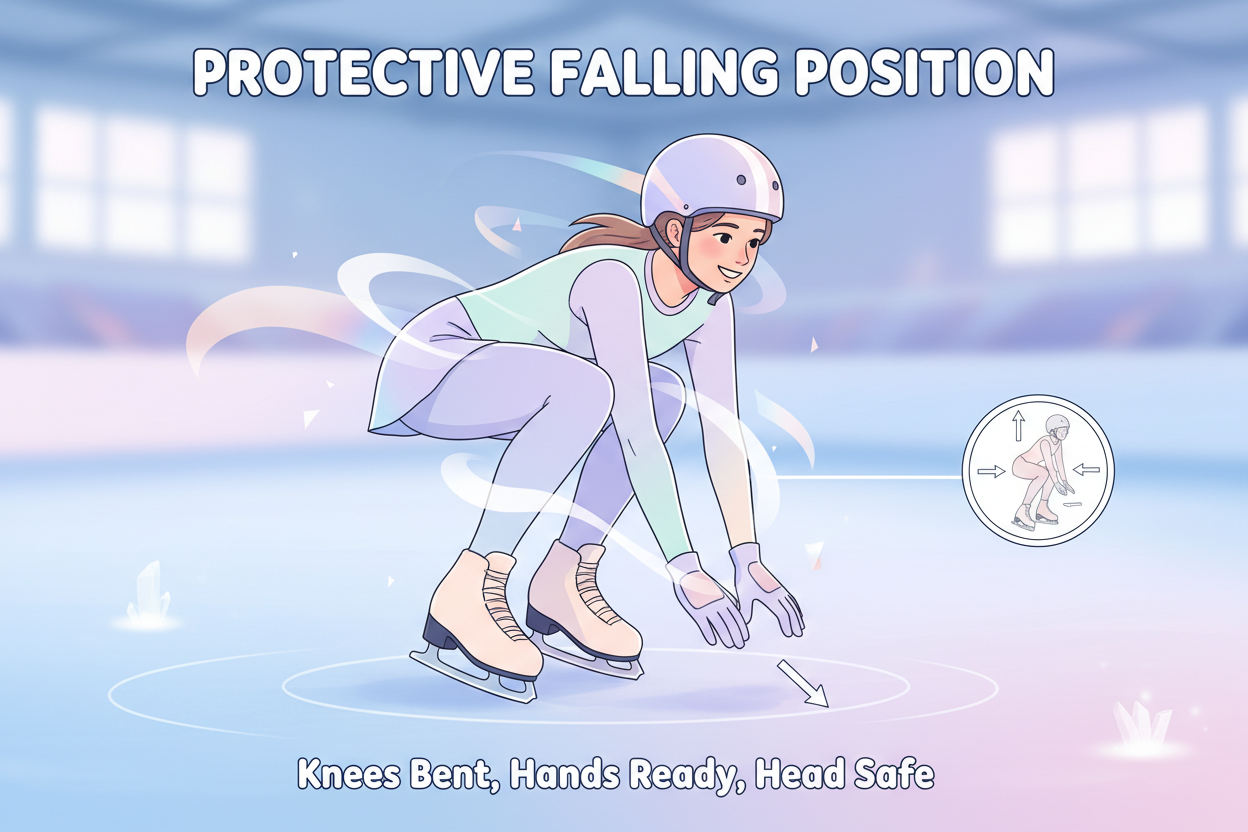
- Bend your knees immediately. Don't try to stay upright. The fall is happening, now you're just managing it.
- Roll to your side hip. Aim to land on the meaty part of your hip and thigh, not straight down on your knees or forward on your hands.
- Protect your wrists and head. Keep your hands up and away from the ice. Tuck your chin so you're not leading with your face.
The Backward Sit-Down Fall
This is the classic "learning to skate backward" fall:
- Tuck your chin to your chest. Look at your belly button, not up at the ceiling. This keeps your head from snapping back.
- Round your back. Think angry cat. You want to create a curve that will help you roll through the fall.
- Land on your bottom, not your tailbone. Aim for the meaty part of your glute muscles, not that bony protrusion that will make you see stars.
The Side Fall Recovery
When you're going sideways (usually during crossovers):
- Roll with the momentum. Don't fight it. Use that sideways energy to your advantage.
- Keep your arms tucked. No starfish arms reaching for the ice. Keep everything compact.
- Use your hip and thigh to absorb impact. These are your biggest, strongest muscle groups. Let them do the work.
How to Fall on Ice Without Getting Hurt: Joint Protection Strategies
The key to safe falling isn't just technique, it's preparation. Both mental and physical.
Essential Protective Gear for Adult Beginners
Adult Beginner Safety Kit
A complete protection setup that lets you practice falling without fear.
Essential Items
- Padded shorts for tailbone protection
- Hard-shell wrist guards
- Non-slip knee pads
- Well-fitting helmet for beginners
Skip These
- Flimsy fabric wrist guards
- Knee pads that shift when you move
- Oversized or loose-fitting protection
- Gear that restricts movement too much
The Turtle Position Technique
When you feel a fall coming and can't control which direction:
- Keep your limbs close to your body. Think defensive position: arms tucked, knees bent, everything compact.
- Protect your spine alignment. Don't twist. Fall as one unit, not like a rag doll.
- Quick recovery positioning. Land already thinking about how you'll get back up.
Common Mistake
Never try to break a fall by extending your arms straight out. This puts enormous stress on your wrists and shoulders. Keep your arms tucked and let your larger muscle groups absorb the impact.
Beginner Ice Skating Safety: Building Your Fall Confidence
This isn't just about physical technique. Half the battle is mental. You need to trust that you can fall safely before you'll take the risks necessary to improve.
Off-Ice Fall Practice Routine
Living room carpet drills. Practice your falling positions on carpet first. Get the muscle memory down before you add ice and speed.
Yoga mat progressions. Start slow, build up to more dynamic movements. Practice rolling through falls. Off-ice training is just as important as on-ice practice.
Mirror work for form check. Make sure you're actually doing what you think you're doing.
On-Ice Confidence Building
Start with kneeling falls. Begin from a stationary kneeling position, then progress to moving.
Practice getting up efficiently. This is half the skill. If you can get up gracefully, falling becomes less scary.
Use the wall for support initially. No shame in the support game. Build confidence gradually. Starting figure skating as an adult is all about building confidence step by step.
| Practice Stage | Location | Focus |
|---|---|---|
| Week 1-2 | Off-ice (carpet/mat) | Basic positions and muscle memory |
| Week 3-4 | On-ice (stationary) | Controlled falls from kneeling |
| Week 5+ | On-ice (moving) | Dynamic falls with momentum |
Getting Back Up Gracefully (Yes, There's a Technique)
Getting up from a fall efficiently isn't just about looking less awkward (though that helps). It's about energy conservation and injury prevention.
The Four-Point Recovery Method
Roll to your hands and knees. Don't try to get up from whatever weird position you landed in. Get organized first.
One foot up, then the other. Place one blade on the ice, then push up to get the other foot down. Don't try to stand straight up from hands and knees.
Use your edges for stability. Once you're up, use inside edges to steady yourself before pushing off. Mastering your snowplow stop helps with overall balance and confidence.
The goal isn't to never fall. The goal is to fall safely and get back up quickly enough that you can keep practicing.
Quick Recovery Tip
Practice getting up when you're not actually fallen. Kneel down on purpose, then use the four-point method to stand. This builds the muscle memory you need when you're actually down on the ice.
When Falls Go Wrong: Red Flags and Recovery
Most falls are fine. Some aren't. Here's how to tell the difference.
When to take a break versus push through: If you're shaken up mentally, take five minutes to collect yourself. If you're hurt physically, take more than five. Listen to your body, it's the only one you've got.
Injury Prevention Reality
Adult figure skaters who invest in proper protective gear and falling technique have significantly fewer injuries and faster recovery times. Smart skating includes smart safety preparation.
Gear Up for Safe Practice
Protect yourself while you build confidence on ice
Frequently Asked Questions
To fall safely in figure skating, bend your knees immediately when you feel yourself losing balance, roll to the side of your hip rather than landing straight down, and keep your hands up to protect your wrists. For backward falls, tuck your chin to your chest, round your back, and aim to land on your bottom muscles rather than your tailbone. The goal is not to fight the fall but to manage it through proper body positioning. Practice these techniques off-ice first on carpet before progressing to the ice.
Adult beginner figure skaters should wear padded shorts for tailbone protection, hard-shell wrist guards to prevent instinctive hand-braking injuries, and non-slip knee pads that stay in place during movement. This protective gear is especially important for adult beginners whose bodies take longer to recover from falls than younger skaters. Wearing proper protective gear from your first session significantly reduces fear and helps your body learn correct falling patterns faster.
Learning to fall safely is one of the most important skills for adult figure skaters because adult bodies have longer recovery times and less natural resilience than children's bodies. Every uncontrolled fall risks injury and builds mental fear, while every managed, safe fall builds confidence and trust in your own abilities. Adults simply cannot progress on the ice without accepting that falls will happen and learning to handle them well. This is why coaches always prioritize fall technique in the first lessons.
The key to protecting your wrists when falling on ice is to resist the instinct to throw your hands out to catch yourself, since that reflex is one of the most common causes of wrist fractures and sprains. Instead, practice keeping your arms bent and hands up near your chest so your hip and thigh absorb the impact rather than your outstretched palms. Wearing hard-shell wrist guards during practice sessions adds an extra layer of protection while you build the muscle memory for safer falling technique.
After a fall, roll onto your hands and knees first rather than trying to stand straight up from a sitting position, which can cause another fall. Place one skate flat on the ice, then the other, using your hands on your knee for support as you push yourself upright. Taking a breath before you rise also helps you check for any discomfort before putting full weight on your joints. This four-point recovery method is much more efficient and less injury-prone than other recovery methods.
Most adult beginners start to feel more comfortable with falling after several dedicated practice sessions focused specifically on fall technique rather than other skating skills. Comfort comes faster when you practice controlled, intentional falls in a low-risk environment rather than waiting for accidental falls to teach you. Wearing proper protective gear from day one also significantly reduces fear and helps your body learn the correct muscle patterns sooner. Most skaters report increased confidence within two to three weeks of focused fall practice.
Yes, taking lessons with a qualified coach is one of the best ways for adult figure skaters to learn safe falling techniques, since a coach can correct your body positioning in real time before bad habits form. Group lessons designed specifically for adults are widely available and often incorporate fall practice as a core part of early sessions. Even a few lessons early on can prevent the kinds of injuries that sideline beginners for weeks and significantly accelerate your progress on the ice.
The turtle position is a defensive falling technique used when you can't control which direction you're falling. In this position, you keep all your limbs close to your body, arms tucked, knees bent, and everything compact and defensive. This protects your joints and vital areas from impact while minimizing the chance of awkward limb positioning that could cause injury. Practicing this position builds muscle memory so your body automatically adopts it when you feel an uncontrolled fall coming.
Beginner figure skaters should dedicate at least 10 to 15 minutes of each practice session to intentional falling practice, especially in the first month of learning. Start off-ice on carpet or yoga mats, then progress to on-ice at the wall or near the boards. As your technique improves, you can reduce dedicated practice time but continue to review falling positions regularly. Consistent practice builds the automatic muscle memory you need for real-world falling situations.
Common injuries from falling in figure skating include wrist sprains and fractures (usually from throwing hands out), tailbone bruising (from backward falls), hip and knee injuries, and ankle sprains. Head injuries are less common if you wear a helmet and tuck your chin properly. Most of these injuries can be prevented or significantly reduced through proper falling technique, protective gear, and gradual progression of practice intensity. If you experience sharp pain or inability to put weight on a joint, seek medical attention promptly.