
What to Wear to Figure Skating Practice
The adult skater's guide to base layers, outerwear, leggings, and rink-bag essentials - so you stay warm, move freely, and look like you belong.
Layer moisture-wicking fabrics, skip the cotton, and dress for your rink's temperature ⛸️Why Your Practice Clothes Actually Matter
Picking figure skating practice clothes isn't about fashion - it's about function. The right gear keeps you warm without restricting jumps, lets your coach see your body lines, and manages sweat so you don't freeze between sets. The wrong gear (hello, bulky cotton hoodie) does the opposite: it holds moisture, hides technique faults, and turns a productive session into an uncomfortable one.
Four things matter most when choosing what to wear to skating practice:
Comfortable, flexible, layered clothing is the foundation of good skating practice - and it doesn't have to be expensive. A few well-chosen pieces go a long way. For a broader overview of everything you need as a beginner, see our complete starter guide.
Which Base Layers Work Best for Figure Skating?
Base layers sit against your skin and do three jobs: move sweat away, keep you warm, and provide a slim foundation for everything on top. Look for polyester-spandex blends labeled "moisture-wicking" or "quick-dry" - these pull sweat out to evaporate so you stay warm without feeling damp.
Aim for pieces with 8 - 12% spandex for shape recovery. Higher-waisted leggings give core support through bends and jumps, and long sleeves with thumbholes keep fabric from riding up during spins.
| Base Layer | Fabric / Features | Best For |
|---|---|---|
| Skating leggings | Polyester-spandex; over-the-boot option | Everyday practice - compression, full coverage, blade clearance |
| Long-sleeve wicking top | Lightweight polyester; flat seams, thumbholes | Multi-skill sessions - sweat control with full arm mobility |
| Fitted tank / short sleeve | Breathable polyester mesh | Intense warm-ups or under a mid-layer in cold rinks |
💡 Fabric Rule of Thumb
If it says "cotton" on the label, put it back. Cotton absorbs sweat, stays wet, and chills you the moment you stop moving. Polyester-spandex blends wick moisture and dry fast - that's what you want next to your skin.
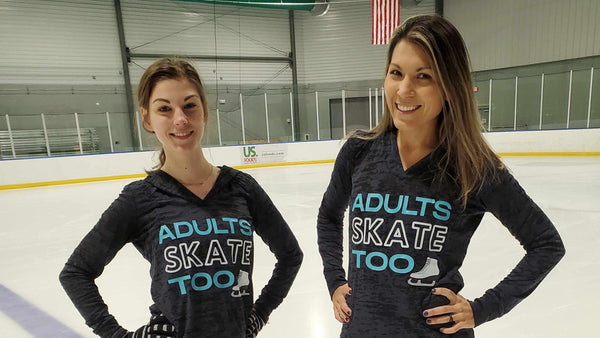
Adults Skate Too carries adult-specific leggings and long sleeves designed for skating movement and comfort if you want practice-ready pieces without the junior sizing.
How to Choose Jackets and Outerwear for the Rink
Outerwear is the layer you adjust between drills - warm enough for rest periods, easy to strip for technical work. The best pieces balance insulation and stretch without hiding your body lines from a coach.
The practice sweet spot - warm without bulk.
- Breathable warmth, flexible panels
- High arm mobility for spins
- Easy on/off between sets
- Best for most rink temperatures
Better for very cold rinks or off-ice time.
- More warmth, less breathability
- Can reduce upper-body mobility
- Best removed for technical drills
- Shell layers pair with warm mid-layers
What Makes a Good Practice Jacket?
Look for raglan sleeves or articulated elbows that don't bunch during arm lifts. Brushed polyester and microfleece trap air for warmth without weight. Keep the hem short enough that it won't interfere with hip rotation or blade clearance - and fitted enough that your coach can actually see your alignment.
For warm-ups, a fleece-lined performance hoodie or stretch zip-up is the most versatile pick. If you need extra warmth before or after practice, a light insulated jacket with compressible fill works well - just plan to take it off for technical drills.
What Are the Best Bottoms for Practice?
Bottoms need to allow full hip and knee flexion, sit cleanly over boots when needed, and give your coach a clear view of your lower body mechanics.
| Bottom Type | Strengths | When to Wear |
|---|---|---|
| Skating leggings | Streamlined, stay put, over-the-boot options | Every session - the go-to for most skaters |
| Skating pants | Extra wind protection, articulated knees | Outdoor or very cold rinks, extra fall padding |
| Practice dress / skirt | Good for choreography and presentation practice | Run-throughs and dress rehearsals, not everyday drilling |
Choose bottoms with reinforced seams at stress points and 8 - 12% spandex so they hold their shape. Avoid low-rise cuts that expose your lower back during extension, and look for contoured seams that follow natural hip and thigh lines for unimpeded rotation.
🩰 Over-the-Boot or Not?
Over-the-boot leggings are the most popular choice because they create a smooth line and keep fabric away from your blades. If you prefer ankle-length, just make sure excess fabric won't bunch near your boot hooks.
How the 3-Layer System Works
The layering approach separates each function - moisture management, insulation, and wind protection - so you can add or strip pieces as your body temperature changes throughout practice.
💡 Mobility Check
Before you step on the ice, do a quick test with all your layers on: squat, reach overhead, simulate a spin position. If anything bunches, rides up, or restricts your movement, swap it out. Sleeves and hems should never interfere with blade clearance.
Essential Accessories for Adult Skaters
Small gear choices make a noticeable difference in comfort and performance. These are the accessories worth keeping in your rink bag.
- Thin thermal gloves - warmth and light fall protection; look for textured palms for grip without bulk
- Performance socks - thin, moisture-wicking, low-seam; better boot fit and fewer blisters
- Hair ties / headbands - soft, non-slip, helmet-friendly; braids lie flat and reduce snag risk
- Blade guards - hard guards for walking, soakers for storage; protects edges off-ice
- Small rink towel - wipe down blades between sessions to prevent rust
⚠️ Common Accessory Mistakes
- Thick cotton socks - they absorb sweat, bunch up, and make boots feel sloppy. Always use thin performance socks.
- Bulky winter gloves - too thick for proper hand positioning. Skating-specific gloves are thinner with grip panels.
- Metal hair clips - they create pressure points under helmets and can scratch the ice if they fall out.
What Protective Gear Should Adult Beginners Wear?
Adult beginners benefit from head and wrist protection while building balance and confidence. There's always a trade-off between protection and freedom of movement, so favor slim-profile gear that fits under your practice clothes.
| Gear | What to Look For | Fit Tips |
|---|---|---|
| Helmet | Certified shell, adjustable straps, snug fit | Should sit level without rocking; brow just under the brim |
| Wrist guards | Rigid splint with soft lining, slim profile | Wear under gloves; shouldn't restrict finger dexterity |
| Knee pads | Slim foam composite, low-profile design | Wear under leggings or pants; test full knee bend before skating |
How Does Protective Gear Fit with Your Layers?
Put protective gear on over your base layer but under your mid-layer. This ensures pads sit correctly against your body and engage on impact instead of shifting around inside a bulky coat. Always run a mobility check - squats, arm raises, simulated falls - with your full outfit and gear on before stepping on the ice.
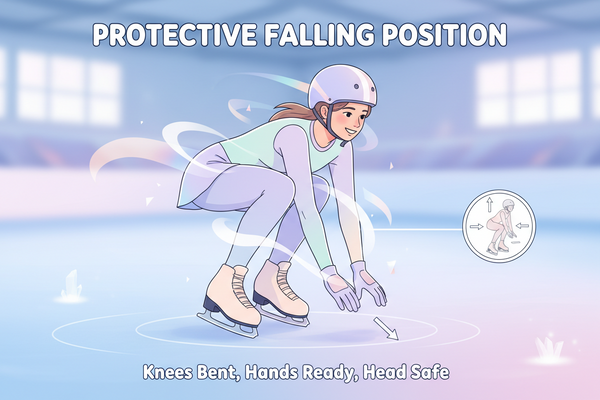
Many adult skaters use pads during early lessons and gradually phase them out as their balance and technique improve. There's no shame in wearing a helmet at any level - your brain is worth protecting. For more on protective gear and building fall confidence, see our guide to falling safely.
What Should You Never Wear on the Ice?
Some clothing choices actively hurt your skating. They restrict movement, hide technique faults from your coach, and can even be dangerous.
🚫 Practice Clothing Red Flags
- Bulky winter coats - restrict arm swing, hide torso alignment, alter your moment of inertia during spins
- Heavy cotton sweatshirts and sweatpants - retain moisture, chill you between sets, sag after sweating
- Overly baggy clothing - can catch on blades, conceal body lines, and shift unpredictably during dynamic moves
- Jeans or non-stretch pants - zero flexibility for knee bends, crossovers, or jumps
- Scarves or loose accessories - safety hazard during spins and partner work
The fix is simple: swap cotton for moisture-wicking synthetics, choose fitted over baggy, and layer thin pieces instead of one bulky coat. Your coach needs to see your hips, shoulders, and alignment - so give them a clean silhouette to work with.
Looking to upgrade your practice wardrobe? Adults Skate Too carries leggings, tops, hoodies, jackets, gloves, and socks designed for adult skaters - no junior sizing, no guesswork.
Frequently Asked Questions
Most figure skaters wear fitted, flexible clothing - practice leggings or skating pants, a moisture-wicking top, and a light jacket or vest for warm-up. The key is full range of motion without excess bulk.
Skating practice pants are designed with extra stretch in the hips and legs for jumps and spins. Many have boot covers that go over skates for a clean line. Regular leggings work fine for beginners.
A lightweight, fitted jacket or vest - not a puffy coat. Many skaters wear fleece zip-ups or athletic jackets that allow arm movement for spins and jumps. You will warm up quickly once skating.
Practice dresses and skirts are common but optional. Many skaters prefer pants for regular practice and save dresses for run-throughs or performance practice.
Thin, moisture-wicking socks or skating tights with the foot portion. Never wear thick socks - your boots need direct contact with your feet for proper blade control.
No. Popular brands include ChloeNoel, Mondor, Jerry's, and Sagester, but any flexible athletic wear works. The most important thing is that you can move freely in jumps and spins.
Athletic pants or skating trousers with a fitted shirt or half-zip pullover. The same principles apply - flexible, fitted, moisture-wicking layers that allow full range of motion.
Start with 2-3 layers and remove as you warm up. A base layer, mid layer, and light outer layer is typical. Most skaters shed the outer layer within 15 minutes of warming up.
Thin gloves that allow finger dexterity. Many skaters use fingerless gloves or thin knit gloves. Avoid bulky ski gloves. See our falling safely guide for why gloves matter.
Online retailers like DiscountSkatewear.com, Kinzie's Closet, Amazon, and brand-direct sites carry adult sizes. ChloeNoel and Mondor offer extended sizing for adults.