The Ultimate Guide to Coming Back to Figure Skating as an Adult: From Olympic Dreams to Ice Reality
Rediscover the joy of skating and turn that Olympic flutter into your personal comeback story
Watching the Olympics, you felt that familiar flutter in your chest - the same one you had as a kid lacing up your skates, dreaming of gliding across the ice like your heroes. Maybe it was seeing those perfect spirals or the pure artistry of a well-choreographed program that made you think: "I wonder if I could still do that." You're not alone in this feeling, and coming back to figure skating as an adult is becoming one of the most rewarding decisions former skaters are making.
The truth is, that flutter isn't just nostalgia - it's your body and soul remembering something that once brought you pure joy. And here's the beautiful part: it's never too late to answer that call.
Why Adults Are Returning to Figure Skating in Record Numbers
We're living through a renaissance of adult figure skating, and it's thrilling to witness. Rinks across the country are reporting unprecedented enrollment in adult programs, with many having waiting lists for the first time ever.
The driving force? A perfect storm of Olympic inspiration, mental health awareness, and a growing understanding that childhood dreams don't have expiration dates. When you see skaters still competing and performing well into their late twenties and beyond, it reminds us that skating isn't just a young person's sport.
The pandemic also played a role - many of us had time to reflect on what truly made us happy, and for former skaters, those memories of gliding across ice kept surfacing. Suddenly, the excuse of "I don't have time" felt less important than "I need something that feeds my soul."
When Olympic Stories Spark Personal Comebacks
There's something about watching Olympic figure skating that hits different when you've actually been on the ice yourself. You don't just see the performance - you feel it. You remember the sensation of a clean landing, the dizzy triumph of holding a spin, the way the cold air hits your face during a fast crossover sequence.
That feeling doesn't care if you're 16 or 46. And every Olympic cycle, it brings a new wave of adults back to the rink.
What to Expect When Coming Back to Figure Skating as an Adult
Let's get real about what returning to skating after years actually feels like. Your first few sessions back will be a mix of "Oh wow, I still remember this!" and "Why does everything feel so much scarier?"
Here's what virtually every adult returner experiences: your basic skating skills come back faster than you expect, but your relationship with fear has definitely changed. That fearless kid who attempted jump after jump? She might need some coaxing to come back out.
The Good News: Your Muscle Memory Is Still There
This is the magic that keeps surprising adult returners. You step onto the ice and within minutes, your body starts remembering. Your forward crossovers feel natural, your backward skating returns quicker than anticipated, and those three-turns that once felt impossible? They're still there, waiting for you.
Former skaters who haven't been on ice in 15+ years regularly report nailing a waltz jump by their third session back. The neural pathways for skating don't just disappear - they go dormant, ready to reactivate when you're ready.
Your edge awareness, that subtle understanding of how your blade connects with the ice, returns remarkably quickly. Even if your skills feel rusty, that foundational relationship with the ice remains intact.
The Reality Check: What Will Feel Different
Your body has changed since you were 12, and that's not a bad thing - just different. You're taller, your center of gravity has shifted, and you've developed what we politely call "adult caution."
Where you once threw yourself into a spin without thinking, you now consider the mechanics. This isn't weakness - it's wisdom. But it does mean you'll need patience with yourself as you rebuild that trust relationship with your body and the ice.
Your flexibility might not be what it once was, and jumps that felt effortless might now require more conscious strength and technique. But here's the flip side: you have better body awareness now, you understand training concepts more deeply, and you can articulate what you need in ways your younger self never could.
Step-by-Step Guide to Your Figure Skating Comeback
Ready to make this dream a reality? Let's break down exactly how to approach starting figure skating again in a way that sets you up for long-term success and joy.
Step 1: Get the Right Gear for Your Adult Body
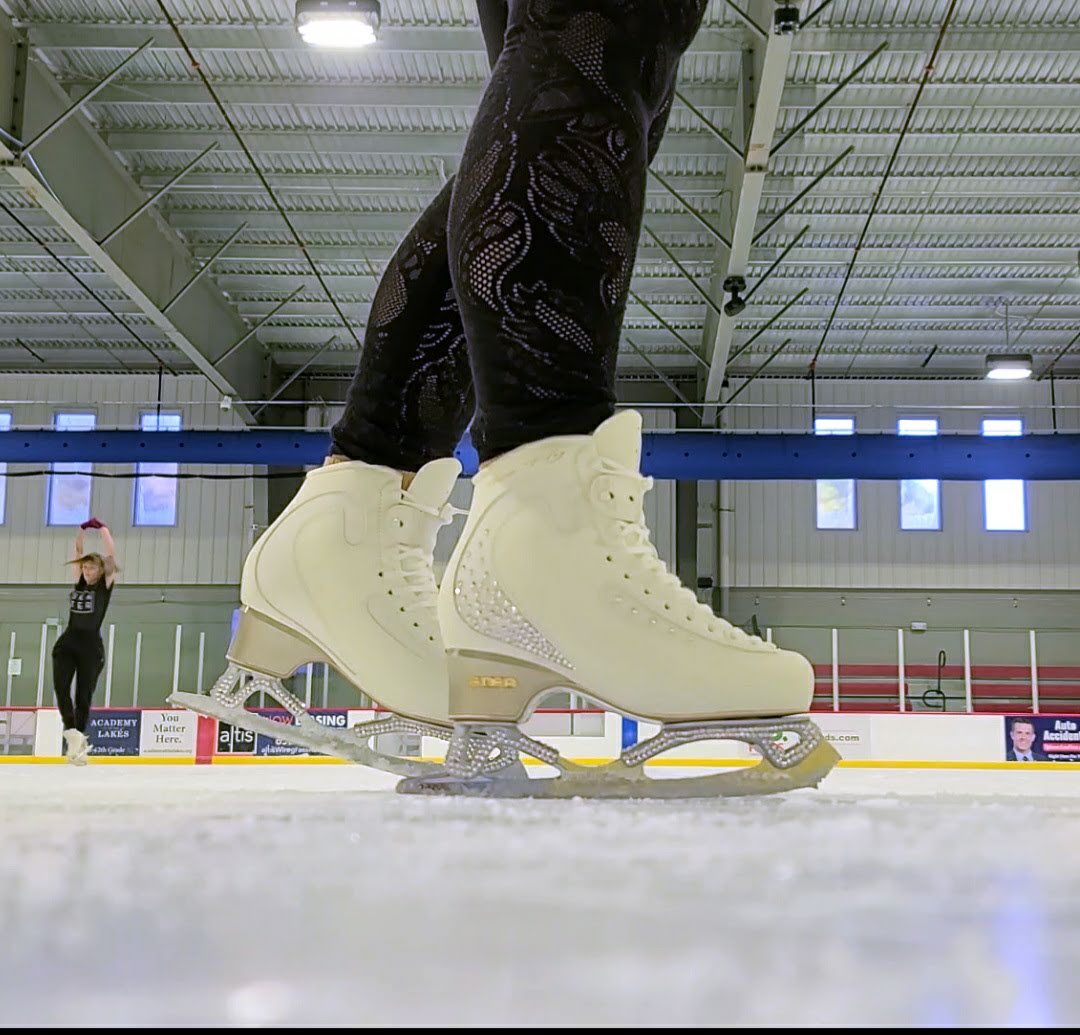
Your feet have likely changed since you last wore figure skates, so resist the urge to dig those old boots out of storage. Adult feet are wider, possibly longer, and need proper support for comeback training. More importantly, adult bodies are heavier than the kids these boots were originally designed for - so you need to choose your stiffness level wisely.
The biggest mistake returners make is grabbing the cheapest recreational skate on the shelf. Those ultra-soft boots (stiffness under 20) are designed for kids or very light casual skaters - they'll break down within months under an adult and won't give you the ankle support you need to rebuild your skills safely.
Recommended Gear by Goal
Your ideal boot depends on your goals. Here's what actually works for adult bodies:
✓ Solid Choices for Adults
- Jackson Artiste (~25 stiffness) - recreational, basic skills
- Riedell Diamond (~35 - 40) - frequent skating, basic jumps
- Jackson Freestyle Fusion (~45) - single jumps, freestyle
- Edea Overture (48) - lightweight, great knee bend
- Riedell 223 Stride (~50) - single jumps, intermediate
✗ Common Mistakes to Avoid
- Using old boots that no longer fit or support you
- Buying ultra-soft recreational skates (stiffness <20)
- Buying overly advanced boots (stiffness 70+)
- Skipping proper fitting at a pro skate shop
- Choosing fashion over function and fit
For a returner who plans to take lessons and work toward jumps and spins, the Jackson Freestyle Fusion (~$300 - 350 as a set) is nearly legendary among adult skaters for good reason - it's heat-moldable, well-padded, and supports everything through single jumps. The Riedell 223 Stride is an excellent alternative if you prefer a narrower heel fit.
If you're easing back in more casually, the Jackson Artiste or Riedell Diamond are solid starting points that won't collapse under adult weight. Just know that if you progress quickly, you may outgrow them within a year.
💡 The "Just Right" Rule for Stiffness
Adults generally need a boot slightly stiffer than a child of the same skill level to accommodate extra weight and strength. But don't go overboard - a boot built for double jumps (stiffness 70+) will be too rigid for someone rebuilding their skating legs, making it hard to bend your knees and learn proper technique. For a deeper dive, check out our complete guide to figure skates for adult beginners.
Whatever you choose, get fitted at a pro skate shop if possible. Figure skate sizing doesn't match street shoe sizing (most skaters are 1 - 2 sizes down), and width, arch height, and heel shape all matter. A boot that fits properly will make your entire comeback experience better.
Step 2: Choose Between Group Classes or Private Lessons
This is where many returning skaters get stuck. Should you join adult figure skating lessons with complete beginners, or jump straight into private instruction?
| Option | Benefits | Best For | Cost |
|---|---|---|---|
| Group Classes | Community, structured progression, affordable | Social learners, consistent schedules | $15 - 25 per session |
| Private Lessons | Personalized pace, focused attention, flexible | Specific goals, varying skill levels | $40 - 80 per session |
| Combination | Best of both worlds | Most adult returners | Varies |
Many successful returners start with a few private lessons to assess their level, then join group classes for regular practice and community, supplementing with private lessons as needed. The combo approach is usually the sweet spot - you get personalized feedback and a social support system.
Step 3: Create a Realistic Practice Schedule
Here's where adult life gets real. You're not training for nationals - you're training for joy. Start with twice a week if possible, or even once a week if that's what fits your life.
⏰ Scheduling Success
Consistency trumps frequency every time. Two hours spread across two sessions will serve you better than trying to cram everything into one marathon session that leaves you exhausted and sore. Schedule your ice time like any other important appointment - because it is one.
Overcoming the Mental Game of Returning to Skating
The biggest challenges in coming back to figure skating as an adult often aren't physical - they're mental. You're dealing with comparison to your younger self, adult fears that didn't exist when you were fearless at 10, and perhaps some perfectionist tendencies that have developed over the years.
Let's address the elephant in the rink: you're going to compare yourself to your younger self. This is completely normal and completely unhelpful. That 12-year-old you had different priorities, different responsibilities, and a different relationship with fear.
Instead of mourning what you "used to be able to do," celebrate what you're choosing to do now. You're an adult with a full life who is actively prioritizing joy, movement, and personal fulfillment. That's pretty remarkable.
Redefining Success as an Adult Skater
Success as an adult returner looks different than it did when you were young. Maybe success is landing your first waltz jump in 20 years. Maybe it's finally nailing that forward inside three-turn that always gave you trouble. Maybe it's simply the feeling of gliding across the ice with music playing, remembering why you fell in love with skating in the first place.
📝 Track Your Journey
Consider keeping a skating journal. Write down small victories, breakthrough moments, and how skating makes you feel. On difficult days, you'll have concrete evidence of your progress - and a reminder of why you came back.
Your goals might include competing at U.S. Adult Championships (which are incredible experiences, by the way), or they might be as simple as being able to skate confidently backward. Both are equally valid.
Building Confidence on Your Return Journey
Confidence builds through small, consistent successes. Start with skills you know you can master, then gradually challenge yourself. There's no shame in spending three sessions just working on forward crossovers if that's what makes you feel secure and confident.
- Film yourself skating to see progress objectively - you're probably better than you think
- Celebrate every small victory, even the ones that feel silly
- Focus on how skating feels, not just how it looks
- Remember that progress isn't always linear - bad ice days happen
- Connect with other adult returners who get it
Making Your Comeback Sustainable Long-Term
The goal isn't just to return to skating - it's to make skating a sustainable, joyful part of your adult life. This means thinking strategically about injury prevention, lifestyle integration, and community building.
Your adult body needs more warm-up time than your teenage body did. Plan for 10 - 15 minutes of off-ice stretching and movement before you even lace up your skates. Your knees, ankles, and hips will thank you.
Cross-training becomes crucial as an adult skater. Yoga improves flexibility and balance, strength training supports your jumps and spins, and cardio work helps with stamina. You don't need to become a gym rat, but some supplementary fitness will make your skating stronger and more enjoyable.
Creating Healthy Boundaries and Expectations
This is perhaps the most important skill for adult returners: learning to set realistic goals and healthy boundaries around your skating.
You might not progress as quickly as you did as a child, and that's perfectly normal. Adult brains learn differently - we need more repetition and more conscious understanding of mechanics. But we also bring maturity, focus, and life experience that can make us more thoughtful, artistic skaters.
⚖️ Goal Setting Strategy
Set process goals rather than outcome goals. Instead of "I want to land a single axel in three months," try "I want to work on my axel preparation and timing consistently." The axel might come in two months or six months, but the consistent work will definitely make you a better skater.
Connecting with Other Adult Returning Skaters
One of the most beautiful aspects of the current adult skating boom is the community. You'll find other returners at your rink, in online groups, and at adult skating events across the country.
ISI (Ice Skating Institute) offers wonderful adult competitions that focus on fun and personal achievement rather than cutthroat competition. U.S. Adult Championships provides an opportunity to compete against skaters your own age, with divisions that make sense for adult lifestyles and skill levels.
Don't underestimate the power of having skating friends who understand why you're excited about finally landing that scratch spin or why you're nervous about your first competition in 25 years.
Get Started With the Right Gear
Quality equipment makes your comeback journey smoother and more enjoyable
Frequently Asked Questions
Start slowly. Take a few public sessions to rediscover your balance, then sign up for adult group lessons or private coaching. Your body will remember more than you think, but give it time to rebuild strength.
Yes - muscle memory is powerful. Most returning skaters find basic stroking and crossovers come back within a few sessions. Jumps and spins take longer to regain but the foundation is still there.
If your old skates still fit and the boots are not broken down, you can start with them. Have the blades sharpened professionally. If they feel unsupportive or painful, it is time for new ones.
Most returning skaters regain basic skills within 2-4 weeks of regular skating. Singles jumps may take 2-6 months to rebuild. Spins often come back faster. Patience and consistency are key.
Your body is different than when you were younger - less flexible, more cautious, and slower to heal. But you also have better discipline, patience, and mental focus. Many adults find they understand the sport better the second time around.
Private lessons are ideal for returning skaters because the coach can assess exactly where you are and build a personalized plan. Group lessons work well once you have your bearings back.
Ask a coach to evaluate your current skills. Most returning skaters place higher than true beginners but should not skip fundamentals. A quick assessment lesson will identify the right starting point.
Absolutely. U.S. Figure Skating Adult Championships has divisions for all levels, and many competitors are returning skaters. There is also a strong community of adult skaters at competitions.
Look for coaches experienced with adults at your local rink. See our complete guide for tips on finding the right coaching match.
Expect wobbly ankles, sore muscles the next day, and a huge grin. Your first few sessions are about rediscovering balance and comfort on the ice - not performing. Take it easy and enjoy being back.