
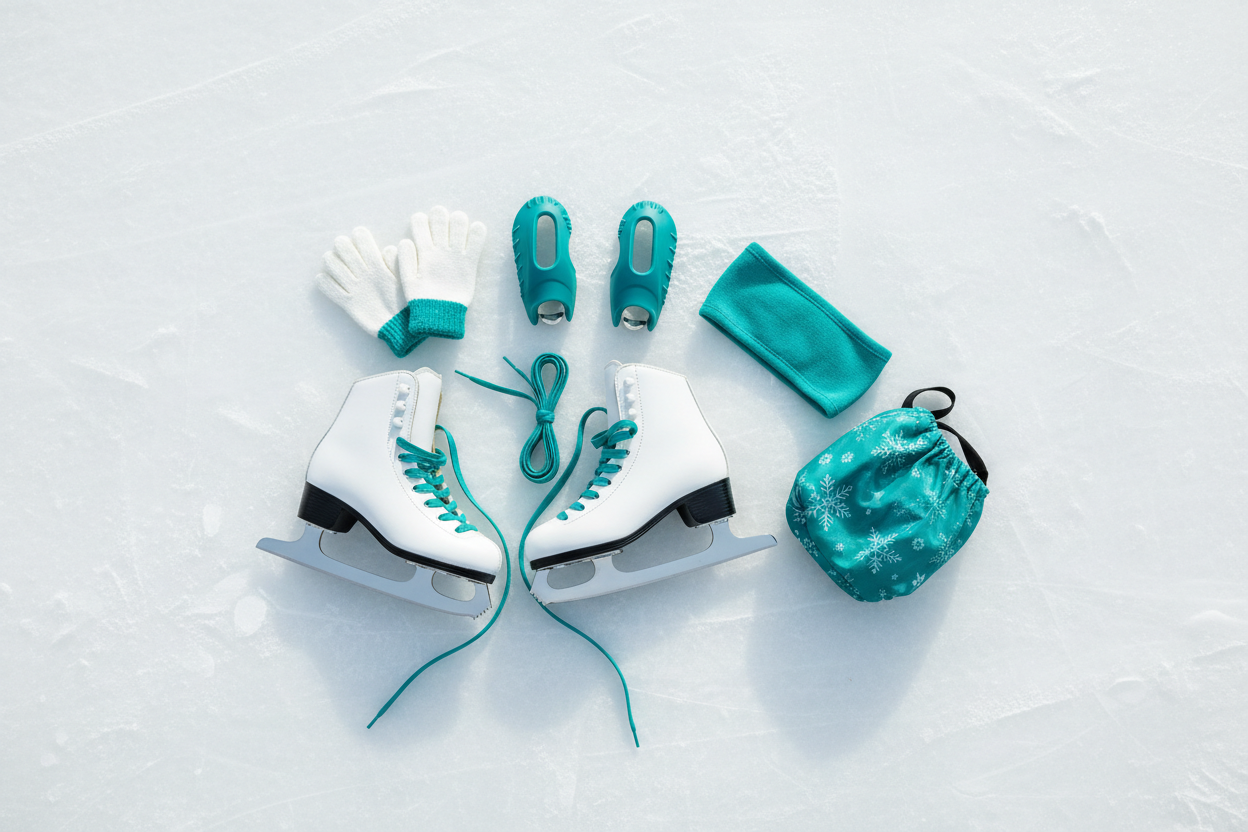
Beginner’s Guide to Ice Skating Gear
Starting ice skating as an adult can feel intimidating — we get it. This guide breaks down the gear that keeps you safe, warm, and focused on learning, not fussing with equipment. You’ll find clear guidance on picking skates, which protective items really matter, smart layering and fabric choices, practical accessories, and simple maintenance steps that make your gear last. Every recommendation is aimed at adult beginners so you can make confident rental or purchase choices without getting bogged down by jargon.
We stick to practical, evidence-backed tips: how fit affects balance, why a helmet helps you progress, what fabrics move sweat and hold warmth, and which small accessories prevent blade damage. You’ll see quick comparison tables and checklist-style tips for fast decisions, plus short summaries of useful items from Adults Skate Too LLC — our shop and community hub for socks, gloves, layers, bags, and fun skating apparel. Whether you plan casual public skates, weekly lessons, or steady skill work, use this guide to match gear to your goals.
What Are the Best Ice Skates for Adult Beginners?
For adult beginners, the best skates balance stability, ankle support, and a comfortable fit while matching how you plan to skate: relaxed public sessions or a path toward figure skills. Skates pair a supportive boot (for ankle control and power transfer) with a blade (which controls glide, turning, and stopping). An entry-level boot with firm ankle support and moderate stiffness reduces wobble and helps you learn edges, stops, and a steady stride. Your main choice is between entry-level figure skates — built for edge work and lessons — and recreational skates that favor comfort for public sessions. Below is a quick comparison to guide your decision, plus buying tips and a short fit checklist.
| Skate Type | Key Feature | Best For |
|---|---|---|
| Entry-level figure skates | Firm ankle support, toe pick for edge work | Lessons and technical progression |
| Recreational skates | Softer boot, extra padding | Casual public skating and comfort |
| Hybrid/modular skates | Replaceable parts, moderate stiffness | Beginners who want an upgrade path |
In short: choose figure-style entry skates if you’re taking lessons or want to build technique; pick recreational skates if you skate infrequently and prioritize comfort. Next up: how to check fit and support so your boots actually help you learn.
How to Choose Between Figure Skates and Recreational Skates for Adults
Figure skates and recreational skates suit different goals. Figure boots are higher and stiffer and include a toe pick for jumps and precise edge control — ideal if you’ll take lessons or plan to progress. Recreational skates trade stiffness for padding and simpler blades, which feels more forgiving for quick public sessions. Ask yourself: how often will you skate, will you take lessons, and do you want to learn jumps or spins? If you answered yes to lessons or progression, go figure skates; if you want easy, comfortable outings, choose recreational models.
Remember that figure skates often need blade sharpening and occasional boot adjustments — routine maintenance that supports learning. That brings us to the most important fit questions for adult feet.
What Should You Know About Skate Fit and Support for Beginners?
A well-fitting skate should hold your heel and midfoot snugly, give firm ankle support, and leave your toes comfortable — not pinched. Fit directly affects balance: loose boots let your foot slide and create wobble; boots that are too tight cut circulation and shorten practice time. Adult feet vary — watch for width issues or high arches — and many entry-level boots come in width options or can be heat-molded for a better shape. Expect a short break-in period: padding compresses and the boot softens after several sessions. You can find more details in the best figure skating boots.
Measure feet at the end of the day and try skates with the socks you’ll actually wear on the ice. If possible, see a professional skate fitter to check ankle alignment and suggest insoles or size tweaks. Good fit speeds progress by letting you focus on technique instead of compensating for poor shoe mechanics.
Which Protective Gear Is Essential for Adult Ice Skating Beginners?
For adult beginners, focus on gear that lowers head-injury risk, protects wrists and knees, and cushions hips and elbows during slides. Protective equipment disperses force, reduces abrasions, and stabilizes joints during unexpected falls. Adults often fall differently than kids, so prioritize a well-fitting helmet and wrist guards that limit hyperextension; add knee and elbow protection if you expect lots of practice or slippery conditions. Below is a concise table of recommended features for core protective items, followed by short reasons to prioritize each piece. best figure skating boots.
Research consistently shows that personal protective equipment reduces skating-related injuries.
Essential Protective Gear for Skating Injury Prevention
Measures to prevent in-line skating injury include wearing personal protective equipment (wrist guards, helmets, knee and elbow pads); improving rink conditions and offering lessons for novices; certifying instructors; encouraging physical preparation; educating skaters about safety; and improving equipment design and standards.
Preventing in-line skating injuries: how effective are the countermeasures?, S Sherker, 1999
| Protective Item | Recommended Feature | Why It Helps |
|---|---|---|
| Helmet | Skating-rated or multi-sport, snug fit, adjustable straps | Absorbs impact and reduces head-injury risk; gives confidence to try new moves |
| Wrist guards | Rigid splints with comfy straps | Limits wrist extension and soaks up impact from forward falls |
| Knee pads | Low-profile, shock-absorbing foam | Protects against direct hits and skin abrasion when sliding |
| Elbow/hip pads | Flexible shell with padding | Spreads force and lowers bruising in sideways falls |
The takeaway: choose gear designed for skating, check fit carefully, and prioritize items that let you stay active and safe. Next, we break down helmet choices and fitting tips for adults.
Why Do Adult Beginners Need Helmets for Ice Skating?
Helmets help by absorbing and dispersing impact energy in falls — especially important for adults who may fall backward or with greater force on hard arena surfaces. A properly fitted helmet reduces the chance of a serious head injury and often helps beginners feel secure enough to keep trying new skills. Choose a skating-rated or multi-sport helmet, make sure it sits level with no front-to-back wobble, and that the straps form a V just under your ears. Inspect helmets for cracks and replace after any significant impact.
Wearing a helmet also lowers fear, which makes lessons and practice more productive. Once your helmet is sorted, pair it with wrist and joint protection for fuller coverage.
How Do Knee, Elbow, Hip Pads, and Wrist Guards Protect You?
Knee, elbow, and hip pads spread impact across a wider area and resist scraping, while wrist guards stabilize the joint and prevent dangerous hyperextension in forward falls. Pads compress to absorb force, and rigid elements (like wrist splints) redirect loads away from fragile areas. Balance protection and mobility: choose low-profile pads for lessons and thicker padding if you expect frequent falls. Look for stretch straps and breathable shells so pads stay put and feel comfortable during movement. Learn to ice skate easily with the right gear.
Try on pads on dry land: squat, bend your elbows, and mimic falling positions to ensure they don’t slip. If they stay in place during those moves, you’ll be more likely to wear them on the ice.
What to Wear for Ice Skating Beginners: Apparel Tips for Comfort and Safety
Dress to stay warm and move freely. Layering, moisture-wicking fabrics, and the right socks and gloves make a huge difference in comfort and focus. Start with a snug, moisture-wicking base, add a stretchy mid-layer for insulation, and finish with a lightweight, wind-resistant outer layer you can shed as you warm up. Thin, moisture-wicking socks improve skate fit; gloves keep hands warm and offer light protection during falls.
| Item | Material / Feature | Benefit |
|---|---|---|
| Base layer | Moisture-wicking synthetic or merino | Keeps skin dry and avoids chill from trapped sweat |
| Mid-layer | Stretch fleece or lightweight insulation | Adds warmth without restricting movement |
| Outer layer | Wind/water-resistant, easy to remove | Blocks rink drafts and is quick to unzip when you heat up |
| Socks & gloves | Thin, moisture-wicking socks; grippy gloves | Improves skate fit and keeps hands warm with added grip |
Fabric and fit matter as much as item type. Below are simple layering steps to keep you comfortable on the ice.
How to Layer Clothing for Warmth and Flexibility on the Ice
Use three layers you can add or remove: base, mid, and outer. The base layer should be snug and wick sweat (avoid cotton). The mid-layer gives insulation — pick a stretchy fleece or thin insulated jacket that lets you bend knees and rotate hips. The outer layer blocks wind and light moisture but should be easy to unzip or take off when you warm up during practice.
Lesson example: a thin synthetic base, a mid-weight fleece, and a lightweight shell work well in most indoor rinks. For quick public skates, a hoodie plus a shell can be comfortable and casual. Small choices in socks and gloves often make the biggest difference in comfort.
Why Are Moisture-Wicking Skating Socks and Gloves Important?
Socks and gloves that move moisture away from skin reduce friction, prevent blisters, and keep your skate fit consistent. Synthetic blends or merino wool carry sweat away without adding bulk. Thinner socks usually give better control — thicker socks add warmth but can create pressure points and reduce ankle feedback. Gloves should balance warmth with grip; touchscreen-friendly palms help with phone use, and light palm padding helps in forward falls.
Try different sock thicknesses with your skates and the rink temperature to find what works best — testing is the fastest way to a reliable, comfortable setup.
What Are the Must-Have Ice Skating Accessories for Adult Beginners?
Simple accessories protect your blades, make transport easier, and keep you ready for practice. Skate guards, blade soakers, a basic maintenance kit, and a well-organized skate bag each have clear jobs: guards protect edges when you walk, soakers soak up condensation, maintenance tools handle small fixes, and a bag keeps everything together. Here are the essentials to consider before session two or three.
- Skate guards: Protect blade edges when walking off-ice and prevent dulling.
- Blade soakers: Absorb moisture after skating to stop rust and corrosion.
- Basic maintenance kit: Soft cloth, screwdriver, and rust inhibitor for quick care.
- Skate bag with compartments: Keeps skates, layers, and accessories organized for easy transport.
These items save time and protect your investment. The next table explains how guards, soakers, and maintenance tools each help.
How Do Skate Guards, Soakers, and Maintenance Tools Protect Your Equipment?
Skate guards are hard plastic covers for walking off-ice and keep blades from getting nicked. Blade soakers are soft covers that absorb residual moisture during storage and prevent rust. Basic tools — drying cloths, screwdrivers for hardware, and rust-prevention wipes — let you do quick daily care that keeps blades performing well. After each skate: dry the blades, put soakers on, and store skates in a ventilated bag — a three-step routine that prevents many problems. For more information, check out skating guides.
Using guards off-ice and soakers in storage is cheap insurance for more expensive parts of your kit. With protection sorted, pick a bag and a few training aids to speed up progress between sessions.
Which Skate Bags and Training Aids Are Best for Adult Skaters?
Choose a skate bag with ventilation, a wet compartment, and padding to protect blades and boots. Useful features include an external pocket for guards, a mesh section for sweaty clothes, and internal straps to keep skates from rubbing other items. Training aids — balance boards, resistance bands, and off-ice footwork markers — help you build ankle strength and edge awareness at home. Off-ice practice boosts balance and muscle memory so your on-ice time is more productive.
Adults Skate Too LLC carries themed bags and organization accessories that help skaters protect gear while showing a bit of personality — plus, the right compartments make packing faster and reduce rust risk during transport.
How to Maintain and Care for Your Ice Skating Gear as a Beginner
Keep maintenance simple and regular: dry blades right after skating, store skates with soakers in a ventilated bag, use guards when walking off-ice, and follow fabric care to preserve moisture-wicking properties. These steps prevent rust, odor, and premature wear and keep blades consistent for safer skating. Sharpening frequency depends on use — frequent skaters sharpen more often; occasional skaters can wait longer. Always trust a reputable sharpening service. Routine checks of laces, screws, and stitching catch common issues early.
- Daily: Wipe blades dry, put soakers on, store in a ventilated bag.
- Weekly: Check laces, screws, and padding; air out apparel.
- Monthly or as-needed: Sharpen blades based on how they feel and perform.
These small habits reduce downtime and keep your sessions focused on learning.
What Are the Best Practices for Skate and Protective Gear Maintenance?
Best practices: dry blades with a soft cloth immediately after skating; remove guards only after blades are dry so you don’t trap moisture; and store skates with soakers in a ventilated bag to stop corrosion. Check screws and blade mounts regularly and replace worn laces; small fixes now prevent failures later. Follow care instructions for pads and apparel — machine-wash most synthetic base layers and air-dry pads and gloves to protect the foam. If blades develop nicks or feel dull, see a sharpening pro rather than attempting DIY grinding — a technician preserves edge geometry.
These steps keep your gear safe and performing, so you spend more time skating and less time fixing problems.
How Does Proper Care Extend the Life of Your Ice Skating Equipment?
Good care prevents corrosion, reduces wear, and keeps boots and padding working as designed — all of which preserve safety and performance. Wiping blades dry and using soakers prevents early rust that would otherwise force deeper sharpening or replacement. Replacing laces or worn padding keeps the boot’s fit consistent so you don’t lose stability. Over time, care lowers your cost per use and makes the initial investment more worthwhile.
Turn maintenance into a few minutes of routine and you’ll get safer, more consistent sessions and faster progress on the ice.
Frequently Asked Questions
What should I consider when renting ice skates as a beginner?
When renting, prioritize fit, comfort, and skate type. Your skates should feel snug around the heel and midfoot without pinching the toes. Ask for beginner-friendly skates with solid ankle support and check blade condition — they should be sharp and rust-free. Try a few sizes and styles if you can, and choose what feels steady for casual skating or lessons.
How can I improve my balance while ice skating?
Balance improves with practice and targeted exercises. Start by gliding on one foot while holding the rink edge. Do off-ice work like yoga or balance-board drills to strengthen your core and legs. Lessons with a coach will speed progress by correcting technique. Regular practice is the fastest route to steadier, more confident skating.
What are the signs that my ice skates need sharpening?
Look for decreased bite in turns, sliding instead of gripping the ice, or a feeling of instability. If stopping requires more effort or edges feel dull, it’s time to sharpen. Beginners should check edges more often as they develop technique — use a professional sharpener for best results.
How do I choose the right size for ice skating socks?
Pick thin, moisture-wicking socks that fit snugly without squeezing. They should reach the ankle and manage moisture to prevent blisters. Thinner socks usually offer better control; thicker socks add warmth but can alter fit. Always try socks on with your skates before skating to confirm comfort.
What should I do if my skates feel uncomfortable during use?
First, check fit: not too tight, not too loose. Adjust lacing to improve ankle support and comfort. If pain continues, see a professional fitter who can suggest insoles, size changes, or other tweaks. New skates often need short break-in periods — wear them briefly off-ice or during short sessions to help them mold to your feet.
Are there specific exercises to do off the ice to enhance skating skills?
Yes. Focus on leg and core strength (squats, lunges, planks) and balance work (single-leg stands, balance boards). Agility drills like lateral hops and quick footwork help with edge control. Consistent off-ice training builds strength and stability that translate directly to better on-ice performance.
Conclusion
The right gear makes learning to skate safer and more enjoyable. Pick skates that fit your goals, use protective gear that you’ll actually wear, and choose breathable, flexible layers. Invest a few minutes in simple maintenance and a couple of practical accessories to keep your kit ready for the ice. Explore our curated picks for adult skaters and get started — the rink is waiting.
This post contains affiliate links. We may earn a commission at no extra cost to you.


