
Key takeaways
- Rental skates are fine for a first time. Try them on properly and swap them if your heel lifts or your toes are squashed.
- Wear warm, stretchy layers and one pair of socks, leave the jeans at home, and always wear gloves.
- On a public session, everyone skates the same way around, slower skaters stay near the boards, and you stop at the boards, not in the middle.
- Bend your knees, look up and expect to fall. Go down sideways, keep your hands in and get up from your hands and knees.
Your first time on the ice is exciting and a little nerve-racking, and probably colder than you expect. Almost everyone survives it. A bit of know-how before you go makes it a lot more fun. Here are ten things worth knowing before a first public session, from picking rental skates to what to do when you fall.
If you're heading to a beginner class rather than a public session, our first lesson checklist covers that, and most of this page applies too. If you catch the bug, our guide to starting figure skating as an adult takes it from there.
1. Rental skates are fine for a first time
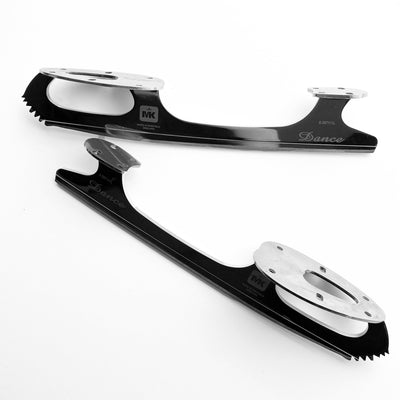
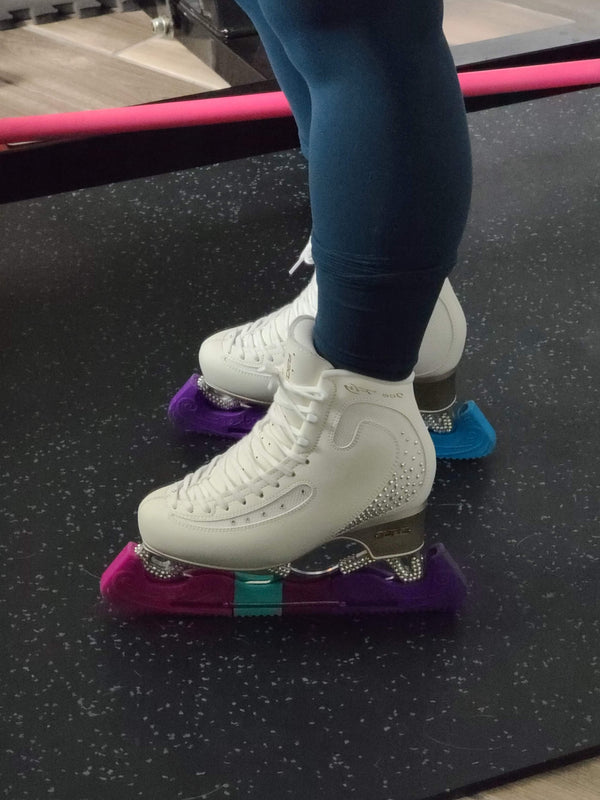
You don't need your own skates for a first visit. Most rinks rent them, and some rent both figure skates and hockey skates. Figure skates have a jagged toe pick at the front of the blade and a curved bottom, so they feel a little different. If figure skating is what you're curious about, ask for those.
Tell the desk your shoe size and ask what they'd suggest, then try the skates on properly. Your heel should stay down when you bend your knees, and your toes shouldn't be squashed. If a pair feels loose, soft and worn, or pinches anywhere, ask for a different one. Swapping is completely normal, and rink staff are used to it.
2. Lace them snugly
Loose laces make rental skates feel much wobblier than they need to. Sit down, push your heel right to the back of the boot, then lace snugly around the bend of your ankle so your heel stays put. Keep it a little easier over your toes and through the top hooks, so you can still bend your knees.

If your feet go numb or tingle, something is too tight, so loosen it a little. Tuck the ends of the laces in so you can't trip on them. If you're not sure you've got it right, ask someone at the desk or a friendly skater to check, because most are happy to help.


Your water bottle is looking a bit bare
These holographic skating stickers are kiss-cut and water-resistant, and the price drops on its own when you pick three.
Build a bundle3. Wear warm, stretchy layers
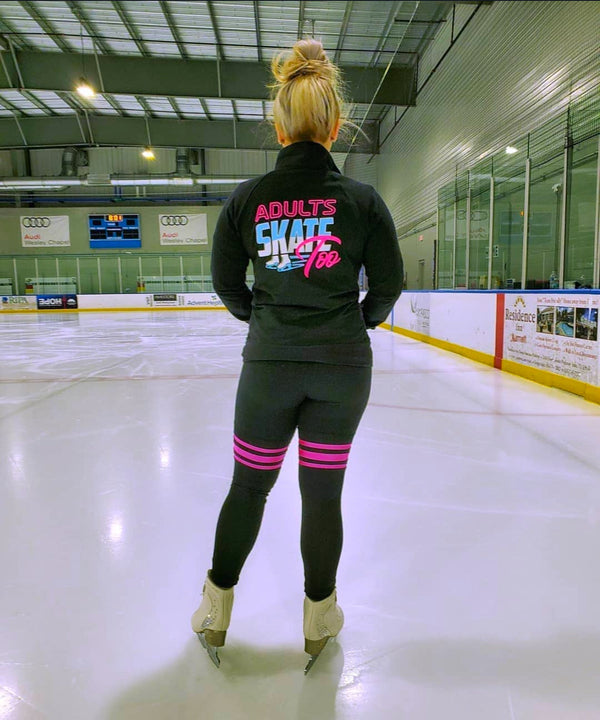
Rinks are cold, but you'll warm up quickly once you're moving, so layers work best. Wear leggings or athletic pants you can bend your knees in, a fitted long-sleeved top and a light jacket you can take off. Leave the jeans at home, because they're stiff and get cold once they're wet.
Wear one pair of socks that comes up higher than the top of the boot, so it doesn't rub. Doubling up on socks makes skates fit worse, not better, and can leave your feet numb. Skip scarves, which can catch or get in the way, and tie long hair back. Our guide to what to wear ice skating has more ideas.
4. Bring gloves, and think about a helmet
Gloves are the one thing not to forget. Your hands will touch the ice when you fall or get up, and other skaters' blades are sharp. Any warm pair that lets you grip the boards is fine, and if you'd like a pair made for skating, we carry CRS Cross padded skating gloves.
A helmet is a good idea while you're learning, especially in case you fall backward. Padded shorts or knee pads under your leggings take the sting out of falls too. If you're worried about looking silly, everyone else is far too busy trying not to fall to notice what you're wearing.
5. Pick a quieter session if you can
Public sessions are open to everyone and are usually the easiest ice to get onto, but they can be very busy. They're often quieter on weekday daytimes than in the evenings and on weekends, when families and groups arrive. A quieter session gives you more room to wobble in peace.
Check the rink's schedule before you go, because public sessions run at set times and sometimes get cancelled for games or events. Some rinks also run adult-only sessions, which can be a calmer place to start. Our guide to public, freestyle and adult sessions explains what's what on a rink schedule.
Leave yourself plenty of time, too. Paying, renting skates, finding somewhere for your shoes and lacing up all take longer than you'd think the first time.
6. Everyone skates the same way around
On a public session, everyone skates around the rink in the same direction, which the rink sets. Some rinks switch direction partway through, so listen for announcements and watch what everyone else is doing. Slower skaters and beginners stay near the boards, and faster skaters use the space further in.
If you need to stop, glide over to the boards first rather than stopping in the middle of the traffic. Don't link arms in a line that blocks everyone behind you, and give small children plenty of room. Many rinks don't allow jumps or spins on public sessions, so read the posted rules.
At the door, look both ways for skaters coming past and wait for a gap before you step on. When the ice is cleared for resurfacing, head off promptly, and wait for the doors to open again before you step back on. Our page on rink etiquette covers the rest.
7. Bend your knees and look up
Your first steps on figure skates feel nothing like walking. Hold the boards for a moment and get used to standing on the blades. Bend your knees, keep your weight over the middle of your feet rather than back on your heels, and look ahead instead of down at your skates.
Then march in place, and take small marching steps forward along the boards. When that feels OK, push off gently and glide on two feet with your knees soft. Each push goes out to the side, not straight back off your toe pick. Let go of the boards a few seconds at a time when you're ready, and stay close to them for as long as you like.
8. You'll probably fall, and that's OK
Everyone falls, and a fall where you sit down sideways usually ends with nothing worse than a bruise and a wet backside. When you feel yourself going, bend your knees, get low and go down to one side onto your hip and thigh. Tuck your chin and keep your hands in, because throwing a hand out is how wrists get hurt.
To get up, check you're OK, get your fingers off the ice and look around for other skaters. Roll onto your hands and knees, put one foot flat on the ice between your hands, then the other, and stand up slowly with your knees still bent. Our guide to falling safely and getting back up walks through it, and it's worth trying on a carpet at home first.
If your head hits the ice
Stop skating for the day and get checked by a doctor, even if you feel fine. The same goes for sharp pain, dizziness or not being able to put weight on a leg or a wrist. The ice will still be there next week.
9. Learn to slow down before you speed up
Before you build up any speed, make sure you can slow down. Until you can stop, keep your speed low and stay near the boards, so you can reach for them if you need to. Gliding gently up to the boards is a perfectly good way to stop on your first day.
Beginner classes usually teach a snowplow stop early on. You glide slowly on two feet with your knees bent, then push one or both feet out to the side so the blades scrape the ice and slow you down. It takes a few tries to get the pressure right, and it's much easier to learn with an instructor showing you.
10. Your first session will feel strange
Expect your ankles and feet to ache, and your thighs to feel it the next day. That's usually tired muscles working hard to keep you balanced, and it eases as you get stronger. Take breaks at the boards, drink some water and stop before you're exhausted.
It's normal to spend a lot of your first session near the boards, and to fall more than you'd like. It gets easier each time you go back. Nobody is watching you as closely as you think, because they're busy with their own skating.
If you enjoyed it, a beginner class is a lovely next step, because an instructor can show you how to glide, stop and fall properly. Our page on your first 30 days explains what the first month of lessons usually looks like.
This is general advice from adult skaters. Every rink sets its own rules, so check yours, and ask at the front desk if anything's unclear.