Made for Adult Ice Skaters

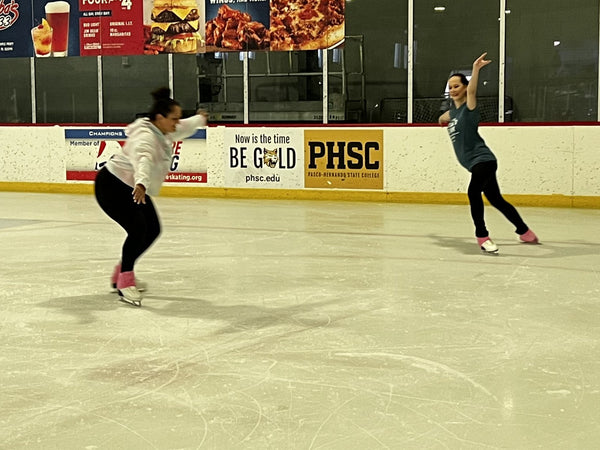
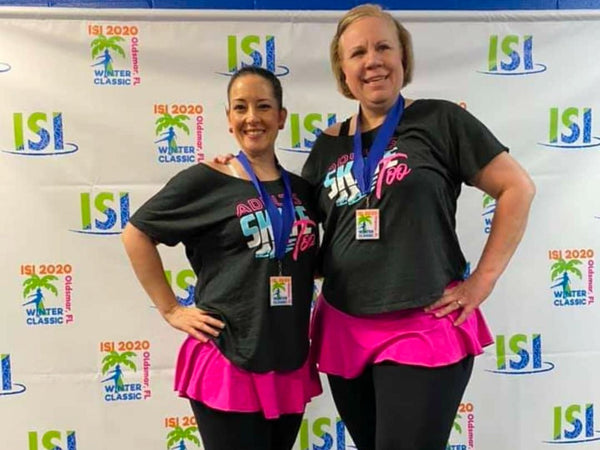
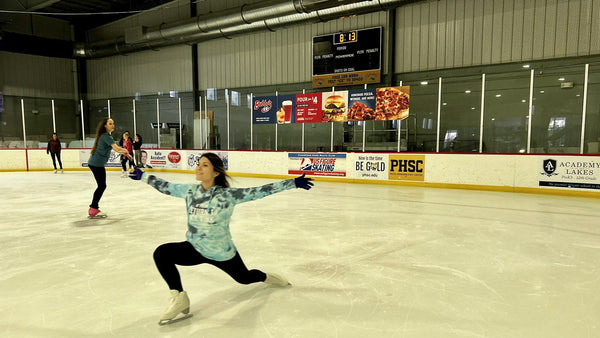
Adults Skate Too is more than a brand — it's a movement built for adult figure skaters of all levels. Whether you're returning to the rink after years away, starting as an adult beginner, or skating every week, AST celebrates adult skating with high-quality, fun, and functional apparel and accessories.

From our best-selling rink totes to cozy skate hoodies, our products are made for those redefining what ice skating for adults looks like. Join the growing community of adult skaters who are proving it’s never too late to lace up.

2026 U.S. Figure Skating Championships: Thrills, Triumphs, and Olympic

More OneofOne Merch Dropping This Week!

Build Your Own Sticker Bundle! Buy More & Save

2026 U.S. Figure Skating Championships: Thrills, Triumphs, and Olympic Dreams

2026 U.S. Figure Skating Championships: Thrills, Triumphs, and Olympic Dreams

2026 U.S. Figure Skating Championships: Thrills, Triumphs, and Olympic Dreams

2026 U.S. Figure Skating Championships: Thrills, Triumphs, and Olympic Dreams

The 2026 U.S. Figure Skating Championships in St. Louis had it all – record-breaking performances, dramatic comebacks, and emotional moments that left fans cheering (and maybe tearing up) in the stands. Over four days of competition, champions were crowned in men’s, women’s, pairs, and ice dance, and each discipline delivered something special. By the end of the event, not only did we witness historic achievements, but Team USA’s Olympic roster for Milano Cortina 2026 was officially set. In this recap, we’ll break down the standout moments in each category and look ahead to what figure skating fans can expect at the upcoming Winter Olympics. Grab a hot chocolate (or your favorite rink side snack) and let’s relive the excitement!


Men’s Singles: Malinin Dominates and New Olympic Hopes Rise

Ilia Malinin performs at the 2026 U.S. Championships in St. Louis
Ilia Malinin performs at the 2026 U.S. Championships in St. Louis. Malinin dominated the men’s field to claim his fourth straight national title.

The men's competition was all about Ilia Malinin, a.k.a. the "Quad God," who stormed to his fourth consecutive U.S. title in jaw-dropping fashion. Malinin landed an array of huge jumps (though notably not attempting his trademark quadruple Axel this time) and still won by a staggering 57-point margin. To put that into perspective, that gap is practically unheard of – he scored 324.88 total points, with the next closest competitor at 267.62. The 18-year-old phenom has been undefeated since late 2023 and showed why he’s considered the world’s most dominant skater heading into the Olympics. At one point Malinin even sported a varsity jacket reading “Quad God” with a big “4A” on the back, embracing his daredevil reputation. Despite scaling back his planned content due to a recent skating boot change, he effortlessly hit multiple quads and even threw in a celebratory backflip during his free skate. Talk about a showman!

While Malinin’s Olympic team berth was never in doubt (he was an alternate in 2022, but this will be his first Olympics), the real drama was for the remaining two men’s spots. In the end, Andrew Torgashev and Maxim Naumov seized those tickets to Milan with inspired performances.

Torgashev, last year’s runner-up, was only fifth after the short program – but he delivered the free skate of his life on Saturday, landing two huge quad toe loops and rocketing up to the silver medal position. His program was a stirring display of both athleticism and artistry, capped by wildly inventive step sequences that brought the crowd to its feet. Torgashev’s 182.63-point free skate gave him 267.72 overall and his second straight Nationals silver. Not bad for someone who had a challenging Grand Prix season – he said this performance “was everything I was training” and proved to himself he could pull through under pressure. You could sense his relief and joy at making his first Olympic team after years of hard work.

The most emotional moment came from 24-year-old Maxim Naumov, who claimed the bronze and the third Olympic spot. Naumov’s journey to the podium was deeply poignant: last year, he tragically lost both of his parents (who were themselves former figure skating world champions) in a plane crash. All week, the crowd rallied behind him as he skated in their memory – after a powerful short program, he held up a childhood photo of him with his parents while awaiting his scores. In the free skate he fought through a few stumbles, but the emotion and resilience he showed were what everyone will remember. When it became clear he’d done enough to finish in the top three, Naumov was overcome with tears of joy. Fellow skaters, coaches, even legend Scott Hamilton embraced him rink-side in a group hug. It was Naumov’s best nationals result ever, and the culmination of a lifelong dream: “We did it, we absolutely did it,” he said, reflecting on how he’d been envisioning this Olympic moment since he was five years old. You couldn’t script a more heartfelt Olympic-berth story.

Of course, as some dreams came true, others just missed. Fan-favorite Jason Brown, a two-time Olympian known for his exquisite artistry, had a brilliant short program that put him in contention, but a disastrous free skate dashed his hopes (he fell to 8th place). The St. Louis crowd gave him a warm ovation nonetheless, knowing this might have been the 31-year-old’s final nationals. Brown’s grace in failure was as classy as his skating.

In the end, Team USA’s men’s roster for Milan will be Malinin, Torgashev, and Naumov – an exciting mix of a superstar and two hungry newcomers. Malinin is aiming to become the second straight American man to win Olympic gold (Nathan Chen topped the podium in 2022), and if he does, he’d be the third U.S. men’s champion in the last five Games. No pressure, right? But judging by how untouchable he looked at nationals, Malinin has earned the favorite label. The last time we saw a U.S. man dominate like this, it was Chen – and we all know how that ended (with a gold medal around his neck). Time will tell if Ilia can repeat that feat in Milan, but one thing’s for sure: he’ll be flying into the Olympics with sky-high confidence and the backing of a very excited fanbase.


Women’s Singles: Amber Glenn’s Triple Axel Triumph and a New Era of U.S. Ladies

Amber Glenn, Alysa Liu, Isabeau Levito and Bradie Tennell at the 2026 U.S. Championships
Amber Glenn (second from left) celebrates her third straight national title alongside silver medalist Alysa Liu (left), bronze medalist Isabeau Levito (second from right), and pewter medalist Bradie Tennell (right) at the 2026 U.S. Championships.

If the men’s event belonged to the Quad God, the women’s event was a coronation of the “Triple Axel Queen.” Amber Glenn delivered an absolutely sublime performance to secure her third straight U.S. title, achieving something no American woman has since the days of Michelle Kwan. In fact, Glenn is now the first woman to three-peat at Nationals since Kwan’s reign in the early 2000s. She put an exclamation point on this historic feat with a personal-best total score of 233.55 points. Her short program, a rockin’ number to Madonna’s “Like a Prayer”, set the tone: it earned a record-breaking 83.05 points, the highest short program score ever at the U.S. Championships. Yes, you read that right – record short program score! And it featured a clean triple Axel that had the crowd roaring. Glenn then backed it up in the free skate, nailing another triple Axel and a barrage of difficult combinations (triple flip–triple toe, triple loop–double Axel–double Axel, you name it). She scored 150.50 in the free, also the highest of the night, proving that her earlier brilliance was no fluke. By the time she struck her final pose, the arena was on its feet for a standing ovation – twice in one week, Glenn had brought down the house. Not bad for someone who, a few years ago, was seen as an underdog with untapped potential.

What’s even more inspiring is Amber Glenn’s journey and presence. At 26, she becomes the oldest American woman in 98 years to make her Olympic debut – a testament to perseverance in a sport often dominated by teens. She’s also proudly one of the few openly LGBTQ+ champions in U.S. figure skating, winning over many fans with her authenticity and grit. After her winning free skate, Glenn was in happy disbelief: “The ladies were on fire this competition, and I couldn't be more proud of how far we've come as Team USA,” she said, beaming. Indeed, the level of skating in the women’s event was sky-high, and a lot of that had to do with how Glenn’s closest competitors pushed her and each other to new heights.

Alysa Liu took the silver medal with a total of 228.91, and her performance might have been the most fun of the night. Remember, Liu is only 20 years old but has already lived a lifetime of skating experiences – she won U.S. titles as a tiny 13-year-old, competed at the 2022 Olympics (finishing a strong 7th), then shocked everyone by briefly retiring in 2022 at age 16 to live a “normal life.” Thankfully for skating fans, she reconsidered and returned to competition two years ago, and oh boy has she come back strong. In fact, Liu enters the Olympics as the reigning World Champion (she won the world title in 2025). In St. Louis, she showcased a brand new free skate to a Lady Gaga medley (“Paparazzi” and “Bad Romance”), complete with a sassy new hairstyle and tons of personality. The crowd clapped along to her choreographic sequence and Gaga moves, and Liu’s joyful, relaxed demeanor was evident – she looked like she was having a blast out there. Technically she was rock-solid too, reeling off seven triples (including a triple lutz–double Axel–double toe combo worth 13+ points). One of the wildest twists? In the short program, Liu actually set a national scoring record herself – for about five minutes. She laid down a personal-best 81.11 in the short, briefly holding the highest score ever, until Glenn skated moments later and topped it with that 83.05. It was like the two were leapfrogging records, back-to-back. Instead of being disappointed, Liu was all smiles, saying she was “happy and proud of how we all did. This was so fun to watch, even for me.” As a former prodigy who’s now a seasoned competitor, Liu brings both experience (she’s the only one of the U.S. women who’s been to the Olympics before) and fresh excitement to the team.

Rounding out this powerhouse trio is Isabeau Levito, who claimed the bronze with 224.45 points. At 18, Levito was the youngest of the group, but she carried herself with incredible poise. She is the 2023 U.S. champion and 2024 World silver medalist, so the expectations were high – and she met them with grace. Skating to a beautiful “Cinema Paradiso” medley, Levito delivered seven triple jumps (including a textbook triple flip–triple toe combo) and earned level-4 spins and footwork, showing off her well-known polish. Her free skate score of 148.73 was the second-highest of the night (only Glenn beat it). When she finished her program, there was an elegant, almost serene look on her face – you could tell she knew she’d done her job. Levito called it a “perfect week” and said she was satisfied that her performance reflected all her training, especially given the extra pressure of an Olympic year. One fun personal note: Levito’s grandmother lives in Milan, so Isabeau is thrilled that her Italian family will get to watch her compete at the Olympics in person. How cool is that?

The competition in St. Louis wasn’t just a three-woman show, either. Veteran Bradie Tennell, a two-time U.S. champion and the top American at the 2018 Olympics, put out a gutsy free skate to surge from behind and finish 4th with 211.48. After an injury-riddled few seasons, Tennell skated with heart, landing all her jumps cleanly and even dropping to her knees to kiss the ice when she finished – an emotional moment as the crowd rose to applaud her resilience. She just missed making a second Olympic team, but she’ll serve as first alternate and earned a lot of respect this week. Youngsters and newcomers in the top ten, like Sarah Everhardt (5th) and Sophie Joline von Felten (6th, landing two triple Axels in her free!), showed that the pipeline of U.S. talent is deep. It’s been a while since we’ve seen the American ladies as competitive with each other as they are now – and that bodes well for the international stage.

Ultimately, Team USA’s women’s Olympic squad will be the medalists Glenn, Liu, and Levito, a trio bursting with talent and personality. In their post-competition press conference, all three were laughing, hugging, and talking about how excited they are for the Olympic experience (Levito joked she’s mostly just hyped for the Olympic Village fun!). They also know they carry the weight of history: it’s been 20 years since an American woman won an Olympic figure skating medal (Sasha Cohen’s silver in 2006 was the last). With these three stars, the U.S. has perhaps its best shot in a long time to break that drought. Glenn, Liu, and Levito are all legitimate medal contenders in Milan – and they seem to be feeding off each other’s energy in the best way. As Glenn said, the American ladies were “on fire” at nationals, and we can’t wait to see that fire on Olympic ice.


Pairs: A Rollercoaster Competition and an Unusual Path to the Podium

Pairs at the U.S. Championships can sometimes fly under the radar, but this year it made headlines for its unexpected twists. The gold medals went to Alisa Efimova and Misha Mitrofanov, who delivered two sparkling programs to defend their national title. They posted a 207.71 total score, over 10 points clear of the field, becoming the first U.S. pair in over a decade to win back-to-back titles (the last to do it were Marissa Castelli & Simon Shnapir in 2013–2014). Their free skate to “Where Do I Begin (Love Story)” was all about romance and elegance – gorgeous lifts, smooth skating, and genuine chemistry. They admitted feeling the pressure of being defending champs, but they handled it like pros. By midday Friday, it looked like Efimova/Mitrofanov had punched their ticket to the Olympics. However, a plot twist was looming.

Despite their victory, Efimova/Mitrofanov will not be going to Milano – because Alisa Efimova, who was born in Russia, did not obtain U.S. citizenship in time for the Games. U.S. Olympic rules require both skaters in a pair to be citizens, and unfortunately that paperwork deadline passed with no miracle. It wasn’t for lack of trying; there were last-minute efforts and years of process, but it didn’t come through. It’s a heartbreaking situation – imagine winning Nationals and then realizing you can’t skate in the Olympics due to a technicality. Efimova was understandably disappointed, but she remained hopeful about the future and proud of what they achieved this week.

And the curveballs didn’t stop there. The bronze medalists, Katie McBeath and Daniil Parkman, faced a similar issue – Parkman, originally from Ukraine, is also not a U.S. citizen yet. So the third-place team was also ineligible for the Olympic team. Essentially, the pairs event ended with only one of the top three pairs actually able to go to the Games. This made for some confusing and emotional moments as fans and skaters awaited the Olympic selections. As U.S. Figure Skating officials described it, “it was a very confusing pairs competition” in terms of figuring out who would be named to Team USA.

So who got the nod? Ultimately, the Olympic selection committee chose the two highest-placing eligible teams. The first was a no-brainer: Ellie Kam and Danny O’Shea, who won the silver medal, were named to the team. Kam/O’Shea were actually the 2024 U.S. champions and have some solid international credentials. In their free skate, they had a freak fall on a throw triple flip, but the rest of their program was epic – superb lifts and an intricate pair spin that had the crowd cheering. They earned a personal-best total score of 197.12. For Danny O’Shea, making the Olympics is the culmination of a 14-year journey in pairs. Fun fact: at 34, Danny will be the oldest American pairs skater at the Olympics since 1932!

The second Olympic pair was a bit more of a surprise: Emily Chan and Spencer Akira Howe, who actually finished 4th (pewter medal) at Nationals, got the ticket to Milan. Chan/Howe had a wild rollercoaster of a week – they bombed their short program, ending up in 8th place after that segment, but then staged a remarkable comeback in the free skate. They found their groove and delivered a lyrical, technically strong program. Their free skate score was 127.23 and it lifted them to 186.52 total, enough for 4th overall. They then had to endure two long days of waiting to see if the committee would put them on the Olympic team. On Sunday, the announcement came – they were in! “We are shocked... this whole competition was filled with a lot of roller coasters. So many miracles have been happening,” Spencer Howe said.

So, the U.S. Olympic pairs teams will be Kam/O’Shea and Chan/Howe. It’s bittersweet that our national champions won’t be there, but fans are excited to cheer on the teams who will. Both duos are first-time Olympians, ready to soak up the experience. Historically, pairs has been Team USA’s weakest discipline – the U.S. hasn’t won an Olympic pairs medal since 1988 – and this year the American pairs will be underdogs on the world stage. But that’s okay. Kam/O’Shea and Chan/Howe have shown they can fight through adversity, and they’ll bring that fighting spirit to Milan.


Ice Dance: Chock & Bates Make History and Lead a Strong Dance Corps

Ice dance at Nationals was a mix of the expected and the excitingly new. As many predicted, Madison Chock and Evan Bates waltzed their way to yet another gold medal, but this one was extra special – it’s their seventh U.S. title, which is a new American record in ice dance. They surpassed the legendary Meryl Davis & Charlie White for most U.S. dance titles ever. When they realized the record they’d set, Madi and Evan were visibly moved. “Seven-time national champions seems surreal,” Chock said.

Their free dance was a fierce contemporary flamenco and it had the crowd in the palm of their hands from start to finish. They opened with a difficult curve lift and carried that intensity through twizzles, spins, and footwork that all received top levels. Judges rewarded them with a season’s best, and they won by a margin that, in ice dance, is huge. As the reigning World Champions, Chock/Bates are looking in fine form as they head toward Milan. Bates said this was “the best we’ve skated the free dance all year,” and that they like to build momentum through the season – peaking at the big events. That strategy is clearly on track.

The rest of the ice dance podium showcased the next generation, and they did not disappoint. Emilea Zingas and Vadym Kolesnik claimed the silver with the performances of their young partnership’s career. They teamed up in 2022 and their rise has been meteoric. Their free dance was passionate and technically excellent. Zingas later said this nationals felt redemptive and credited last year’s disappointment for motivating them to come back stronger.

In third place were Christina Carreira and Anthony Ponomarenko, another team making a happy comeback. After a bit of an up-and-down season and a coaching change mid-season, they peaked at the right moment. It means everything to them to be standing on that podium.

When the dust settled, the U.S. Olympic ice dance team was no surprise: Chock/Bates, Zingas/Kolesnik, and Carreira/Ponomarenko are the trio heading to Milan. This is a formidable squad. Team USA has had an ice dance team on the Olympic podium at every Games since 2006 – a streak they are very proud of – and this group will aim to keep that going (and maybe even upgrade the color of the medal).


On to Milan: Olympic Team Set and Rivalries to Watch at the 2026 Winter Games

With Nationals complete, Team USA officially nominated 16 skaters to the 2026 Olympic figure skating team. It’s a stellar lineup that has fans excited about both near-term results and the future of U.S. skating.

  • Women’s singles: Amber Glenn, Alysa Liu, Isabeau Levito
  • Men’s singles: Ilia Malinin, Maxim Naumov, Andrew Torgashev
  • Pairs: Emily Chan & Spencer Akira Howe, Ellie Kam & Danny O’Shea
  • Ice Dance: Christina Carreira & Anthony Ponomarenko, Madison Chock & Evan Bates, Emilea Zingas & Vadym Kolesnik

The Men: Malinin vs. the World

In the men’s event, Ilia Malinin is heading to Milan as one of the clear favorites for gold. He remains “very much the man to beat.” If he were to falter, look to Japan, which has a rich recent history in men’s skating. The field will be deep, and the pressure will be huge. But truth be told, Malinin has the highest ceiling. If he skates his best with those quads and improved artistry, the title is likely his to lose.

The Women: Can Team USA Break the Olympic Curse?

The women’s singles event in Milan is shaping up to be incredibly deep and competitive – and guess what, Team USA is right in the mix. It’s been 20 years since an American woman stood on an Olympic podium, but this could be the year that changes. Glenn, Liu, and Levito are all capable of big things, but the international field will be fierce.

Japan’s Kaori Sakamoto will be a major contender. The European field will bring serious challenge too. And the big unknown is always the potential impact of Russian participation rules. Still, the U.S. trio is not intimidated. They’ve competed against the best and held their own. If any of them land the competition of their life in Milan, we could be looking at a podium moment that finally changes the narrative.

Pairs: Chasing Personal Bests in a Tough Field

Pairs will be tough, but the goal is clear: skate clean, build confidence, and maximize execution. Both teams will gain invaluable experience at the biggest event in the sport, and their contributions may be especially important in the Olympic team event.

Ice Dance: Going for Gold and Keeping a Medal Streak Alive

Ice dance is traditionally where Team USA can feel a bit more confident, and 2026 should be no exception. Chock/Bates will lead the way as serious medal contenders. The top rivals will include teams from Canada and Italy (with home crowd energy). But the Americans are in this fight. And yes… if Madi and Evan skate in Milan like they did at Nationals, they can absolutely chase the top of the podium.

The Team Event: One for All and All for One

The Olympic team event will be the first skating competition in Milan and it’s always a blast. Team USA has depth, options, and star power. Strategy matters, but so does momentum. If the U.S. executes cleanly across the disciplines, a podium is very realistic.

In conclusion, the 2026 U.S. Championships gave American figure skating fans everything they hoped for: incredible performances, inspiring stories, and a whole lot of optimism for the Olympics. From Ilia Malinin’s quad-filled coronation to Amber Glenn’s trailblazing triple Axel triumph; from the pairs drama that ended in joy for two up-and-coming teams to the ice dance legacy cemented by Chock & Bates – it was a Nationals to remember. Now the focus shifts to Milano Cortina, where all these storylines will continue on the grandest stage.

One thing is certain: Team USA is bringing a mix of talent, experience, and passion to the 2026 Winter Games, and they’ll be supported every step of the way by fans back home. As skating enthusiasts, we’re in for a treat – the kind of nail-biting, cheer-at-your-TV, maybe-even-happy-cry-a-little ride that only the Olympics can provide. So let’s savor these Nationals highlights and get ready to turn the page to the next chapter. Milano is calling, and Team USA is ready to answer with blades on and hearts on fire. Go Team USA!


TL;DR

The 2026 U.S. Figure Skating Championships in St. Louis gave us everything: Ilia Malinin casually proving he’s built different, Amber Glenn three-peating with triple Axel power, and a women’s field that feels legitimately stacked heading into Milan. Pairs got weird (in the most Nationals way possible), ice dance got historic (Chock/Bates record title), and now Team USA is locked in for the 2026 Olympics with real medal potential across multiple disciplines.

Common Skater Qs 💭

Can adults learn to ice skate?

Absolutely! It’s never too late to start skating. Many adults begin in their 20s, 30s, 40s, or beyond — and fall in love with the sport.

What should I wear to adult skating lessons?

We recommend leggings or athletic pants, layered tops, and a jacket or hoodie. Gloves and tall socks are helpful, too. AST makes apparel specifically for adult skaters!

Do I need my own skates to start?

Not at first! Most rinks rent skates. Once you're hooked, you can invest in figure skates that match your goals and budget.

Are there competitions or classes for adult skaters?

Yes! Many clubs offer adult-only group classes and competitions through organizations like U.S. Figure Skating.

Is figure skating a good workout for adults?

Skating improves balance, coordination, strength, and endurance — and it's fun too!

How do I find adult skating classes near me?

Search your local rink’s website or contact them directly for adult learn-to-skate programs.

What skates are best for adult beginners?

Brands like Jackson, Riedell, and Edea offer supportive boots. Visit a skate shop for fitting advice.

What should I bring to my first skating class?

Wear warm layers, bring gloves, tall socks, and water. If you have skates, bring them too!

Leave a comment