
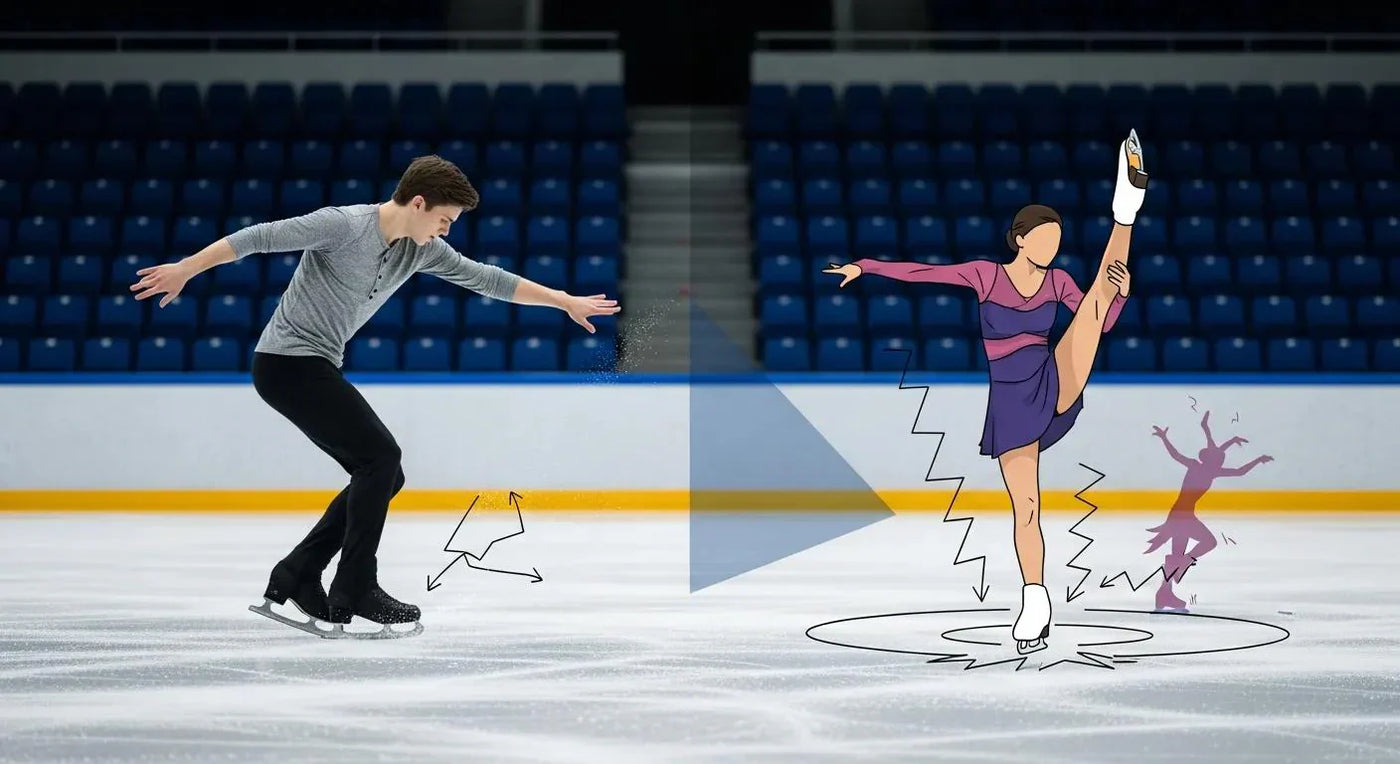
Avoid These Figure Skating Mistakes
Adult skaters balance work, family and life with the desire to get better on the ice. That reality creates predictable mistakes that slow progress and increase injury risk. This practical guide, grounded in coaching experience and biomechanics, lists the ten most common slip-ups adult skaters make, explains why they happen, and gives clear drills, routines and mindset strategies so you skate safer and improve faster. You’ll find straightforward fixes for , , , , , and that translate directly to on-ice results. Each H2 pairs a common mistake with actionable fixes; H3 subsections give short, drill-based prescriptions and quick practice cues you can use immediately. We also point out apparel and accessories that genuinely help practice, and community resources that keep adult skaters motivated and consistent.
What Are the Most Frequent Technique Errors Adult Figure Skaters Encounter?
Technique faults in adult skaters usually come from limited mobility, fear or old habits. Spotting them fast helps you choose the right drills. The most common foundational problems are , looking down, and choppy stroking—each steals balance, speed or flow and raises fall risk. Below are the top technique errors with single-line fixes you can use during practice. These quick cues are built for easy recall and coach-friendly instruction.
- Rounded posture: Lift chest and engage the core; practice two-foot glides with an active knee bend to feel alignment.
- Looking down at the blade: Pick a point ahead—eyes up clears the chest and centers your weight.
- Flat edges or incorrect lean: Do slow edge rolls and controlled three-turns to feel inside vs. outside edges and adjust your lean.
- Short, choppy stroking: Hold the glide longer between pushes and use extended crossovers to build power.
- Hesitant knee bend on landings: Repeat soft dip-and-rise drills to train shock absorption and confident flexion.
These are starting points—consistent, focused reps and timely feedback convert fixes into habits. Next we’ll unpack how poor posture disturbs balance and which drills reliably rebuild alignment.
How Does Poor Posture Affect Adult Skating Balance and Stability?
In adult skaters poor posture shows up as a tucked pelvis, locked knees or a collapsed chest. Those alignment issues push your center of mass behind the blade, which creates wobble, forces ankle compensation and reduces your ability to drive edges and rotations. Corrective drills rebuild a neutral pelvis and an engaged core: slow two-foot glides with a deliberate knee bend, wall-supported hip tucks off-ice to feel pelvis position, and video or mirror feedback to reinforce an upright chest. Simple cues like “knees over toes, chest lifted” speed up proprioception retraining. for edges and jumps, and that leads right into edge-control work.
Corrective Exercises for Figure Skater Posture & Alignment
The present study shows that corrective exercises are effective in aligning the knee, ankle, and foot positions in 9- to 11-year-old boys with pronation syndrome. Coaches and exercise specialists can use these research findings to improve the posture and enhance the lifestyle of individuals with lower limb misalignments caused by decreased mobility.
The effect of 8-week corrective games on knee, ankle, and foot alignment in boys aged 9–11 years with pronation syndrome, M Seyedahmadi, 2025
What Causes Incorrect Edge Usage and How Can Adults Improve Edge Control?
Bad edge use usually comes from unclear weight placement and fear of tipping the ankle. That produces flat glides and hesitant turns that interrupt flow and block clean three-turns or controlled crossovers. The fix is progressive edge work: begin with stationary edge rolls to feel inside and outside edges, then use marching edge drills with long, slow pushes and low three-turn progressions that emphasize lean and knee alignment. Off-ice balance drills—single-leg stands and ankle mobility work—transfer directly to more confident edges on the ice. With steady practice you’ll feel the blade bite instead of slide, improving flow and creating safer jump and spin technique. See our for specific progressions.
Which Jump and Spin Mistakes Do Adult Skaters Commonly Make?
Many adults rush progression or skip basics, which leads to predictable jump and spin errors. The cure is returning to fundamentals and progressing load gradually. Typical faults are poor takeoff posture, collapsing on landing (often called ""), overly long setups that reduce control, and from quick arm moves or uneven core bracing. Below is a concise table pairing common faults with practical corrective drills to use in sessions.
| Element | Common Error | Drill to Fix |
|---|---|---|
| Single/Double jumps | Landing tall with a stiff leg ("adult leg syndrome") | Low repeated soft-landings from small hops, focus on knee flexion and hip alignment |
| Toe-assisted jumps | Early toe pick or delayed rotation | Slow-hop progressions with landing holds and assisted reps |
| Upright spins | Off-center due to weight shift | Small-radius one-foot balance spins, use a fixed spotting point |
| Sit/camel spins | Speed loss from wide arms | Progressive arm-closure drills with core bracing and short timed holds |
Use this table as a quick reference during practice to match a symptom with a targeted drill. Next we break down "adult leg syndrome" and spin-centering with practical steps.
How Can Adult Skaters Correct 'Adult Leg Syndrome' in Jump Landings?
"Adult leg syndrome" is the habit of landing with a locked, overly straight leg—often driven by fear, stiffness or a balance compensation. That pattern increases impact forces and destabilizes landings, costing confidence and raising injury risk. Retrain with low-impact landing progressions: start with off-ice controlled step-downs emphasizing soft, loaded knees, then move to on-ice small-hop landings from assisted holds while keeping hips and the free leg aligned. Coach cues like “soft knees—absorb like a spring” and short video clips help reinforce the new pattern. Over time the nervous system relearns shock absorption, improving and reducing cautious, upright landings.
What Are the Best Techniques to Improve Spin Centering and Speed?
Centered, fast spins come from three linked elements: a stable entry, a small rotational radius and timed arm closure. Drill static one-foot balances and slow short rotations to find a centered axis, then reduce your radius by bringing limbs closer while keeping the torso rigid, and practice deliberate arm closures to convert body configuration into angular velocity. Start small—about 10 focused entries per session—and always check that your center of gravity stays over the blade. Don’t force speed before balance and landing control are solid; use progressive load to build speed without losing centering. These steps restore reliable spin mechanics and prepare you for safer progression.
How Do Training and Mindset Challenges Impact Adult Figure Skaters?
Adult skaters juggle less ice time, slower recovery and busy schedules—factors that often lead to inconsistent practice, and mental blocks like . That reality means structuring sessions differently: prioritize quality over quantity, include deliberate warm-ups and cooldowns, and use small, measurable goals so progress is visible. The table below gives compact warm-up and off-ice prescriptions that fit tight schedules and boost safety and performance. These routines help adults lower injury risk while getting more out of each practice.
Off-Ice Training & Flexibility for Figure Skaters
A flexibility-stretching program was to be done on a daily basis. Thus, the total time invested per week was about 3 hr on alternate days doing the off-ice training portion of the program.
Conditioning program for competitive figure skating, 1979
| Activity | Recommended Duration | Purpose |
|---|---|---|
| Dynamic Warm-up (mobility + light cardio) | 5–10 minutes | Raise blood flow, loosen hips and ankles, prepare the nervous system |
| Activation (glute and core drills) | 5 minutes | Improve hip stability and trunk control for edges and jumps |
| Off-ice balance work (single-leg stands, BOSU) | 2–3 sets of 30–60 seconds | Build proprioception and ankle stability that transfers to edges |
| Strength circuits (squats, lunges) | 10–15 minutes, 2×/week | Increase muscular endurance and shock absorption for landings |
This quick routine fits busy schedules and makes preparation predictable and repeatable. Next we explain why skipping warm-ups is risky and how to build a time-efficient routine you’ll actually do.
Why Is Skipping Warm-ups Risky and How Can Adults Implement Effective Warm-up Routines?
Skipping the warm-up removes the physiological ramp-up that prepares muscles, tendons and the nervous system for skating, which raises the chance of strains, poor landings and balance errors. A simple 5–10 minute dynamic warm-up—light cardio (marching or skipping), hip and ankle mobility flows and glute activation—primes you for the ice. Tempo matters: move with control, do 10–20 reps per mobility drill and hold activation isometrics for 10–15 seconds. Comfortable, flexible apparel like leggings and fitted tops makes movement easier and keeps you warm during warm-up; good clothing helps you be consistent. Proper warm-ups reduce injury risk and prepare you to skate with sharper edges, stronger pushes and safer landings.
How Can Adult Skaters Overcome Impostor Syndrome and Comparison to Younger Skaters?
Impostor feelings often come from comparing yourself to younger skaters or focusing only on speed of progress. Use cognitive reframes: set process goals (for example, “increase stable one-foot glides from 10 to 20 seconds”) instead of outcome-only goals, log small wins, and build deliberate practice blocks that grow competence step by step. Pair up with a practice buddy, find a mentor or join a peer group to create accountability and normalize setbacks. Practice monthly reflections and celebrate consistency over perfection—this shifts identity from “inexperienced” to “committed adult skater.” Those shifts make sticking to training plans easier and steady improvement more likely.
What Equipment and Safety Mistakes Should Adult Skaters Avoid?
Common gear mistakes are skating in , , ignoring , and underestimating protective gear when learning new elements. Fixing these items reduces pain, wobble and avoidable falls. Here are practical, checklist-style actions to take now.
- Get a professional fitting or check fit signs (no toe slip, solid heel hold, comfortable width) before long sessions.
- Set blade sharpening by hours skated, not just by date, so your edges keep biting.
- Use lacing patterns that lock the heel while allowing forefoot comfort to prevent heel lift.
- Wear padding during high-risk learning and consider comfort accessories for long practices.
These steps reduce gear-related problems and increase on-ice confidence. The table below compares skate parts and accessories to help you choose wisely.
| Component | Characteristic to Check | Value for Adult Skaters |
|---|---|---|
| Skate Laces | Support level and length | High: the right laces improve ankle support and cut heel slip |
| Boot Cuff | Flexibility vs. support | Medium: cuff stiffness affects ankle control and comfort |
| Blade Edge | Sharpness and rocker profile | High: sharp, well-profiled blades give better edge bite and control |
| Protective Accessories | Padding, guards, wrist/elbow protection | Medium: reduces injury severity while learning elements |
This comparison shows which gear items most directly affect safety and technique. Next we cover fit and lacing in more detail and offer practical fixes.
How Does Improper Skate Fit and Lacing Affect Performance and Safety?
A poor skate fit—toe compression, heel lift or side-to-side wiggle—blunts proprioception and creates wobble on edges, undermining confidence and increasing injury risk. Lacing matters: loose ankle lacing allows heel lift, while overly tight toes cause numbness and restrict movement. Quick fixes are checking three fit indicators (no excessive toe jam, secure heel lock, comfortable width) and using figure-skate-specific lacing to lock the heel while letting the forefoot spread naturally. If tweaks don’t help, see a professional boot fitter for reshaping, heat molding or orthotic options. Proper fit and lacing restore tactile feedback through the boot and improve stability for jumps, spins and edge work.
Why Is Regular Blade Sharpening Essential and How Does Protective Gear Enhance Safety?
Blade sharpness controls how well a skate grips during edges, turns and landings; dull blades slide and force compensations that lead to falls. Sharpen frequency depends on skating hours: recreational skaters often tune every 15–20 on-ice hours, while heavier training needs more frequent attention. Signs of dullness include inconsistent edge bite and trouble carving turns. Protective gear—wrist guards, hip pads and padded shorts—reduces impact when you fall and gives confidence when trying new elements. A simple safety checklist helps: monitor blade feel, keep a sharpening log and use padding during element progression. Regular maintenance and sensible gear lower injury risk and speed technical progress.
| Gear Component | Recommended Use | Safety/Performance Benefit |
|---|---|---|
| Blade Sharpening | Based on hours and feel | Maintains edge grip and precise carving |
| Protective Padding | Learning jumps/spins | Reduces injury severity and boosts confidence |
| Laces and Ankle Supports | Daily practice | Improves heel lock and reduces wobble |
| Guards and Soakers | Off-ice transport | Protect blades and extend edge life |
This table reinforces how upkeep and protection work together to keep skaters safe and moving forward. Proper equipment care ties directly into better balance and technique, which the next section addresses.
How Can Adult Figure Skaters Improve Balance and Overall Technique?
Better balance and technique come from blending on-ice drill sequencing with off-ice conditioning and a simple weekly plan that values consistency over intensity. builds the muscle foundation for centered spins, confident edges and safer landings. turn those gains into flow and control, with measurable reps and time so progress is trackable. The H3 subsections below list targeted off-ice exercises and on-ice drills mapped to common errors so you can slot them into a weekly routine.
What Off-Ice Exercises Enhance Balance and Core Stability for Adult Skaters?
Off-ice sessions should focus on single-leg balance, hip and ankle mobility, and core endurance—qualities that transfer directly to on-ice stability and shock absorption. Try single-leg Romanian deadlifts for the posterior chain, side planks and Pallof presses for lateral core, seated ankle mobility work to refine blade tilt, and controlled squats/lunges for landing strength. Aim for 2–3 sets of 8–12 reps, 2–3 times per week, and progress with tempo or light resistance. Wearing flexible, supportive apparel during these sessions improves range of motion and comfort, helping you keep good form. These exercises build the foundation that makes on-ice corrections stick.
Figure Skating Injury Prevention: Biomechanics & Exercises
Pes anserine syndrome is the term that encompasses both pes anserine bursitis and pes anserine tendonitis. The exact incidence of pes anserine syndrome is unknown. However, the etiology has been hypothesized to be due to poor biomechanics and overuse. Treatment protocols with targeted exercises for rehabilitation of pes anserine syndrome have not been well documented. ACL injury prevention programs have been shown to significantly decrease ACL injuries by addressing proper hip, knee, and ankle alignment and biomechanics.
The Treatment Of Pes Anserine Syndrome Using ACL Injury Prevention Exercises: A Case Report, 2018
- Single-leg Romanian deadlifts: strengthen the posterior chain and improve balance.
- Side plank with hip dip: builds lateral core control for edge stability.
- Ankle mobility drills: increase dorsiflexion and precision in blade tilt.
- Controlled squats/lunges: enhance shock absorption for safer landings.
These exercises directly support better on-ice performance and help prevent compensatory movement patterns.
Which On-Ice Drills Help Fix Common Bad Habits and Improve Skating Flow?
On-ice drills should be specific, measurable and tied to the habit you want to change—this mapping speeds skill transfer and cuts wasted reps. Examples: edge-roll progressions for wobbly edges (slow rolls increasing range), controlled three-turn sequences for clean transitions, extended glide-holds to train weight distribution and stroking efficiency, and low-rep jump progressions that prioritize landing technique over rotation. Aim for short, focused sets—8–12 quality reps—rather than long, unfocused laps. Combine drills into a weekly plan (two technical sessions plus one conditioning session) to balance learning and recovery. With disciplined drills, bad habits become reliable skills that blend into smoother, safer skating.
How Does Adults Skate Too LLC Support Adult Skaters in Overcoming Common Mistakes?
Adults Skate Too LLC helps adult skaters with apparel, accessories, information and community connection that make practice safer and more consistent. Our core offering is functional gear designed for adult skaters—items on our collections page include lanyards, stickers, zip pouches, shirts, leggings and heat transfers that support mobility, comfort and a sense of identity while training. We also share practical resources and cultivate a , using the tag #adultsskatetoo to encourage skaters to share progress and cheer each other on. For adults who want both useful tools and emotional support, this mix of products and community makes warm-ups easier to stick to, off-ice work more comfortable, and steady goals more motivating.
What Apparel and Accessories Aid in Correcting Technique and Enhancing Comfort?
Right-fit apparel and smart accessories remove small barriers that block consistent practice. Leggings and fitted tops let you move freely during warm-ups and off-ice drills; zip pouches and lanyards keep small training aids and notes organized so sessions stay focused; stickers and heat transfers personalize gear and keep motivation visible. When choosing items, prioritize stretch, breathability and a snug but nonrestrictive fit so ankle motion and core engagement aren’t hindered. The right clothing supports reliable warm-ups and better movement, which makes technical drills more effective and helps you progress safely.
How Can Joining a Supportive Skating Community Boost Confidence and Progress?
Being part of a supportive group gives accountability, practical tips and emotional encouragement that counter comparison and impostor feelings while speeding skill growth through shared resources. Community can look like local peer practice groups, online challenges tagged #adultsskatetoo, or resource forums—each offers motivation, troubleshooting and a place to celebrate small wins. Practical next steps: find a local adult-skater group, set a weekly check-in with a practice buddy, and share short practice clips for feedback. Community normalizes setbacks, highlights steady progress and turns the long grind of skill acquisition into something collaborative and enjoyable.
- Join a peer practice group for accountability and on-ice feedback.
- Share short practice clips with a mentor or community to get targeted advice.
- Use community challenges and tags like #adultsskatetoo to celebrate progress publicly.
Those community steps turn motivation into consistent practice and help adult skaters keep momentum without feeling isolated.
This guide is built to give adult figure skaters clear, usable steps and practical solutions. Addressing common mistakes with a structured approach helps you tighten technique, lower injury risk and enjoy steady progress on the ice.


